
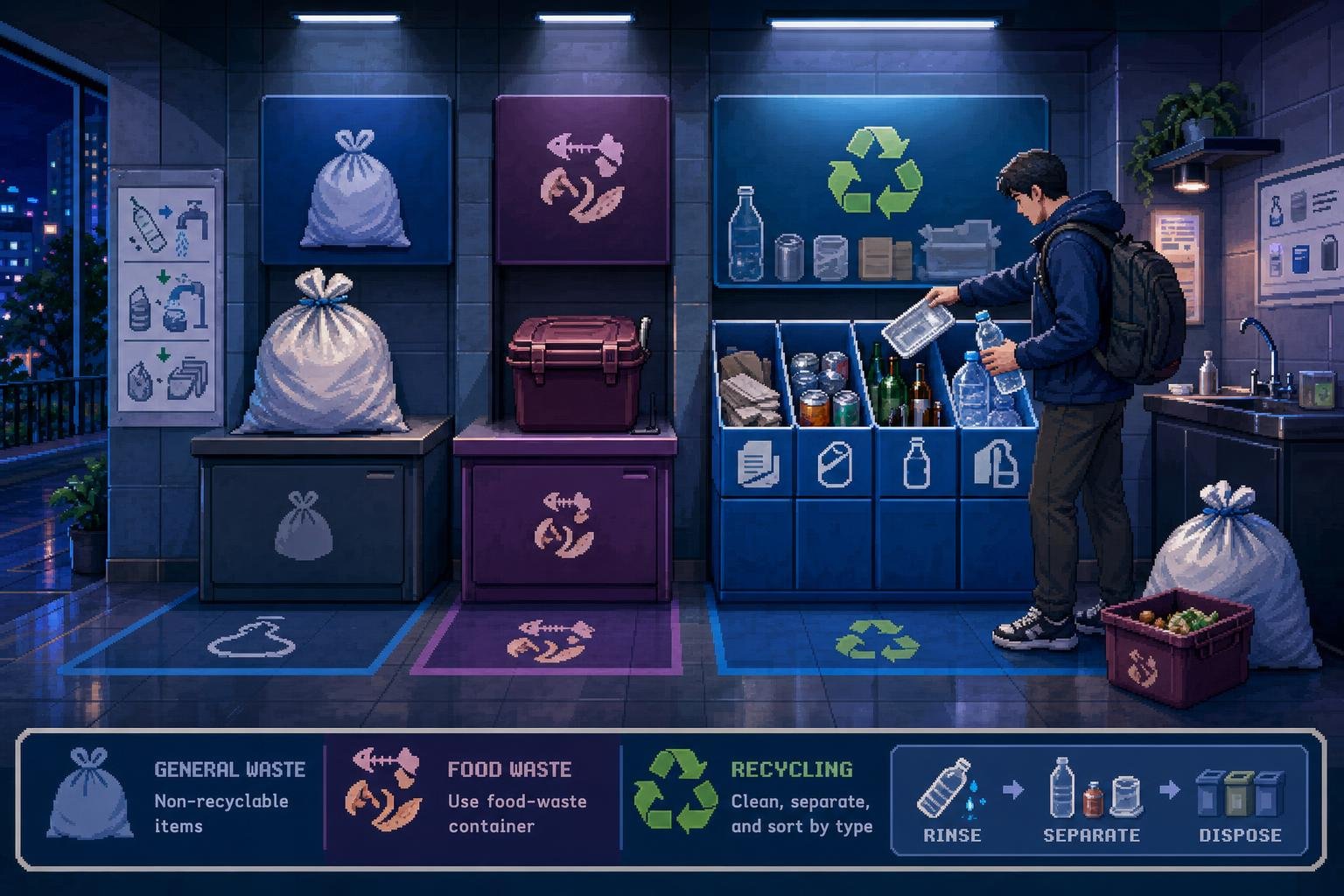
Korea does not use one identical trash system everywhere. The basic categories are similar, but the exact bag, collection point, disposal day, and food-waste method may change between districts and housing types.
The safest approach is simple: find out where your accommodation expects waste to go, separate it before leaving the room, and never assume that a convenient street bin is for household trash.
At a glance
| Type of waste | Typical method | Important point for visitors |
|---|---|---|
| Ordinary waste | District-approved standard garbage bag | Bag types and disposal times are local. Buy the correct bag for the district where you are staying. |
| Food waste | Food-waste bag, building collection container, or food-waste machine | Remove packaging, bones, shells, and other non-food items first. |
| Recyclables | Separated by material, often at a shared collection area | Empty containers and separate paper, plastic, cans, glass, vinyl, and other accepted materials. |
| Bulky items | Local district report, sticker, or collection booking | Do not leave furniture or large appliances beside ordinary bins without reporting them. |
| Batteries, medicine, and small electronics | Dedicated collection box or local collection point | Use the national waste guide to find an appropriate nearby location. |
These categories reflect the general system used in Korea, but the local authority or building manager has the final instructions. Seoul’s foreign-resident information also warns that disposal methods can vary by autonomous district and housing type.
Step 1: Ask where your accommodation wants waste left
Before buying a bag or carrying waste outside, ask one of these questions:
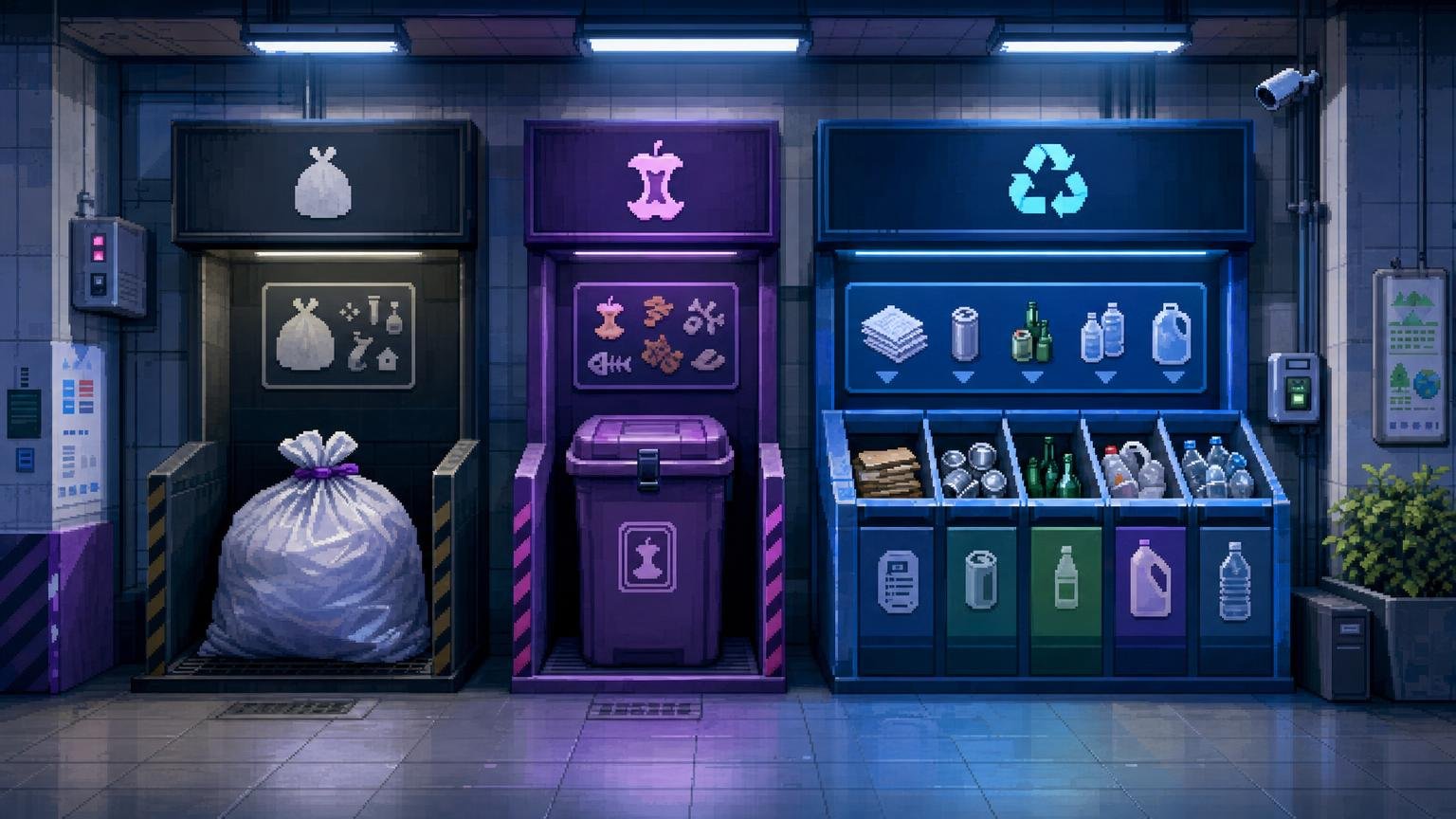
- Where is the recycling area? Recycling may be inside the building, beside the entrance, in a basement area, or at a shared neighborhood collection point.
- Which days can I put out trash? Many buildings have specific collection days for ordinary waste and recyclables.
- Which standard garbage bag should I buy? Standard bags are usually linked to the local district, so a bag from another district may not be accepted.
- How does food waste work here? Apartments may use a shared container or RFID machine, while smaller buildings may require a food-waste bag or tag.
Useful Korean terms are 일반쓰레기 for ordinary waste, 음식물쓰레기 for food waste, 재활용 for recycling, and 쓰레기 버리는 곳 for the place where trash is put out.
Step 2: Dispose of ordinary waste correctly
Ordinary waste is the material that cannot be recycled or treated as food waste. In many areas, it must be placed in a paid standard garbage bag called a 종량제봉투. These bags are commonly sold at convenience stores and supermarkets, but the available size and district designation can vary.
Typical ordinary waste includes contaminated items that cannot be recycled, used tissues, composite-material products, and items such as bones or hard shells that are excluded from food waste. Do not use a random shopping bag if your building requires a standard garbage bag.
- Remove anything that belongs in food waste or recycling.
- Put the remaining ordinary waste into the correct standard bag.
- Tie the bag securely.
- Place it only at the designated collection point and during the permitted time.
Do not leave household waste beside a public street bin, at a subway entrance, or beside another building’s collection area. Public bins are not a substitute for residential disposal, and the location may be monitored or managed by a different district.
Step 3: Separate food waste
Food waste is not simply anything that came from a meal. It must be separated from packaging and other materials before disposal.
In Seoul’s published guidance, examples that should not go into food waste include meat and fish bones, hard shells from crabs or shellfish, large fruit stones, eggshells, onion and garlic skins, tea grounds, plastic, toothpicks, foil, rubber gloves, metal, glass, and other non-food items. Similar principles are used widely, but local instructions still apply.
Before putting food waste into a designated bag, container, or machine:
- Remove plastic film, wrappers, toothpicks, skewers, and other packaging.
- Drain excess liquid.
- Remove bones, shells, and hard pits.
- Rinse or separate heavily salted food when the local guidance asks you to do so.
- Cut very large or long pieces into smaller portions if required by the building or district.
Some apartment buildings use a shared food-waste container or an RFID machine. In that situation, do not put food waste into an ordinary garbage bag unless the building specifically instructs you to do so.
Step 4: Prepare recyclables before putting them out
Recycling areas commonly separate paper, paper cartons, glass bottles, metal cans, plastic containers, clear PET bottles, and vinyl or plastic film. The exact arrangement differs by location.
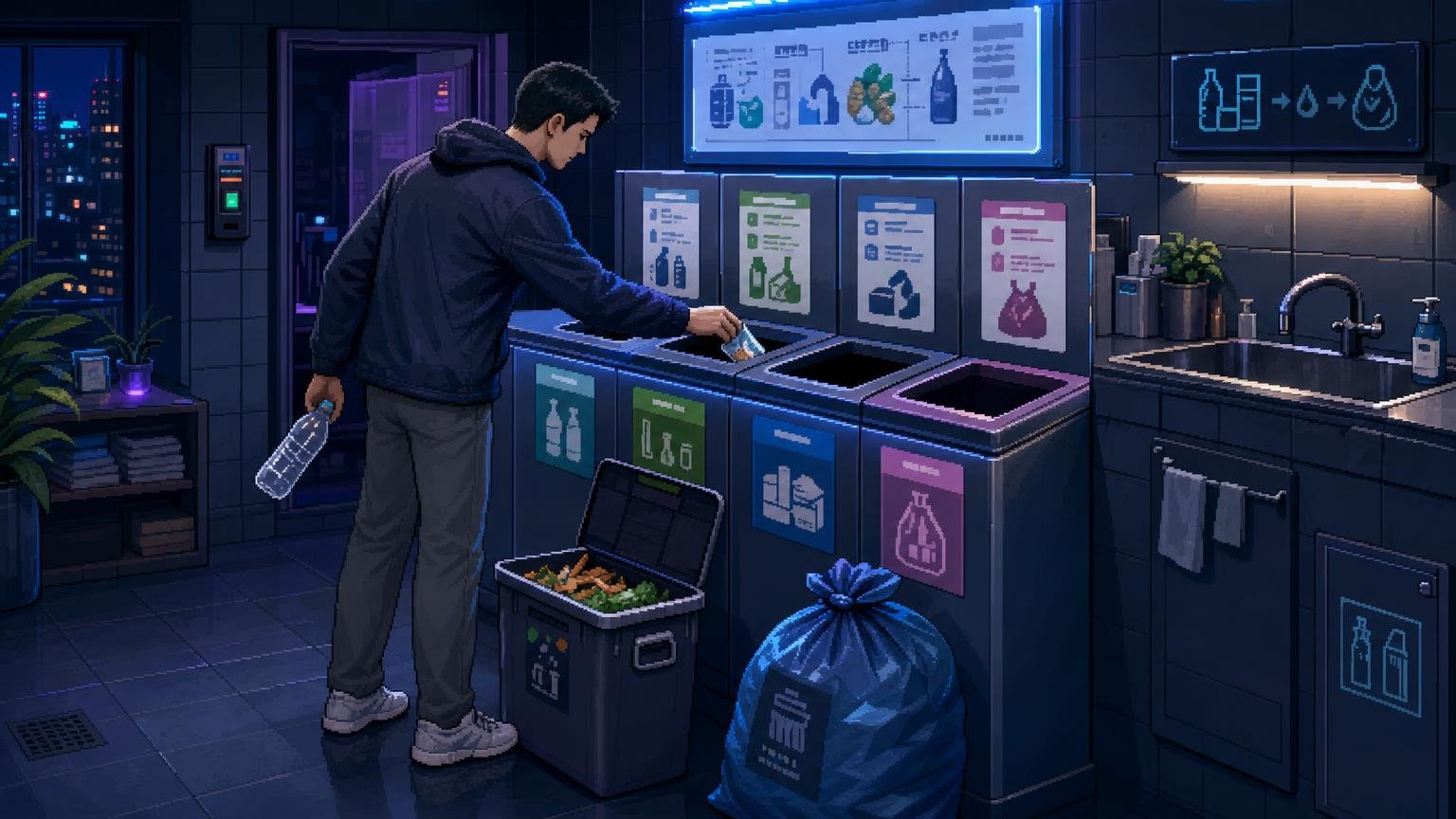
- Empty the container. Pour out leftover drinks, soup, sauce, or food.
- Rinse it when necessary. Containers with heavy food residue may be rejected as recycling.
- Separate different materials. Remove detachable lids, labels, pumps, or other parts when the local guide requires it.
- Flatten suitable packaging. Flatten cardboard and large plastic packaging to save space.
- Follow the collection point’s labels. Do not combine materials just because they are all plastic-looking.
Clear PET beverage bottles may have a separate collection stream in some locations. If your building has a dedicated clear-bottle container, use it rather than the general plastic section.
Paper contaminated with food, used tissues, and heavily soiled paper products generally do not belong with clean paper recycling. When an item is made from several materials and cannot be separated, check the official waste guide rather than guessing.
Special items: what not to put in the normal bins
Bulky waste
Furniture, mattresses, large appliances, and other bulky items normally require a report, sticker, or collection booking through the local district. Fees and procedures vary. Never leave a chair, suitcase, fan, or appliance beside the ordinary waste area without checking the local process.
Batteries and fluorescent lamps
Use dedicated collection boxes where available. Do not put loose batteries or fluorescent lamps into an ordinary garbage bag because they can create safety problems during collection and processing.
Medicine
Unused or expired medicine may have a designated collection route, such as a collection box at a pharmacy or public facility. Use the local waste guide to find the correct location instead of flushing medicine or mixing it with ordinary waste.
Small electronics
Small electronic devices may be accepted at a dedicated collection point or through a local free-collection service. The available route depends on the item and district.
Which method fits your accommodation?
- Hotel: Put room waste in the room bin or ask housekeeping. Do not carry hotel waste to a residential collection point unless staff tells you to.
- Hostel or guesthouse: Use the shared bins and recycling stations provided by the property. Ask staff if labels are unclear.
- Short-term rental: Follow the host’s instructions exactly, especially for food waste, collection times, and standard bags.
- Apartment or officetel: Look for a designated recycling and food-waste area. Building rules often matter more than general tourist advice.
- Camping or outdoor day trip: Take your waste with you if no clearly marked disposal facility is provided. Do not place household waste into a park or street bin.
How to check the local rule in English or with a translation tool
The Ministry of Climate, Energy and Environment operates the Household Waste Separation and Disposal Website. It provides item-by-item disposal information, local disposal methods, and nearby collection points. The service is primarily in Korean, so you may need browser translation or help from your accommodation.
Search for the item first, then select the relevant city, county, or district where possible. This is especially useful for batteries, medicine, electronics, clothing, bulky waste, and confusing packaging.
Common mistakes and quick fixes
- You bought the wrong standard bag: Ask the store or accommodation whether the bag is for the correct district. Do not assume all Korean standard bags are interchangeable.
- You cannot find the recycling area: Look for a basement, parking-level collection room, or a fenced area beside the building. Ask for 재활용품 버리는 곳.
- The food-waste machine is locked: Ask the building manager or host whether a card, key, tag, or separate bag is required.
- The collection area has no English: Take a photo of the labels and ask your host to identify the correct section.
- You are leaving before collection day: Ask the accommodation to dispose of the final bag rather than leaving it outside early.
- You are unsure whether something is recyclable: Search the item on the national waste guide. Guessing is more likely to contaminate the recycling stream.
FAQ
Do foreigners need a Korean phone number to throw away trash?
No Korean phone number is normally needed for basic sorting and putting waste in the correct local collection area. However, some local online reporting or booking services may have their own requirements. Ask your accommodation to help with bulky waste or special collection bookings.
Can I buy a standard garbage bag at any convenience store?
Standard bags are commonly sold at convenience stores and supermarkets, but stock, sizes, and district availability can differ. Ask for 종량제봉투 and confirm that it is for the district where you are staying.
Can I put food waste in an ordinary garbage bag?
Usually not. Use the designated food-waste bag, container, or machine required by your building or district. Remove packaging, bones, shells, and other non-food items first.
Are all plastic items recyclable?
No. Clean, accepted plastic containers may be recyclable, while composite, contaminated, or difficult-to-separate items may belong in ordinary waste. Search the item on the official waste guide when in doubt.
What should I do with a takeaway cup?
Empty it and separate the cup, lid, straw, sleeve, and leftover contents according to the collection labels. If the cup is heavily contaminated or made from mixed materials that cannot be separated, check the local guide.
Can I leave trash outside at any time?
No. Many areas set specific disposal days and hours. Leaving waste outside early can cause collection problems or be treated as improper disposal. Follow the timetable given by your building or district.
What if I am staying in Korea for only a few days?
Hotels and many hostels handle guest waste through their own system. For a rental apartment, ask the host where to put ordinary waste, food waste, and recycling before your first disposal. This is the quickest way to avoid using the wrong bag or collection point.
Official Information
- Ministry of Climate, Energy and Environment: Household Waste Separation and Disposal Website
- Household Waste Separation Website: How the local and item search works
- Seoul Metropolitan Government: Waste Disposal Information for Foreign Residents
- Seoul Metropolitan Government: Food-Waste Separation Guidance for Foreign Residents