
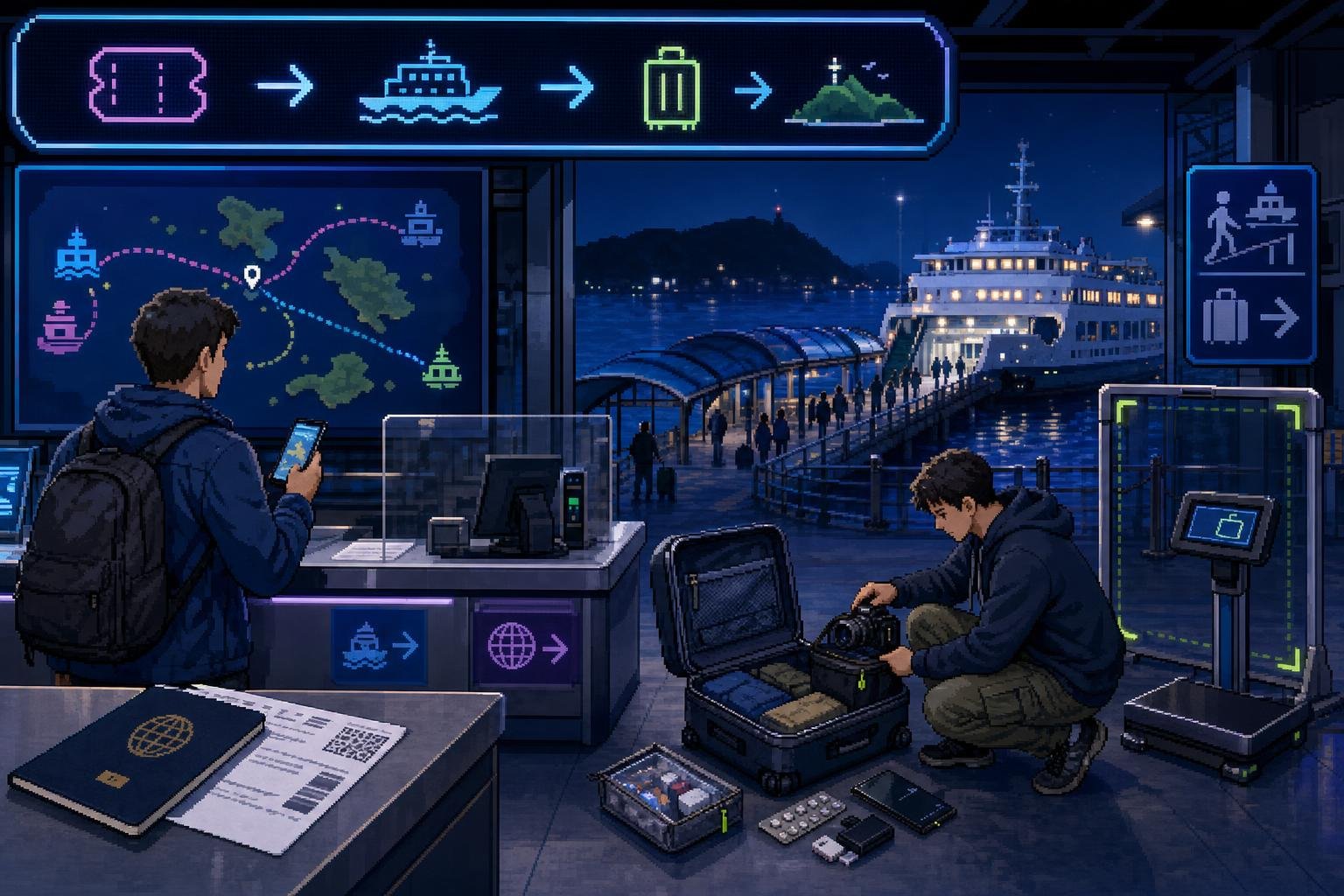
Taking a ferry to Jeju, Ulleungdo, Hongdo, Heuksando, Baengnyeongdo, or a smaller coastal island is possible as a foreigner, but the process is less standardized than booking a train or domestic flight. The most important details are the departure port, the ferry operator, the language of the booking page, and whether the sailing uses a fast passenger ship or a larger vehicle ferry.
This guide focuses on the practical problem: how to find a bookable sailing, what information to prepare, what happens at the terminal, and how to handle luggage without being caught by route-specific rules.
At a glance
| What you need | Practical advice |
|---|---|
| Identification | Carry your original passport. Domestic ferry operators and terminals may check it when issuing or checking a boarding pass. |
| Booking details | Prepare the passenger’s passport spelling, date of birth, nationality, contact details, and travel date. |
| Where to book | Use the official national passenger-ship booking system, the operator’s website, or a reputable English-language intermediary if the route is listed. |
| Payment | Do not assume every Korean ferry website accepts an overseas card. Check the payment screen before relying on an online booking. |
| Arrival time | Arrive early for ticket collection, identity checks, luggage handling, and walking to the correct boarding gate. The exact cutoff varies by terminal and operator. |
| Luggage | Rules vary. Some routes publish weight and size limits, while others handle baggage through the operator or terminal separately. |
1. Identify the exact ferry route first
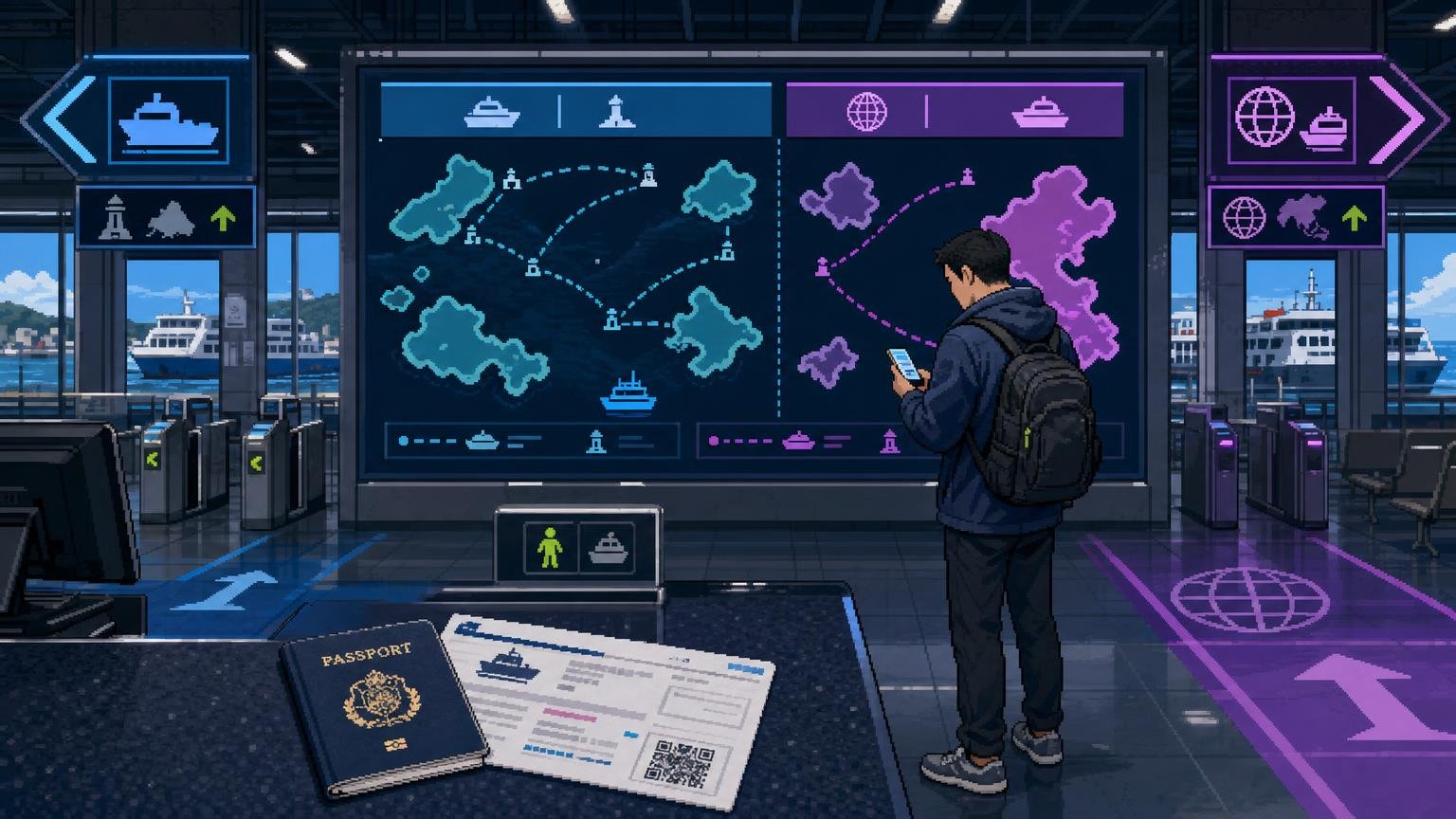
Search for the island and the mainland departure port together. For example, look for “Mokpo to Jeju,” “Wando to Jeju,” “Mukho to Ulleungdo,” or “Incheon to Baengnyeongdo.” The island name alone is not enough because one island may have more than one port, and the same region may have separate coastal and international ferry terminals.
For Jeju and the southwestern islands, the Korea Tourism Organization lists departure points including Incheon, Mokpo, Goheung, Wando, Jindo, and other coastal terminals. Its route information also warns that schedules can differ from the published overview, so use it as a route-finding tool and then confirm the sailing with the responsible operator.
2. Choose the best booking method
Option A: Official passenger-ship booking system
The national coastal ferry booking service operated through the Korea Shipping Association is the best starting point for many domestic island routes. Search by departure, arrival, date, and passenger type, then check which operator is selling the sailing.
The system was redesigned so travelers can book through a web browser without needing a separate app. However, the booking experience and available payment methods may still differ by operator. If the website asks for Korean-only authentication or rejects your payment card, do not keep repeating the same transaction. Check the ferry company’s own booking page or contact the operator.
The Incheon Port Authority states that the national booking link can be used for domestic passenger ships and that ticket quantities and booking conditions may vary by operator. This is important for groups: a route may allow a different number of tickets for members and non-members.
Option B: Book directly with the ferry operator
Direct booking is useful when the national system does not clearly show the route, when you need a vehicle or bicycle, or when you want to confirm a cancellation or baggage policy. Some operators provide English reservation pages, while others use Korean-only websites with separate telephone support or terminal ticket counters.
For example, Seaworld Express Ferry’s official site provides online reservation, booking lookup, cancellation, card-payment, schedule, and boarding-procedure sections. The site is useful for checking current operations on routes such as Mokpo–Jeju and Jindo–Jeju, but its interface and notices may not all be available in English.
Option C: Use an English-language intermediary
Some larger or tourist-oriented ferry routes appear on English-language booking platforms. This can be easier when the operator’s website is Korean-only, but compare the final departure terminal, passenger details, payment currency, amendment rules, and luggage conditions with the operator before paying.
An intermediary is not a substitute for checking the operator’s current notice. Weather cancellations, vessel changes, maintenance, and seasonal timetable changes are normally controlled by the ferry company.
3. Prepare the passenger information correctly
Use the passenger’s name exactly as shown on the passport. Ferry tickets may be connected to passenger identification, so a nickname, missing middle name, or reversed date of birth can create a problem at the terminal.
Have these details ready:
- Full English name as printed in the passport
- Nationality
- Date of birth
- Passport number, if requested by the operator
- Mobile number or contact information
- Travel date and return date, if booking a round trip
For a domestic route, the passport is used as identification rather than as an international immigration document. You should still carry it to the terminal because the ferry company or terminal may require an identity check before boarding. A photocopy or passport photo on your phone may not be accepted in place of the original.
4. Check the payment and confirmation carefully
A booking that reaches the passenger-information page is not necessarily a completed ticket. Confirm that you receive a payment confirmation, reservation number, or issued ticket. Save a screenshot and keep the confirmation email or booking page available offline.
Foreign-card acceptance is not consistent across Korean coastal ferry websites. Some operator sites provide a card-payment function, while another route may require a Korean payment method, telephone reservation, bank transfer, or payment at the terminal. Because this varies by company and sailing, check the actual payment page rather than assuming that Visa or Mastercard will work.
If the site does not clearly confirm your booking, contact the operator before travelling to the port. Avoid making multiple payments while an earlier transaction is still pending.
5. What to do at the ferry terminal
Step 1: Go to the correct terminal
Large port cities can have separate international, coastal, and vehicle-ferry facilities. Incheon, for example, has different terminals for international ferries and domestic coastal ferries. Check the terminal name in Korean and allow extra time if you are transferring from a bus or train.
Step 2: Find the ticket counter or boarding-pass desk
Even with an online reservation, you may need to exchange the reservation for a boarding pass at the terminal. Present your passport and booking information. The exact procedure depends on the terminal and operator.
Step 3: Confirm the gate and boarding time
After receiving the boarding pass, check the departure gate, vessel name, and boarding time. Do not rely only on the original booking time if the operator has posted a same-day schedule notice.
Step 4: Pass the boarding gate with your passport
Domestic coastal ferry terminals may check both the boarding pass and identification at the gate. The Incheon Port Authority states that passengers without identification may be refused boarding, and that passengers must reach the gate before the published cutoff.
For a first ferry trip, arriving around 60–90 minutes before departure is a sensible buffer, especially if you need to exchange a reservation, ask about baggage, or find a terminal that is unfamiliar to you. This is practical planning advice, not a universal operator rule. The actual ticketing and gate-closing times are route-specific.
6. How to handle luggage
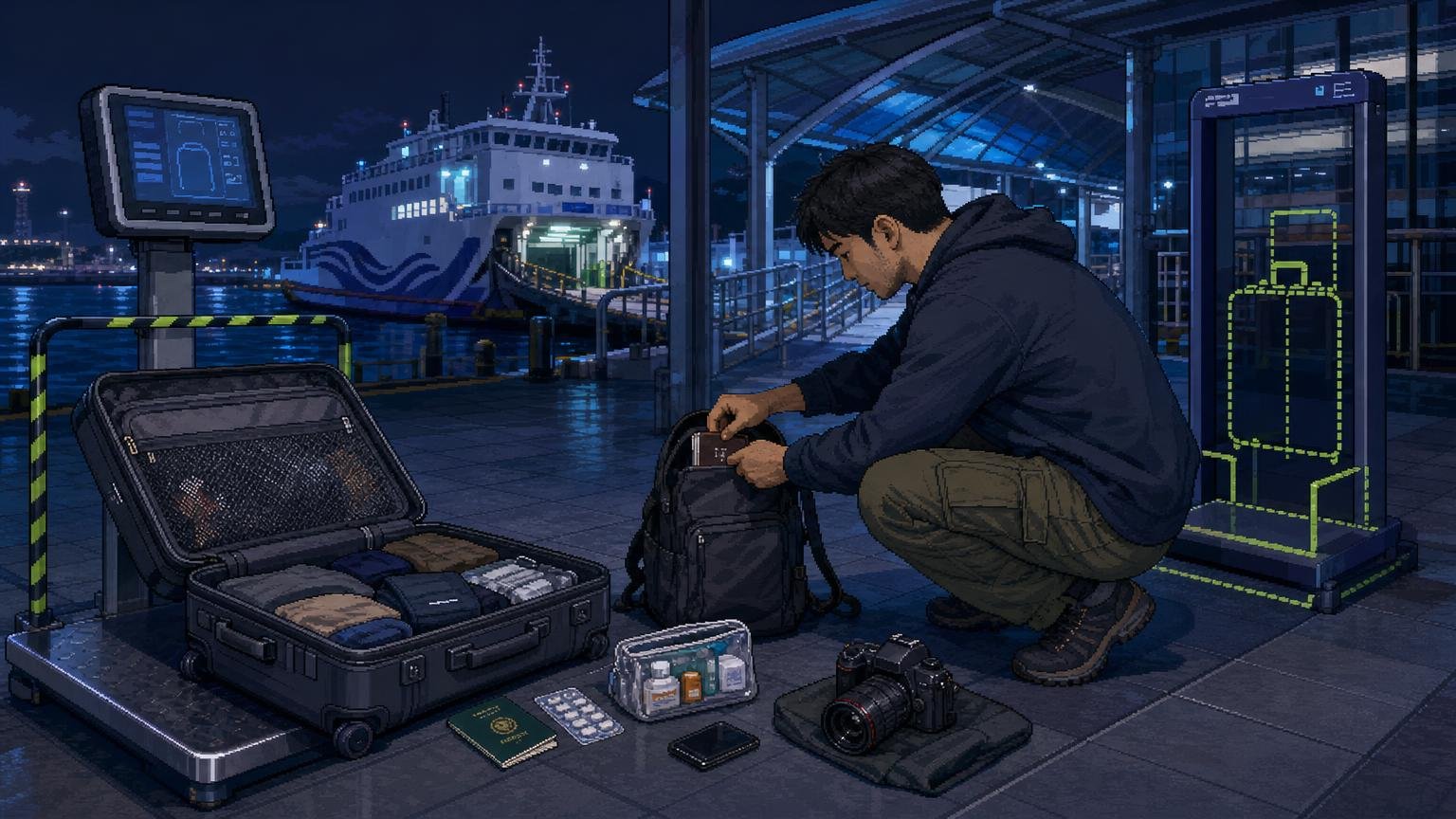
Do not assume that every ferry uses airline-style checked baggage. Some ships let passengers carry luggage into the passenger area, some terminals offer a separate baggage service, and some routes publish their own weight or size limits.
As one example of a route-specific rule, Incheon’s coastal-ferry information publishes a limit of 15 kilograms per person and a combined length, width, and height of 1.5 metres for certain Ongjin coastal services. The same page says that passengers exceeding the limit may be refused carriage. This should not be treated as a universal rule for every island ferry.
Before departure, ask the operator or ticket counter:
- Can I bring a large suitcase into the passenger cabin?
- Is baggage checked, stored separately, or kept beside the passenger?
- Is there a weight or size limit?
- Is a bicycle, camping item, surfboard, or stroller accepted?
- Is there an extra charge for oversized luggage?
- Where do I collect baggage after arrival?
Keep your passport, wallet, phone, medication, power bank, camera, and other valuables in a small personal bag. The Incheon Port Authority advises passengers to hand-carry valuables and fragile items and to label baggage with a name, address, and destination if it is checked.
Sharp objects, chemicals, flammable products, and other restricted items may be subject to separate rules. If you are carrying camping fuel, tools, large batteries, fishing equipment, or sports gear, contact the operator before going to the terminal.
7. Vehicles, bicycles, and special items
A ferry that carries cars is not automatically the best choice for a passenger travelling with a bicycle or oversized luggage. Vehicle loading may use a separate entrance and earlier check-in time. Fast passenger ships may not accept bicycles, while a cargo-capable vessel may do so under different conditions.
Book vehicles and bicycles as a separate service when required. Do not arrive with a bicycle or motorbike assuming it can be added at the passenger counter. The operator may need the vehicle type, size, registration information, or advance space reservation.
Which booking approach suits you?
- Independent traveler comfortable with Korean websites: Start with the national passenger-ship booking system and compare the result with the operator’s current notice.
- Traveler who needs English support: Look for an English-language intermediary or contact the ferry company before paying. Confirm the exact terminal and passenger information.
- Traveler with a large suitcase: Ask about baggage limits before booking, especially on smaller islands and fast passenger ships.
- Traveler with a bicycle, car, or camping equipment: Contact the operator directly and book the cargo or vehicle portion separately if required.
- Traveler with a tight same-day connection: Avoid relying on the last possible sailing. Ferry times can change because of weather, vessel maintenance, or operator notices.
Common mistakes and troubleshooting
“I booked the island, but the terminal is wrong.”
Check the departure port, not just the island name. Incheon’s international ferry terminal and domestic coastal ferry facilities are separate, and other port cities can also have multiple passenger terminals.
“The booking page accepted my details but I have no ticket.”
Look for a payment result and reservation number. If neither is available, contact the operator before making another payment.
“My foreign card does not work.”
Try the operator’s direct page, an English-language intermediary, or terminal purchase if advance booking is still available. Payment methods are route-specific, so there is no single foreign-card rule for all domestic ferries.
“The schedule has changed after I booked.”
Check the operator’s same-day notice and contact the booking provider. Do not travel to the terminal based only on an old screenshot or a third-party timetable.
“My suitcase is too large.”
Ask whether the vessel has baggage handling or whether you need to pay for separate cargo transport. A published baggage limit on one route does not guarantee the same allowance on another route.
What may be different
- Schedules can change by weekday, month, season, vessel maintenance, or weather.
- Fares, fuel surcharges, cabin types, and vehicle charges vary by operator and sailing.
- Foreign-card support and phone-verification requirements differ between booking websites.
- Some routes require advance reservation, while others may sell tickets at the terminal until capacity is reached.
- Boarding-pass collection deadlines and gate-closing times are not identical across terminals.
- Luggage limits and baggage-handling services vary by vessel and destination.
- English-language support may be available for one operator or telephone line but not for every terminal interaction.
FAQ
Do foreigners need a Korean phone number to take a domestic ferry?
Not necessarily, but a booking website may request a contact number or impose its own verification process. If online booking requires Korean authentication, try the operator’s direct reservation method or ask whether terminal purchase is available.
Do I need my passport for a ferry within Korea?
Carry the original passport. Korea Tourism Organization guidance for domestic island ferries states that a passport or personal identification is required for boarding, and terminal authorities may check identification with the boarding pass.
Can I buy a ferry ticket at the port?
Sometimes, but it depends on capacity, route, date, and operator. Popular departures, weekends, holidays, and vehicle spaces can sell out. Treat walk-up purchase as a backup rather than a guaranteed option.
Can I take a normal large suitcase?
Often yes, but the answer depends on the vessel and route. Confirm whether the suitcase is carried into the passenger area, checked separately, or subject to a weight and size limit.
Are domestic island ferries affected by weather?
Yes. Operators may delay, alter, or cancel sailings because of weather or sea conditions. Check the operator’s current notice on the day of travel and avoid scheduling an important flight or international connection immediately after a ferry crossing.
Is Jeju treated like an international ferry destination?
A mainland–Jeju sailing is a domestic route, so it does not normally involve international immigration at the departure port. You should still bring your passport because passenger identification and boarding procedures apply.
Official Information
- Korea Shipping Association: Passenger-Ship Booking System — Search and book domestic coastal ferry routes.
- VISITKOREA: Getting to Jeju Island — Route examples, departure terminals, identification guidance, and links to ferry operators.
- Incheon Port Authority: Coastal Ferry Booking — Official booking link and booking quantity guidance.
- Incheon Port Authority: Coastal Ferry Boarding Notes — Example boarding-gate and baggage guidance for Incheon coastal services.
- Incheon Port Authority: Cargo and Car Ferries — Example baggage limits and information about bicycles, vehicles, and cargo-capable vessels.
- Seaworld Express Ferry — Operator booking, current schedule, cancellation, payment, and boarding-procedure pages.