
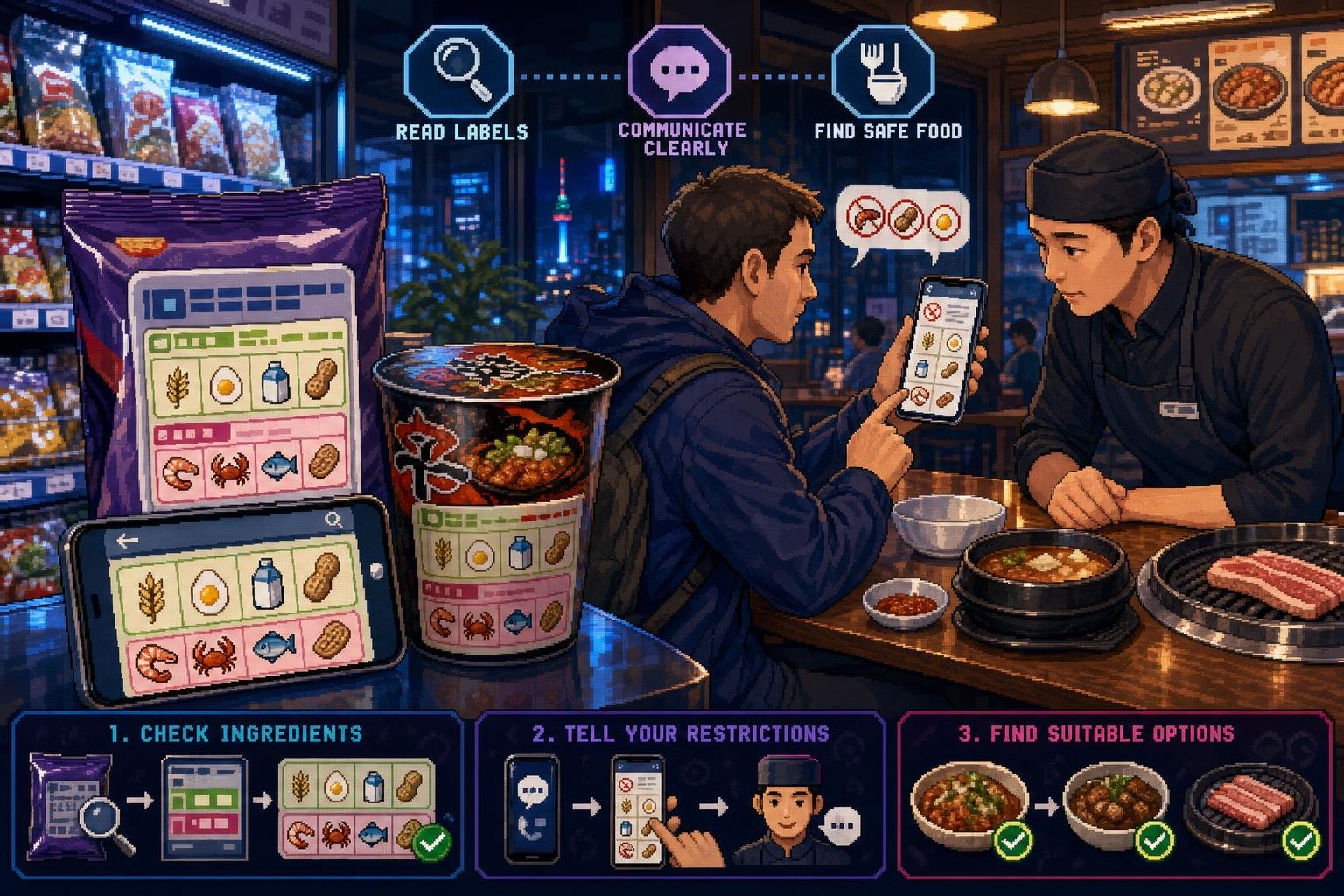
Dietary restrictions can be difficult to explain in Korea because an ingredient may be hidden in soup stock, seasoning, dipping sauce, kimchi, a processed meat product, or a garnish. A dish that appears vegetarian may contain fish sauce or meat broth, and a food described as “vegetable” may still include egg, milk, or soy sauce.
The safest approach is to separate three questions: what you cannot eat, whether even a small amount is dangerous, and whether shared equipment is a problem. Then communicate those points in simple Korean before ordering.
At a glance: the safest way to order
| Situation | What to do | Useful Korean |
|---|---|---|
| Food allergy | Name the ingredient and say that even a small amount is unsafe. | 저는 ___ 알레르기가 있어요. 조금도 먹으면 안 돼요. |
| Intolerance | Explain that the ingredient makes you ill, even if it is not an allergy. | 저는 ___을/를 먹으면 아파요. |
| Vegetarian or vegan diet | List what must be excluded instead of saying only “vegetarian.” | 고기, 생선, 해산물, 달걀, 우유를 먹지 않아요. |
| Religious restriction | Name the prohibited ingredients and ask about meat, alcohol, and preparation. | 돼지고기와 알코올이 들어가면 안 돼요. |
| Severe allergy or cross-contact concern | Ask whether the same pan, oil, knife, or grill is used. | 같은 조리도구를 사용하나요? |
What to say in Korean
Start with the exact ingredient
Use the ingredient name rather than a broad category whenever possible. Show the Korean word on your phone and say it slowly:
- Peanuts: 땅콩 (ttangkong)
- Tree nuts: 견과류 (gyeongwaryu)
- Milk: 우유 (uyu)
- Egg: 달걀 or 계란 (dalgyal or gyeran)
- Wheat: 밀 (mil)
- Gluten: 글루텐 (geulluten)
- Soy: 대두 or 콩 (daedu or kong)
- Fish: 생선 (saengseon)
- Shellfish: 조개류 (jogaeryu)
- Shrimp: 새우 (saeu)
- Crab: 게 (ge)
- Pork: 돼지고기 (dwaejigogi)
- Beef: 소고기 or 쇠고기 (sogogi or soegogi)
- Chicken: 닭고기 (dakgogi)
- Fish sauce: 액젓 (aekjeot)
- Alcohol: 술 or 알코올 (sul or alkol)
Use these short sentences
- “I have a ___ allergy.”
저는 ___ 알레르기가 있어요. (Jeoneun ___ allereugiga isseoyo.) - “I cannot eat ___.”
저는 ___을/를 먹지 못해요. (Jeoneun ___eul/reul meokji motaeyo.) - “Even a small amount is not okay.”
조금도 먹으면 안 돼요. (Jogeumdo meogeumyeon an dwaeyo.) - “Does this contain ___?”
이 음식에 ___이/가 들어가요? (I eumsige ___i/ga deureogayo?) - “Does the broth contain meat or seafood?”
육수에 고기나 해산물이 들어가요? (Yuksue gogi-na haesanmuri deureogayo?) - “Please leave out ___.”
___은/는 빼 주세요. (___eun/neun ppae juseyo.) - “Is this cooked in the same oil or pan?”
같은 기름이나 프라이팬에 조리하나요? (Gateun gireumina peuraipaene jorihanayo?) - “If you are not sure, please tell me.”
확실하지 않으면 말씀해 주세요. (Hwaksilhaji aneumyeon malsseumhae juseyo.)
Do not say only “vegetarian” or “no spicy food”
Dietary words can be understood differently. If you are vegetarian, specify whether you eat eggs, dairy, fish, or seafood. If you are vegan, say that you do not eat meat, fish, seafood, eggs, milk, butter, or other animal products. If you avoid pork for religious reasons, also ask about processed meat, broth, dumplings, and sauces.
For example, you can write:
저는 채식주의자입니다.
I am vegetarian.
고기, 생선, 해산물을 먹지 않습니다.
I do not eat meat, fish, or seafood.
육수와 소스에도 들어가면 안 됩니다.
They must not be used in the broth or sauce either.
For vegan travelers, add:
달걀, 우유, 버터도 먹지 않습니다.
I also do not eat eggs, milk, or butter.
How to read Korean food labels
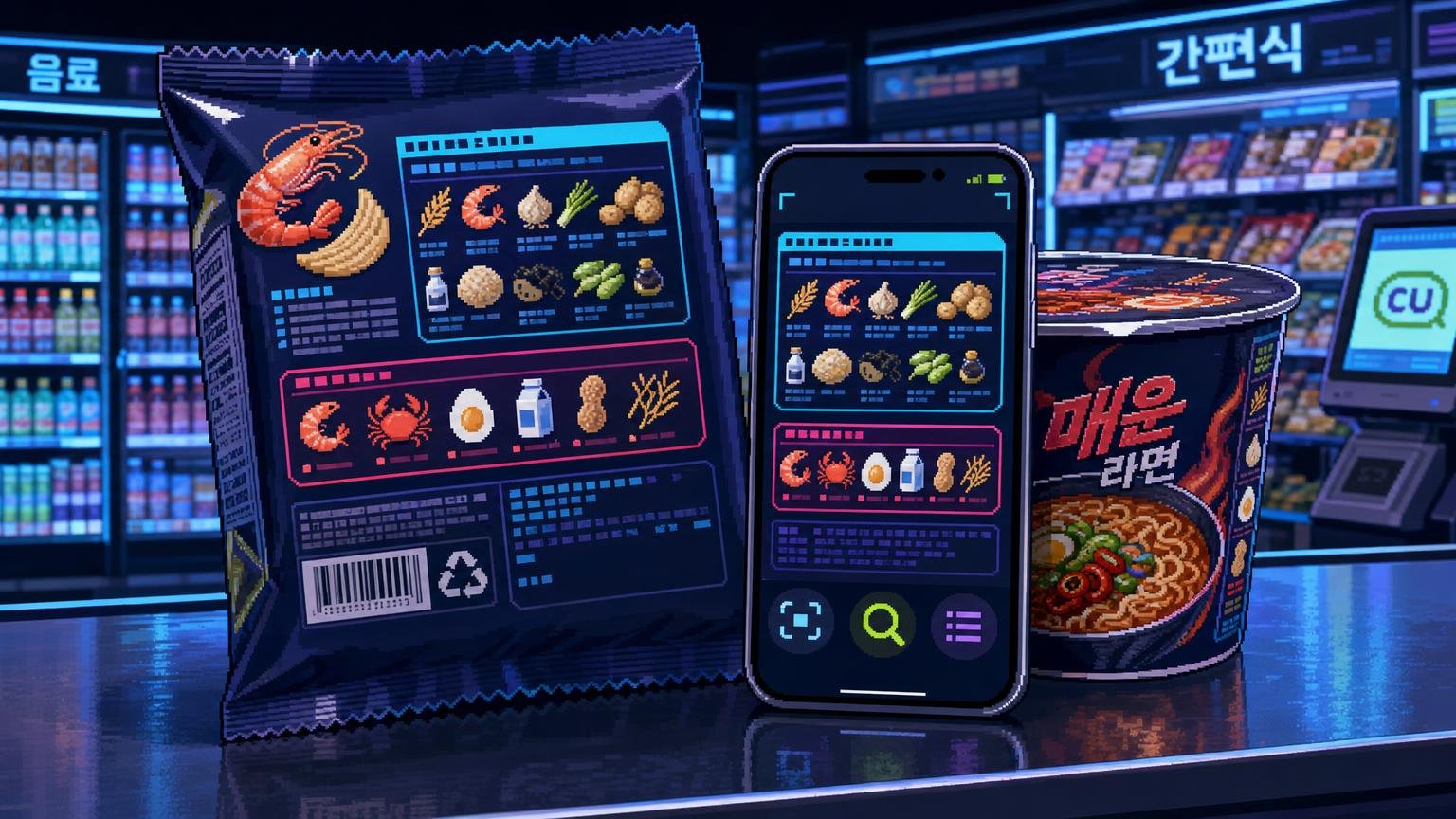
On packaged foods, look for the ingredient list, the allergen information near it, and any warning about possible mixing during manufacturing. Korea’s Ministry of Food and Drug Safety lists regulated allergens including eggs, milk, buckwheat, peanuts, soybeans, wheat, fish such as mackerel, crab, shrimp, pork, peach, tomato, walnuts, chicken, beef, squid, clams, pine nuts, and sulfur dioxide in specified circumstances. The exact Korean wording on a package is more important than a translated product name.
Words that may reveal hidden ingredients
| Check this word | Why it matters |
|---|---|
| 원재료명 | Ingredient names or raw materials. |
| 알레르기 유발물질 | Allergen information. |
| 함유 | Contains. |
| 대두 | Soybean; common in soy sauce, pastes, and processed foods. |
| 밀 | Wheat; may appear in noodles, dumplings, sauces, and soy sauce. |
| 우유 | Milk; also check dairy-based powders and cheese ingredients. |
| 난류 | Eggs. |
| 새우, 게, 조개류 | Shrimp, crab, and shellfish. |
| 돼지고기, 소고기, 닭고기 | Pork, beef, and chicken. |
| 혼입될 수 있음 | May be mixed in or may contain traces because of shared manufacturing. |
Read the full ingredient panel rather than relying on a front-of-package phrase such as “vegetable,” “original,” or “plain.” For instant noodles, snacks, sauces, convenience-store meals, and desserts, check the seasoning packet and every separate component. A product can have more than one package inside.
Restaurant menus may also show allergen information near a dish, on a separate information sheet, or through an online ordering page. However, not every small restaurant provides detailed English information, and a menu symbol may not explain whether the ingredient is in the broth or sauce. When the consequence of an error is serious, ask staff directly.

How to choose a suitable restaurant
1. Decide how much certainty you need
- Preference or mild intolerance: A restaurant that can remove the ingredient may be enough, but confirm sauces and broth.
- Strict vegetarian or vegan diet: Choose a restaurant with a clearly described plant-based menu and ask about fish sauce, shrimp paste, egg, and dairy.
- Food allergy: Ask about hidden ingredients and preparation equipment before ordering.
- Severe allergy or anaphylaxis risk: Prefer a restaurant that can communicate clearly and do not order if staff cannot confirm the ingredients or cross-contact risk.
2. Search using the right Korean terms
When searching map apps or restaurant websites, combine the food type with a dietary term:
- 비건 — vegan
- 채식 — vegetarian or plant-based eating
- 알레르기 — allergy
- 글루텐 프리 — gluten-free
- 할랄 — halal
- 무첨가 — without added ___; check exactly what is omitted
Search results are a starting point, not proof that a restaurant is safe. Check the current menu or contact the branch before going, because menus, staff, ingredients, and opening arrangements can differ by location.
3. Ask before sitting down when possible
Show your written explanation before ordering. Ask whether the kitchen can prepare a dish without the ingredient and whether the same cooking oil, pan, grill, knife, or cutting board is used. If the staff seem uncertain, choose a simpler alternative or another restaurant rather than trying to negotiate after the food arrives.
4. Choose dishes with fewer hidden components
Simple rice, plain grilled ingredients, fresh fruit, and clearly labeled packaged foods can be easier to verify than stews, sauces, marinades, dumplings, mixed noodles, and fried foods. This is not a guarantee of safety: ask about seasoning, broth, and cooking equipment each time.
Common Korean dishes that need extra questions
- Bibimbap: Check the egg, meat, gochujang, sesame oil, and any sauce. The vegetables alone do not tell you whether the dish is suitable.
- Gimbap: Ask about ham, egg, crab stick, tuna, mayonnaise, and seasoning in the rice.
- Stews and soups: Ask what the broth is made from. Meat, anchovy, shellfish, or fish sauce may be used even when the visible ingredients are vegetables.
- Kimchi: Recipes vary. Ask whether fish sauce, salted shrimp, or other seafood products are included.
- Jjajangmyeon: The sauce commonly contains pork, and the noodles may contain wheat.
- Jjamppong: It usually requires a seafood and broth check.
- Fried food: Ask whether the same oil is used for shrimp, meat, or other allergens.
- Desserts and drinks: Check milk, butter, egg, nut toppings, syrups, and flavored powders.
What to do if the restaurant cannot confirm
Do not treat a smile, a nod, or the phrase “probably not” as confirmation. Politely ask again using the written ingredient name. You can point to the specific item on your card or phone and ask the staff to check with the cook.
If the answer remains unclear, use one of these alternatives:
- Choose a restaurant with a dedicated vegan, vegetarian, gluten-free, or allergy-aware menu.
- Select a packaged food with a complete Korean ingredient label.
- Eat a food you have already verified rather than experimenting when the restriction is medically important.
- Ask a Korean-speaking companion, hotel staff member, or the Korea Travel Helpline for interpretation help.
The Korea Tourism Organization’s 1330 Travel Helpline provides travel information and interpretation support by phone and online chat. It can help with communication, but it cannot guarantee that a particular dish or restaurant is medically safe.
FAQ
Is “vegetarian” enough to explain my diet in Korea?
Usually not. Say which ingredients you avoid, including meat, fish, seafood, eggs, dairy, fish sauce, or meat broth. Korea Tourism Organization guidance also advises travelers to give detailed instructions rather than relying on a general dietary label.
Can I trust a dish described as vegetable?
No. Ask about the broth, sauce, seasoning, egg, dairy, fish sauce, shrimp paste, and cooking oil. The visible vegetables do not show every ingredient.
Are Korean packaged foods required to show allergens?
Korean food-labeling rules require regulated allergens to be identified on applicable packaged foods, and warnings may indicate possible mixing during manufacturing. Read the Korean ingredient panel and allergen section carefully, especially for imported or highly processed foods.
How do I explain a serious allergy?
Say the exact ingredient, say “조금도 먹으면 안 돼요” meaning “Even a small amount is not okay,” and ask about shared pans, oil, grills, knives, and cutting boards. If staff cannot confirm the answer, do not order that dish.
What if I cannot read the Korean label?
Use a translation tool to identify the ingredient list, but do not rely on a single translated word for a serious allergy. Compare the original Korean term with your prepared allergy card and ask staff to confirm any uncertain ingredient.
Can 1330 confirm whether a restaurant is safe for my allergy?
1330 can provide travel information and interpretation support, but the restaurant and kitchen remain responsible for confirming their ingredients and preparation. Use the service to help communicate, not as a medical safety guarantee.
Official Information
- Ministry of Food and Drug Safety: Food Labeling System — regulated allergen labeling and packaged-food information.
- VISITKOREA: Tips for Vegetarians — practical ordering advice and examples of hidden meat or seafood ingredients.
- VISITKOREA: 1330 Travel Helpline and Complaint Center — travel information, interpretation, and online chat support.