
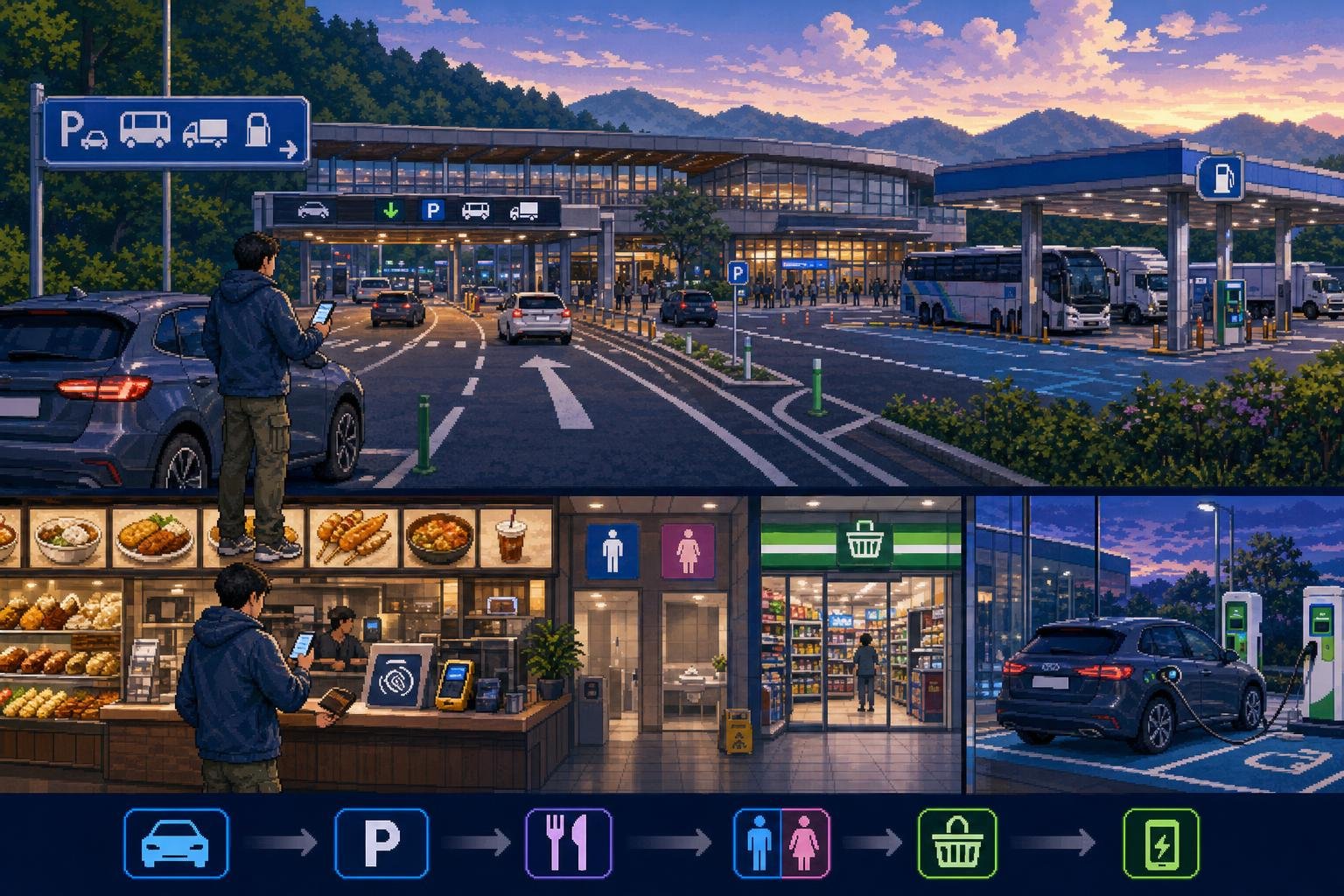
If you are driving between Korean cities, a highway rest area is where you should stop for food, fuel, a toilet break, or a short rest. The main difficulty for international visitors is not finding a building—it is knowing which services are available, how the directional names work, and what to do when a location is crowded or a payment method does not work.
This guide focuses on using a Korean 휴게소 during a self-drive road trip. It is different from a small 졸음 쉼터, or drowsy rest area, which is mainly a smaller pull-off area for taking a short break.
At a glance
| What you need | What to look for | Practical note |
|---|---|---|
| Toilet break | 화장실 or restroom symbols | Toilets are a standard reason to stop, but queues can be long during holidays. |
| Food | 푸드코트, 식당, 간식, 편의점 | Expect Korean meals, snacks, drinks, and sometimes regional specialties. |
| Fuel | 주유소 | Check whether the station is self-service or staffed before leaving the car. |
| Electric charging | 전기차 충전소 | Availability, connector type, payment process, and waiting time vary by location. |
| Family facilities | 수유실, 가족화장실 | Baby-care facilities are available at some locations, not every rest area. |
| Car problem | 경정비소 or service corner | Minor maintenance may be available at selected locations; do not assume every stop has a repair shop. |
How to enter and leave a highway rest area
1. Choose a stop on the correct side of the expressway
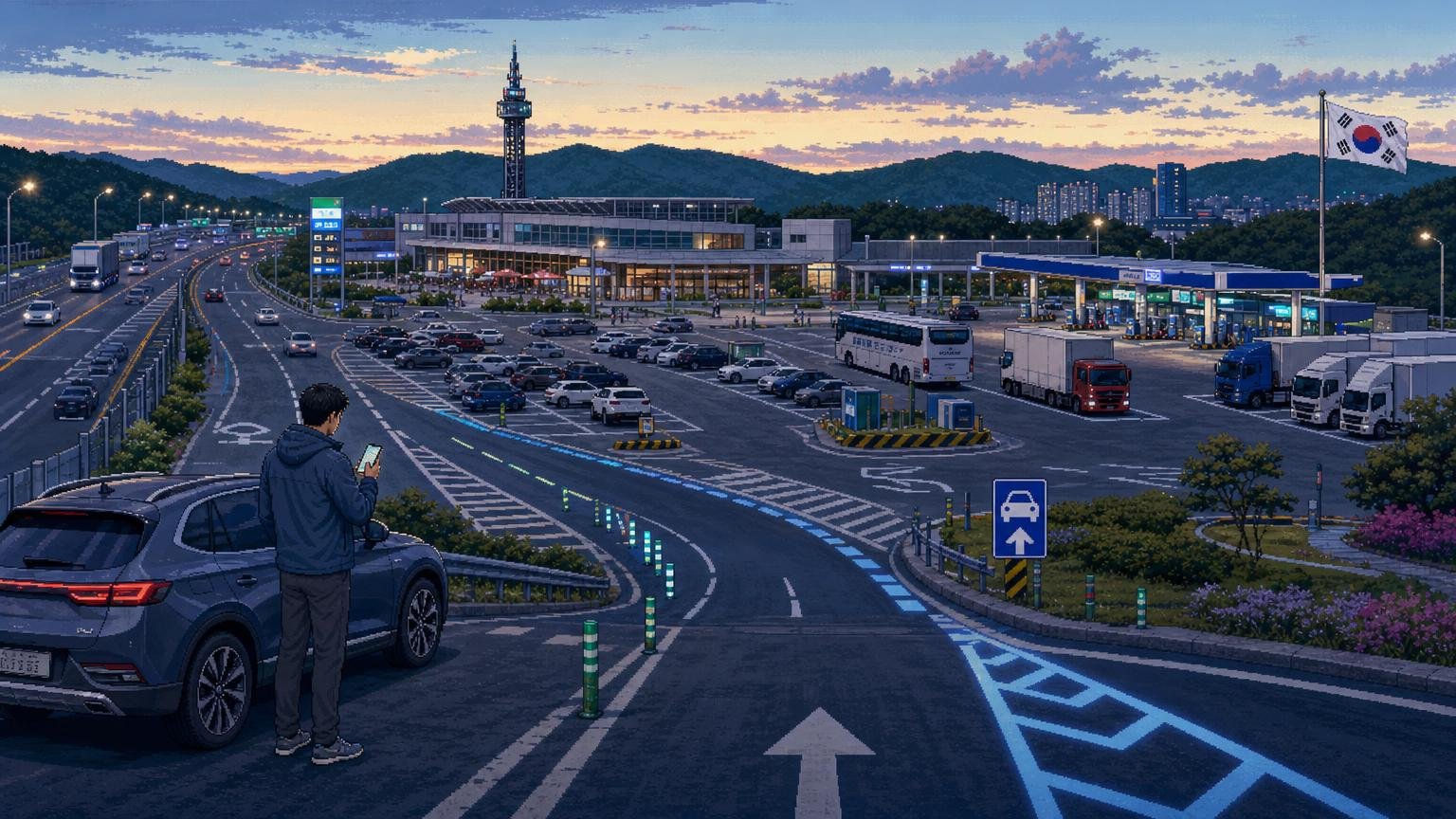
Korean rest areas are normally separated by travel direction. Their names often include a direction in parentheses, such as 서울, 부산, 강릉, or 목포. This does not describe the city where you are currently driving; it identifies the direction or side associated with that facility.
Before turning in, check the sign and your navigation app. Once inside, you generally cannot use the rest area to change to the opposite direction of the expressway.
2. Follow the entrance lane and park
Slow down early and follow the large rest-area sign. Parking areas may be divided between ordinary cars, buses, trucks, accessible spaces, and electric vehicles. Park only in a marked space and remember where you left the car, especially at a large or busy stop.
3. Check the building layout before buying anything
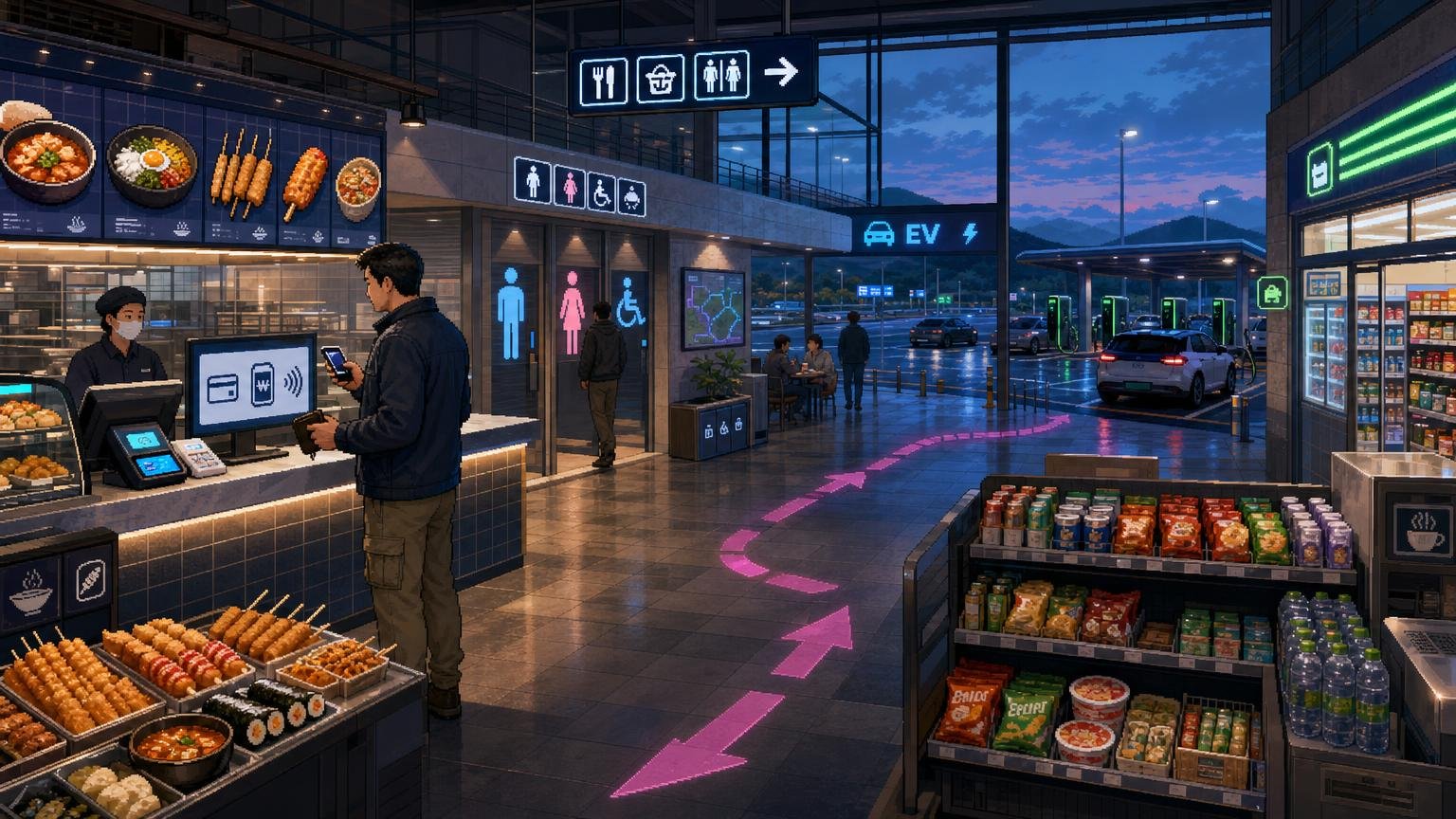
Many larger rest areas place the toilets, food court, snack counters, convenience store, and customer-service area in one main building. Fuel stations and electric chargers are usually in a separate part of the site. Look for pictograms if you cannot read the Korean signs.
4. Keep your parking area and direction in mind
When you finish, return to the car park rather than walking toward another road entrance. If you are traveling with others, set a meeting point near the main entrance or agree on a departure time.
What you can usually find at a 휴게소
Toilets and basic rest facilities
Public toilets are one of the most reliable facilities at a major highway rest area. Larger locations may also have accessible toilets, family facilities, baby-care rooms, or rest areas. The Korea Expressway Corporation’s rest-area directory lets you filter locations by facilities such as nursing rooms, pharmacies, sleeping rooms, showers, laundry rooms, farm-product shops, and pet play areas.
Food courts and Korean road-trip snacks
The main food court usually works more like a self-service cafeteria than a traditional restaurant. Choose a counter, order and pay, collect your food when called or displayed, and return trays to the designated area if instructed.
Common rest-area snacks include hotteok, sausage-and-rice-cake skewers, potato snacks, fried foods, drinks, and regional specialties. Menus may include photos, but English explanations are not guaranteed. If you have allergies or strict dietary requirements, use a translation app and ask staff before ordering rather than relying only on a dish name.
Convenience stores and cafés
Many major rest areas have a convenience store and one or more cafés. These are useful for bottled water, drinks, packaged food, tissues, and simple travel supplies. Individual tenants may have different operating hours and payment policies, particularly late at night.
Fuel stations
Rest-area fuel stations may offer gasoline, diesel, and sometimes other fuel types, but the exact selection depends on the site. Korean fuel signs commonly identify gasoline with 휘발유 and diesel with 경유. Some stations are self-service; others have staff who assist with fueling.
If you are unsure, show the fuel type on your rental-car paperwork or ask the attendant before beginning. Fuel is sold by the liter. Keep the receipt if your rental company requires fuel documentation.
Electric-vehicle charging
Some rest areas have electric-vehicle charging stations, but you should not assume that every stop has an available charger or the connector you need. A charger may also be occupied, out of service, or temporarily unavailable. For a long drive, check your next charging option before the battery becomes low and keep a backup stop in mind.
Extra services
Selected rest areas offer services such as pharmacies, agricultural-product shops, pet areas, showers, sleeping rooms, laundry facilities, car washes, minor repair services, or truck-driver lounges. These are location-specific. Treat the official directory as a planning tool, then confirm the detail on the day if the service is important to your route.
How to pay at a highway rest area
Payment depends on the individual food counter, café, convenience store, fuel station, or charger. International cards are often usable at larger chains and modern terminals, but acceptance is not universal. A card may be declined because of the merchant’s terminal, the card issuer, offline processing, or a temporary network problem.
- Carry at least one backup payment method.
- Keep a small amount of Korean won for smaller snack counters or unexpected problems.
- For a rental car, confirm whether fuel or charging requires a separate payment process.
- Do not leave your card or phone at a counter while walking away; collect it after payment.
There is no single payment rule for every tenant, so ask 카드 돼요? (“Can I pay by card?”) if you are uncertain.
Planning a stop before you drive
Use your navigation app to search for 휴게소 along the route, but check the direction carefully. A search result may show a rest area on the opposite carriageway or a similarly named location in another direction.
For a more detailed facilities check, use the Korea Expressway Corporation’s official rest-area search. You can search by expressway and rest-area name and review listed facilities, telephone numbers, brand stores, service corners, and other location details.
What to do when the rest area is crowded
Rest areas become especially busy during Korean holiday travel periods, summer vacation weekends, and meal times. Parking may take longer than expected, and popular snack counters can have queues.
- Do not wait until the fuel warning light or low-battery warning appears before stopping.
- If the car park is full, follow staff directions instead of stopping in a driving lane.
- Allow extra time if you are meeting a timed tour, ferry, reservation, or airport pickup.
- Keep children close in the parking area and watch for cars moving slowly between spaces.
- Before leaving, check that everyone has returned and that phones, passports, wallets, and rental-car documents are with you.
Highway rest-area etiquette and safety
Do not stop on the expressway shoulder simply because you missed a rest-area entrance. Korea’s expressway guidance directs drivers to use a proper rest area or drowsy rest area for breaks; shoulder stopping should be reserved for emergencies.
Inside the facility, keep aisles clear, follow queue markings, and return to the correct car park. If you are tired, do not treat a quick coffee as a substitute for rest. Park safely and take a proper break before continuing.
Common mistakes and troubleshooting
“The name includes Seoul, but I am not going to Seoul.”
The word in parentheses usually indicates the travel direction or side of the road. Confirm the arrow and your route rather than interpreting the name as your destination.
“I found the rest area in the app, but it is on the other side.”
Rest areas are commonly direction-specific. If the map shows the opposite carriageway, continue to the next suitable stop instead of attempting an unsafe turn or exit.
“My foreign card did not work.”
Try another card or payment method, and ask the cashier whether cash is accepted. Smaller independent counters may not process every overseas card even when a nearby chain store does.
“The charger is listed, but it is occupied.”
Charging availability changes during the day. If your battery range allows it, continue to a backup location. Do not plan a long journey around only one charger without a second option.
“I cannot find the car.”
Take a photo of the parking section, nearby building entrance, or a distinctive sign before walking away. Large rest areas can look similar, particularly at night.
Which type of stop suits your trip?
- Short toilet break: Choose the next convenient rest area and avoid unnecessary detours.
- Meal stop: Use a larger rest area with a food court and allow time for queues.
- Family road trip: Check for nursing rooms, family facilities, and a comfortable seating area in advance.
- Electric vehicle: Confirm charger availability and have a backup location before setting out.
- Long-distance overnight drive: Prioritize a proper rest rather than repeatedly stopping only for coffee or snacks.
- Minor vehicle issue: Search for a rest area listing a service corner or repair facility, but contact the rental company for serious problems.
FAQ
What is a Korean highway rest area called?
It is called 휴게소, pronounced approximately “hyu-ge-so.” You may also see 졸음 쉼터, a smaller drowsy rest area intended for short breaks.
Can I use a highway rest area without buying food?
Yes. Rest areas are used for toilets, fuel, charging, walking, and resting as well as eating. You do not need to purchase a meal to use the public facilities.
Are Korean highway rest areas open all night?
Do not assume that every shop or facility is open 24 hours. The site may remain accessible while individual restaurants, cafés, counters, or services have different hours.
Can I find an English menu?
Some larger chains and popular counters may offer pictures or multilingual information, but English is not guaranteed. A translation app and a photo-based menu can help.
Are electric chargers available at every rest area?
No. Charging facilities vary by location, and a listed charger may be occupied or unavailable. Check the specific rest area and keep a backup charging plan.
Can I turn around to reach a rest area on the other side?
No. Treat the opposite-direction rest area as a different facility. Continue safely and use a later stop or exit that matches your route.
What should I do if I lose something?
Return to the counter or area where you last had it and contact the rest area or Korea Expressway Corporation lost-property service as soon as possible. Note the rest-area name, direction, approximate time, and exact location.