
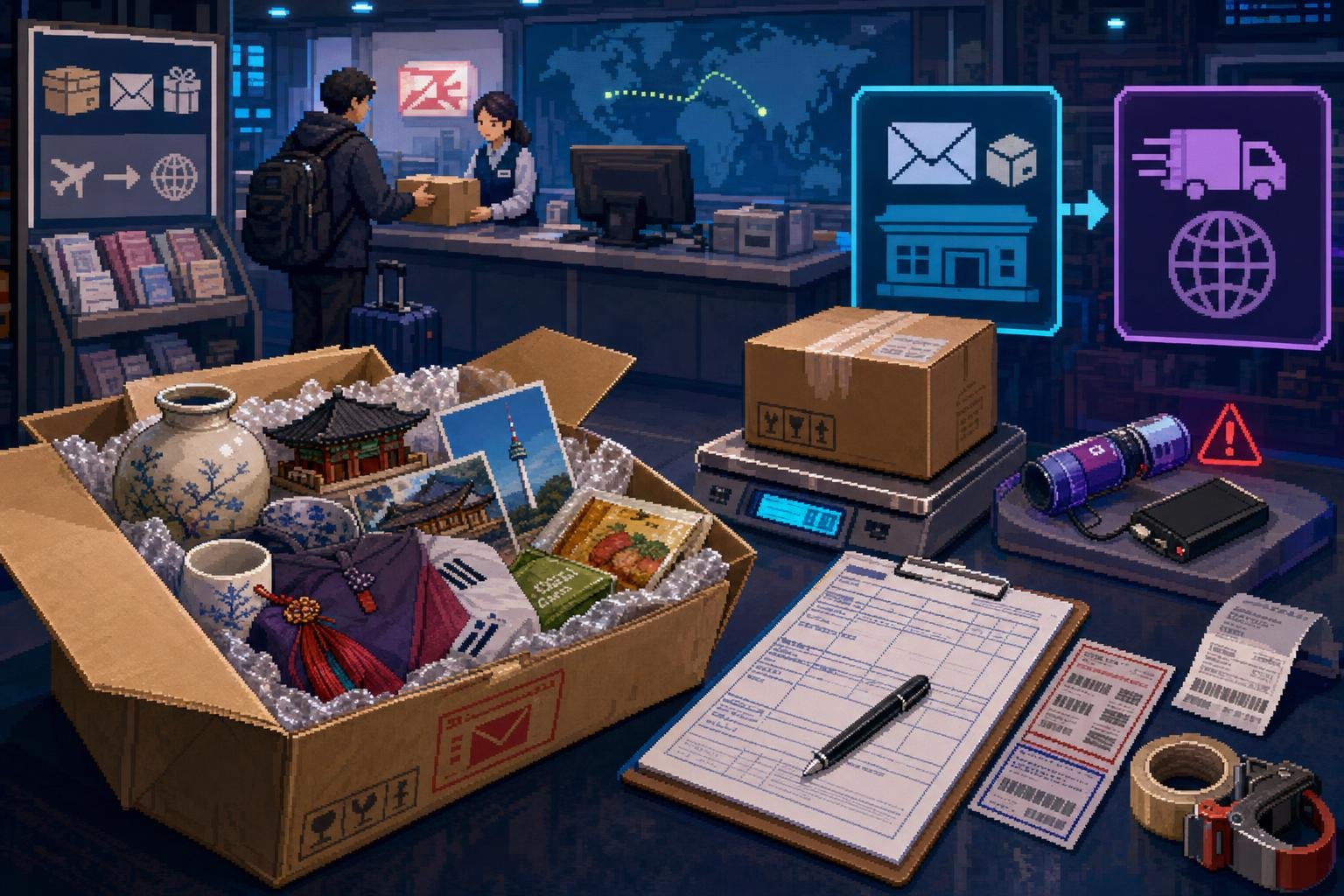
Shipping souvenirs can be useful when your luggage is already full or when you have bought fragile, bulky, or heavy items. The difficult part is not usually finding a box. It is choosing a service that accepts your items, completing the customs description correctly, and avoiding a parcel that is delayed, returned, or charged unexpected import fees.
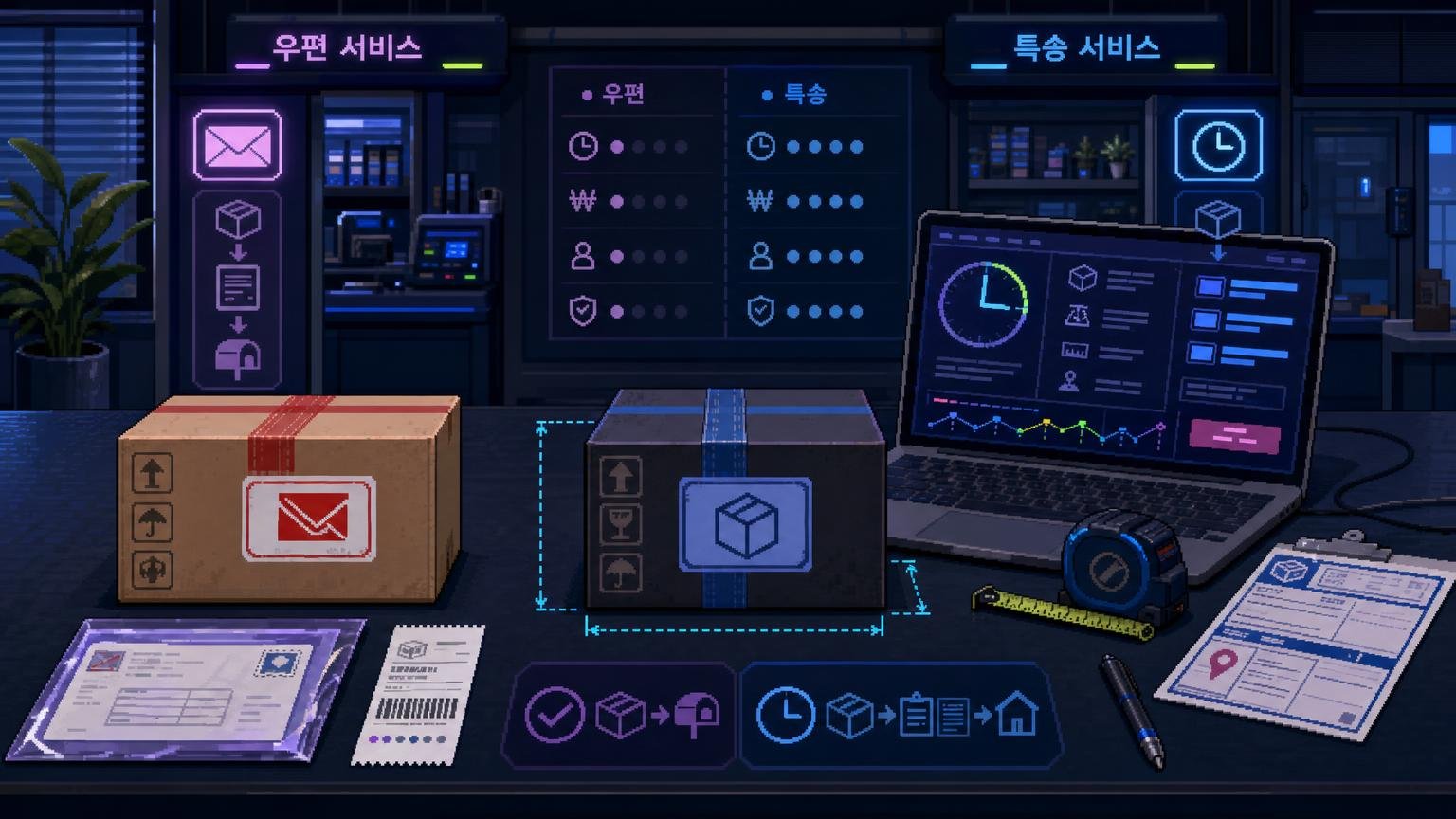
Korea Post is usually the most natural starting point for individual travelers because its international-mail system includes destination checks, postal rates, EMS services, and a branch-finder tool. Private express couriers are another option, especially when you need faster delivery or prefer a scheduled pickup and commercial-courier tracking.
At a glance: which shipping option suits you?
| Option | Best for | What to expect | Main caution |
|---|---|---|---|
| Korea Post international parcel | Ordinary souvenirs and travelers who want a familiar postal counter | Branch-based service, destination-dependent availability, customs declaration, tracking options depending on the service | Cutoff times, accepted items, and available services vary by destination and branch |
| Korea Post EMS | Travelers who want a faster postal service with tracking | Rates depend on destination, service, weight, dimensions, and possible surcharges | Delivery estimates exclude customs delays and holidays |
| Private express courier | Urgent shipments, door-to-door handling, or more structured online shipment management | Online quotation, pickup or drop-off options, detailed customs information, and courier tracking | Rates can be higher, and duties, taxes, brokerage, or other surcharges may be charged separately |
Before you pack: check whether the souvenirs can be shipped
Do not assume that an item is acceptable simply because it was sold in a Korean shop. International postal and courier rules are based on aviation safety, Korean export rules, and the import rules of the destination country.
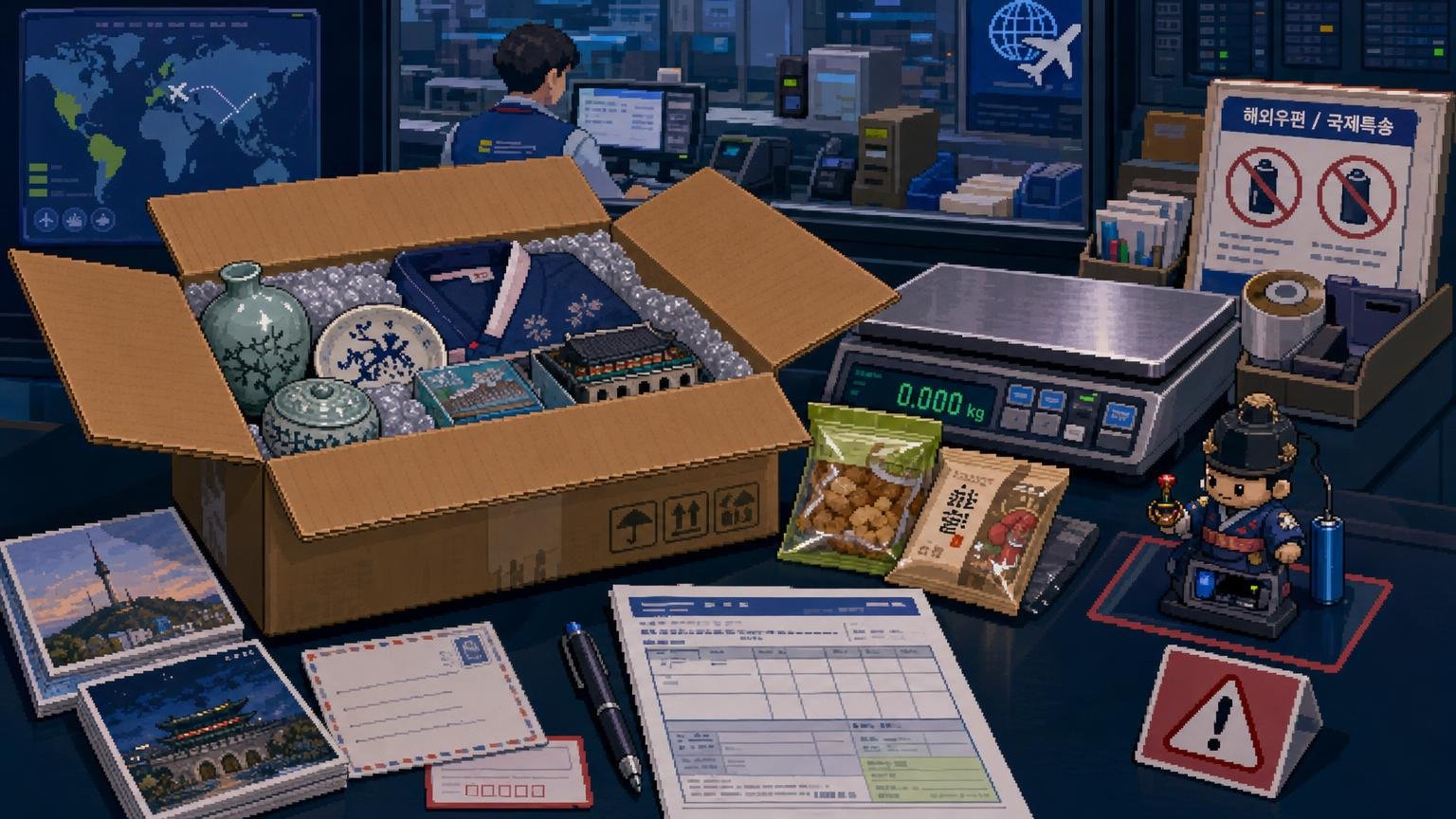
- Usually simpler: clothing, paper goods, books, ordinary stationery, non-powered ornaments, and many commercially packaged dry foods.
- Check carefully: cosmetics, creams, oils, alcohol, packaged food, tea, herbal products, seeds, knives, ceramics, magnets, and anything with a chemical or safety label.
- Common problems: perfume, aerosol products, lighters, fuel, strong adhesives, flammable liquids, lithium-battery devices, loose powders, and unidentified liquids.
Korea Post’s current prohibited-item guidance specifically warns that some batteries and devices containing rechargeable lithium batteries are not accepted through international postal services. It also identifies products such as perfume, gas-filled lighters, fuel, and some aerosols as prohibited or subject to review. Food, seeds, cosmetics, alcohol, and other goods may require additional conditions. If an item is uncertain, check the official item guide before packing rather than relying on a shop assistant’s guess.
Destination-country rules can be stricter than Korean shipping rules. A parcel accepted in Korea may still be held, taxed, returned, or destroyed by customs in the receiving country.
How to ship souvenirs through Korea Post
1. Check the destination and service first
Use Korea Post’s international-mail pages to check whether your destination currently accepts EMS or international parcels. Availability is not universal, and a price calculator does not necessarily mean that the service is available for every destination.
2. Find a suitable post office
Use the Korea Post location finder to identify a nearby branch. Ordinary postal counter hours are commonly listed as 09:00–18:00 on weekdays, but the last acceptance time for same-day dispatch can be earlier and varies by branch. Some branches may also have lunch-hour restrictions or different services, so check before making a special trip.
3. Prepare the recipient’s full address
Write the address in the format used by the destination country. Include the recipient’s full name, street address, apartment or unit number where relevant, postal code, city, country, and a working phone number or email address if requested. A vague hotel address or an incomplete apartment address can cause delivery problems after the parcel leaves Korea.
4. Pack the items for movement, not just for display
Use a sturdy box with cushioning around ceramics, bottles, framed items, and other breakable souvenirs. Fill empty space so the contents do not move when the box is turned. Keep original product labels where possible, especially for packaged food, cosmetics, and commercial products. Do not hide restricted items inside clothing or other souvenirs.
5. Complete the customs declaration accurately
Describe the contents clearly and separately. “Souvenirs” or “gifts” is too vague for many shipments. Use descriptions such as “cotton T-shirt,” “ceramic cup,” “printed postcards,” or “sealed seaweed snack.” Include the quantity and a realistic value for each type of item, and select the correct purpose, such as gift or personal effects, when the form asks.
6. Compare the available service and confirm the final charge
Ask the counter staff which international services are available for your destination. The final amount can depend on actual weight, dimensional weight, destination, service type, insurance, and additional transportation surcharges. Korea Post states that its online estimates are for reference and that the exact amount is confirmed when the parcel is submitted.
7. Keep the receipt and tracking number
Photograph the receipt or save the tracking number before leaving the post office. Send the tracking number to the recipient and keep photographs of the parcel and its contents until delivery is confirmed.
Using a private courier from Korea
Private couriers such as UPS and FedEx can be useful when you want a door-to-door express service, scheduled pickup, online booking, or a more detailed shipment-management process. They are often more suitable for urgent shipments or items whose value makes tracking and support especially important.
A private-courier shipment normally requires more detailed information than a casual postal description. Prepare the exact item description, quantity, value, country of manufacture, materials, parcel dimensions, weight, sender details, and recipient details. UPS specifically advises shippers to provide the item’s tariff classification, country of manufacture or assembly, value, dimensions, and a clear description for customs processing.
Check the quote carefully before paying. The displayed transportation charge may not include every possible fuel surcharge, remote-area charge, brokerage fee, import duty, tax, or disbursement fee. The recipient may be contacted before delivery if customs information or payment is required.
For a private courier, use a complete street address rather than assuming that a post-office box will work. UPS states that its packages require a valid street address and complete recipient contact information. FedEx also advises travelers to enter accurate origin, destination, postal-code, weight, and dimensions when checking rates and transit times.
What to write on the customs form
The customs declaration is not a packing-list shortcut. It is used by customs authorities to identify the goods, assess possible duties and taxes, and decide whether additional controls are needed.
- Use specific names: write “cotton socks” instead of “clothes,” and “ceramic bowl” instead of “souvenir.”
- List separate categories: do not combine unrelated products under one description.
- State the quantity: for example, two cotton T-shirts or six printed postcards.
- Declare a realistic value: an artificially low value can cause delays, penalties, insurance problems, or questions from customs.
- Identify the purpose honestly: gift, personal effects, returned goods, or another available category.
- Keep receipts: they can help explain the value if the shipment is questioned.
Import duty and tax are normally determined by the destination country, not by the Korean post office or courier counter. The recipient may have to pay before delivery, even when the shipment was a personal gift. Check the customs authority of your home country if the parcel contains food, alcohol, cosmetics, medicines, plant products, or a high-value purchase.
How to choose between Korea Post and a courier
Choose Korea Post when:
- You are sending ordinary souvenirs rather than urgent documents or high-value goods.
- You are comfortable visiting a post-office counter and completing the declaration there.
- Your destination is available through EMS or international parcel service.
- You want to compare postal services using Korea Post’s official calculator.
Choose a private courier when:
- You need a faster, door-to-door service and can accept a higher quote.
- You want online booking, scheduled pickup, or more detailed shipment management.
- Your parcel is time-sensitive and you have checked the courier’s destination coverage.
- You can provide detailed customs information, including dimensions, origin, materials, and value.
Consider not shipping when:
- The item contains a rechargeable battery, liquid, aerosol, fuel, or another restricted component.
- The souvenir is inexpensive but unusually heavy or bulky, making postage disproportionate to its value.
- You are leaving Korea immediately and cannot respond if the shipper asks for clarification.
- The destination country has strict rules for food, plants, animal products, medicines, or alcohol.
Common mistakes that cause shipping problems
- Writing only “gift” on the form: customs staff need to know what the gift contains.
- Using the wrong recipient address: confirm the country’s postal code and apartment or unit format.
- Sending a battery-powered souvenir: remove or avoid restricted rechargeable-battery items unless the specific service confirms acceptance.
- Using an unmarked container: liquids, powders, cosmetics, and food in unofficial packaging may require extra documentation or may be rejected.
- Arriving just before closing: the branch may be open while the same-day international-mail cutoff has already passed.
- Assuming postage includes import charges: destination customs may bill the recipient separately.
- Not checking the parcel after packing: re-open the box if the clerk asks to inspect the contents, and do not seal in prohibited items.
What to prepare before visiting the counter
- Recipient’s complete international address
- Recipient’s phone number and, if useful, email address
- Your passport or other identification if the branch or service requests it
- A list of contents, quantities, and approximate values
- Receipts for expensive purchases
- Parcel dimensions and approximate weight if using an online courier quote
- A payment method accepted by the selected branch or courier
- A backup plan if one item is refused
Do not rely on a Korean phone number for the recipient. Use the recipient’s actual contact details in the destination country. If you are staying in Korea for only a short time, leave enough time before departure to handle a rejected item, a missing customs detail, or a service delay.
FAQ
Can I ship Korean snacks and food?
Some commercially packaged, labeled foods may be accepted, but acceptance depends on the product, destination, packaging, and service. Homemade, unmarked, refrigerated, or plant-based products may face additional restrictions. Check both Korea Post’s item guidance and your destination country’s import rules.
Can I mail cosmetics from Korea?
Some finished cosmetics may be accepted, but sprays, flammable products, alcohol-containing products, and unmarked samples can require additional checks or may be prohibited. Keep the original packaging and check the exact product before packing.
Do I need to speak Korean at the post office?
Not necessarily, but the process is easier if you arrive with the address, contents, quantities, and values written clearly. A translation app can help with specific product names, but it should not replace checking the official prohibited-item rules.
Can I send a parcel to a hotel?
Only if the hotel agrees to receive and hold it and the recipient information is complete. For a private courier, use a valid street address and confirm the hotel’s receiving procedure before shipping.
Will the recipient have to pay customs charges?
Possibly. Import duties, taxes, brokerage fees, and handling charges are determined by the destination country and the selected delivery service. Ask the recipient to monitor the tracking information and customs messages.
Is EMS always faster than an ordinary international parcel?
EMS is designed as a faster international postal service, but the actual delivery time depends on the destination, service availability, holidays, transportation conditions, and customs clearance. Do not treat an online estimate as a guarantee.
What should I do if the post office refuses one souvenir?
Ask which rule applies and whether the item can be sent through another approved service. If the item is restricted because of a battery, liquid, aerosol, food, plant, or chemical component, do not conceal it inside the parcel. The practical alternatives may be carrying it in accordance with airline rules, leaving it behind, or checking the destination-country import requirements.
Official Information
- Korea Post EMS: delivery-time and price calculator
- Korea Post EMS: currently available destination countries
- Korea Post EMS: items that can and cannot be sent
- Korea Post: post-office location finder
- Korea Post: postal-service hours and branch cutoff information
- UPS Korea: international shipping steps and customs information
- FedEx Korea: rate and transit-time guidance
- Korea Customs Service: postal-item customs procedures