
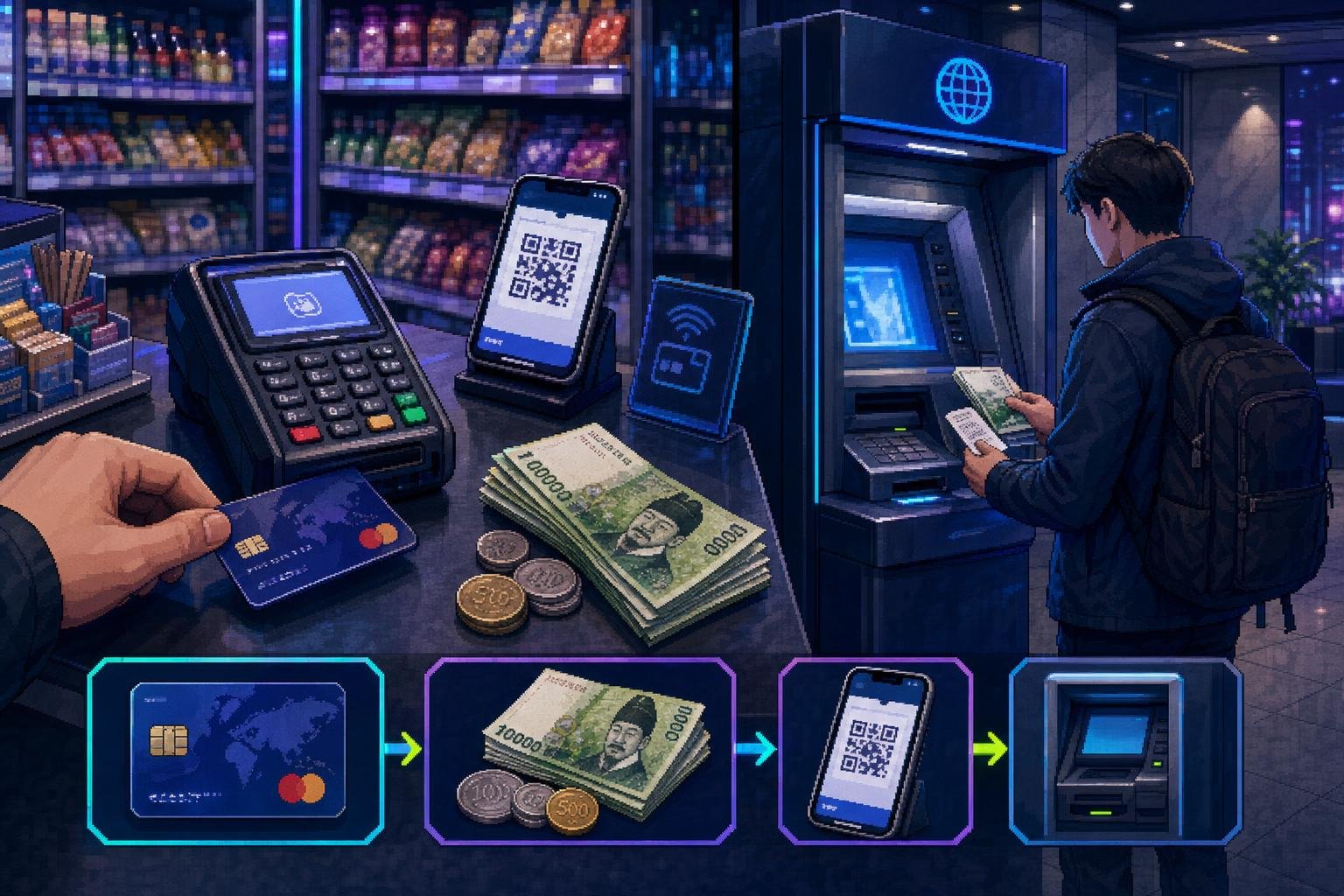
For most visitors, paying in Korea is straightforward once you separate three different situations: ordinary shopping and restaurants, cash-only or cash-preferred small businesses, and payments that require a Korean transport or mobile-payment system. Your foreign credit card may work perfectly at a department store but fail at a Tmoney top-up machine or a small market stall.
At a glance: which payment method should you use?
| Payment method | Best for | Important limitation |
|---|---|---|
| International credit or debit card | Hotels, restaurants, cafés, department stores, pharmacies, convenience stores, and most regular shops | Acceptance is not universal; some terminals reject overseas cards or require a physical card |
| Korean won cash | Traditional markets, street food, small stalls, some local businesses, and backup payments | You need to withdraw or exchange money in advance |
| Transportation card | Subway and buses, and sometimes taxis or affiliated stores | Ordinary Tmoney purchase and top-up points may require cash; it is not the same as a normal bank card |
| Mobile payment | Participating QR merchants, app bookings, and foreigner-focused prepaid services | Availability depends on the app, merchant, country of issue, phone access, and account verification |
| Foreigner-focused prepaid card | Travelers who want a separate spending balance and a backup for merchants that do not accept their foreign bank card | It may have separate balances, fees, supported locations, or refund procedures |
Official Korean tourism guidance says that most businesses, including major hotels, department stores, and general shops, widely accept credit cards such as Visa, Mastercard, and American Express. However, the same guidance advises checking availability because some stores do not provide card service.
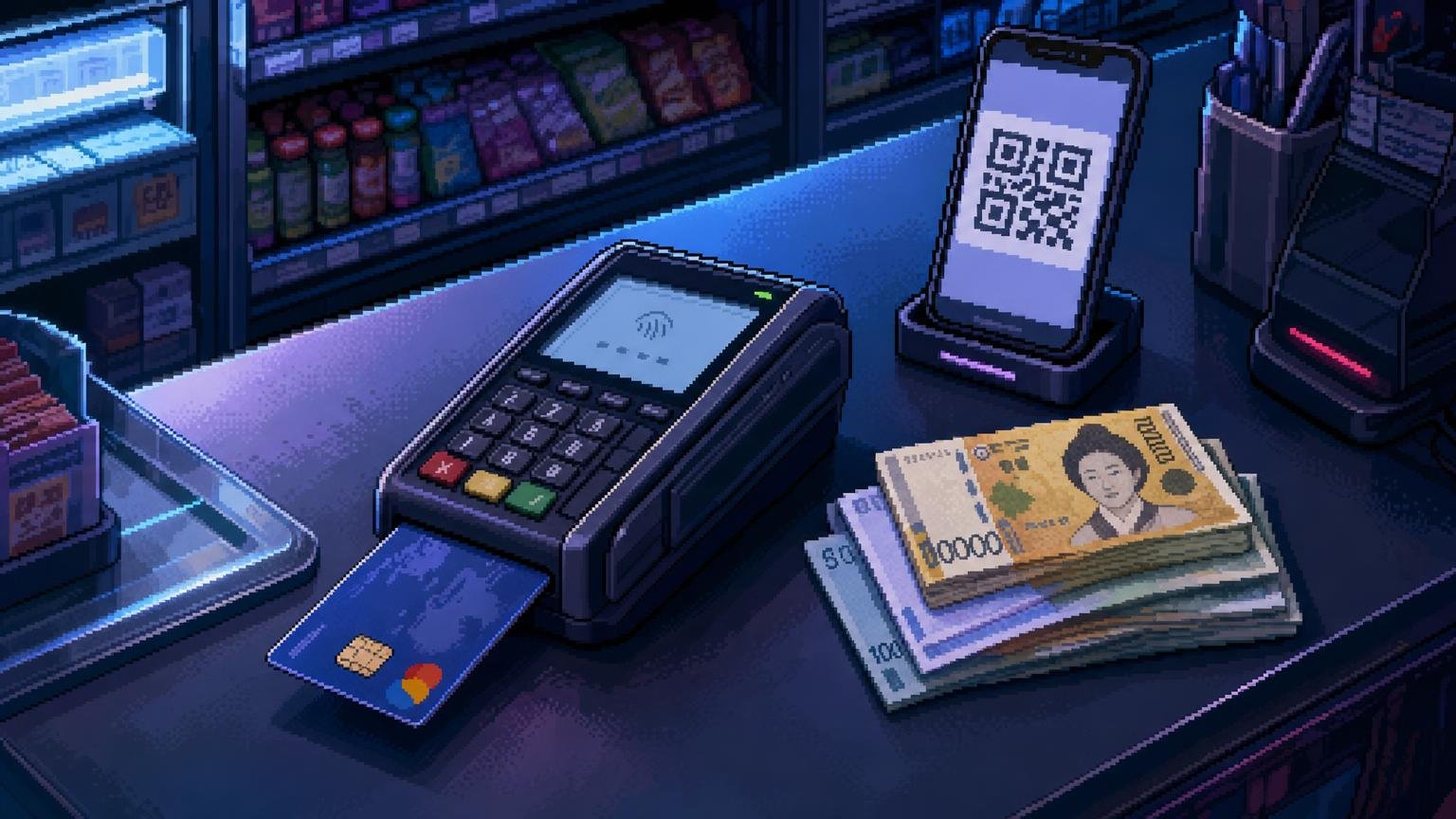
1. Using an international credit or debit card
Your international card should be your primary payment method for normal day-to-day spending. It is generally the simplest choice at hotels, department stores, chain cafés, larger restaurants, convenience stores, pharmacies, and established retail shops.
Before your trip
- Tell your card issuer that you will use the card in South Korea if your bank requires travel notifications.
- Check whether overseas purchases, foreign-currency conversion, or cash withdrawals carry additional fees.
- Make sure you know your card PIN. Some payment terminals or cash machines may request it.
- Bring at least one backup card from a different network or account.
- Keep the physical card with you even if you normally use a digital wallet.
At the payment terminal
Hand the card to the cashier or follow the terminal instructions. Depending on the machine, you may need to insert or tap the card, select a language, enter a PIN, or sign. If the cashier asks whether you want to pay in Korean won or your home currency, choosing Korean won usually avoids the merchant’s dynamic currency conversion rate. Your card issuer will determine the final exchange rate and any foreign-transaction fee.
If the first attempt fails, do not assume the card is permanently unusable. Ask the staff to try the physical card, another terminal, or a different card network. A small merchant may accept domestic Korean cards while rejecting an overseas card even though both cards look similar.
2. When you need Korean won cash
You do not need to carry a large amount of cash, but having small Korean won notes is sensible. Cash is particularly useful at traditional markets, street-food stalls, small independent shops, some local restaurants, and businesses that display a cash-only notice.
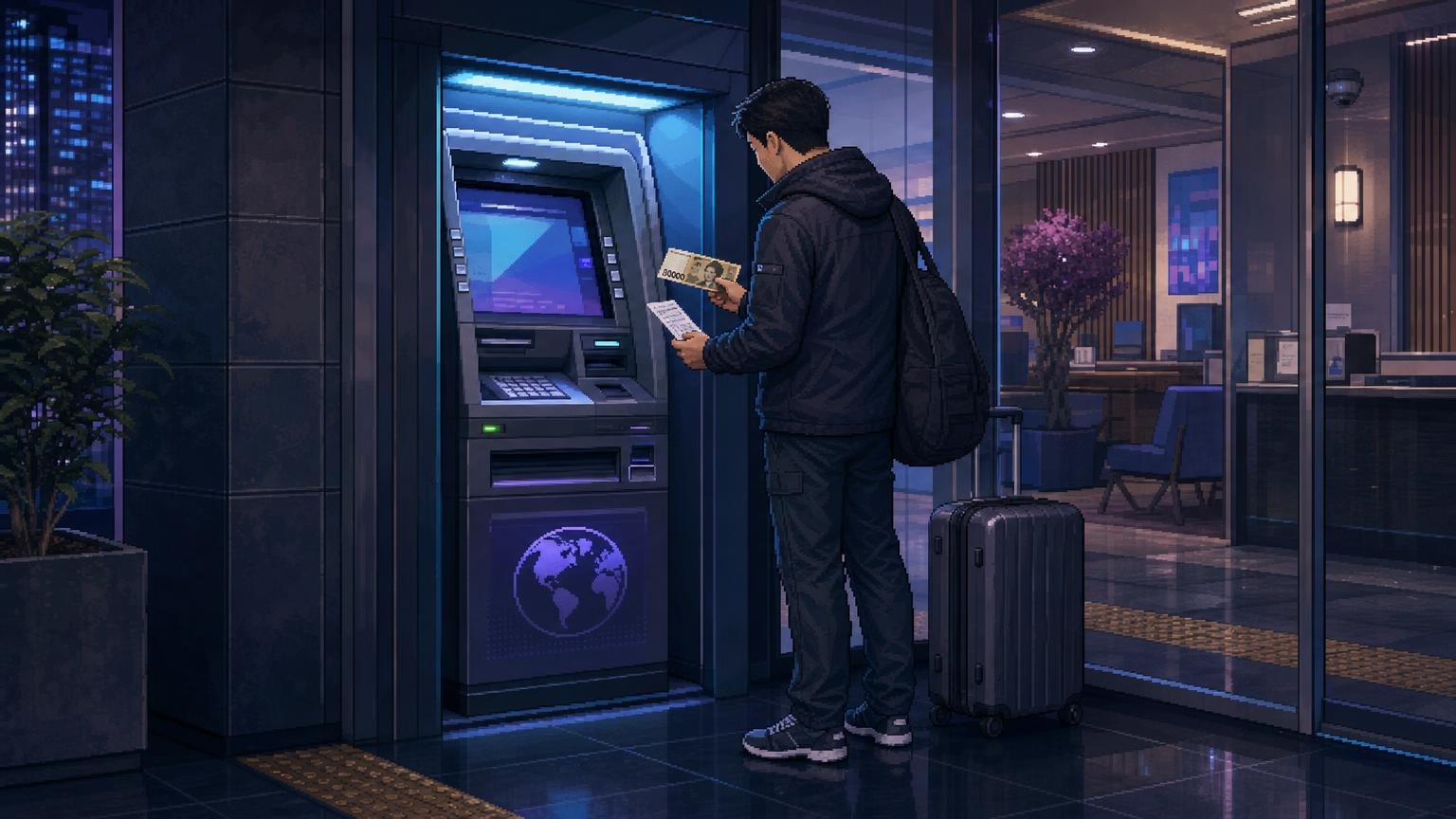
Withdraw cash from an ATM displaying a Global sign or the logo of a card network your card supports. Seoul’s official travel information explains that international-card ATMs are common, many offer English-language menus, and convenience-store ATMs may charge higher transaction fees. The exact fee depends on both the Korean ATM operator and your home bank.
A practical ATM routine
- Look for a bank ATM or a clearly marked Global ATM in a busy, well-lit location.
- Insert your card and select English or another available language.
- Choose the cash-withdrawal option and follow the prompts.
- If the machine offers currency conversion, compare the displayed options carefully. Your own bank may provide the better exchange rate, but the result depends on your card agreement.
- Take your card, cash, and receipt before leaving the ATM.
Withdraw a modest amount first rather than exchanging or withdrawing your entire trip budget. This reduces the risk of carrying excess cash and lets you confirm that your card works in Korea.
3. Transportation cards are a separate payment system
A foreign bank card that works in a café will not necessarily work when you try to tap directly onto a Korean bus or subway gate. For ordinary public transport, travelers commonly use a rechargeable transportation card such as Tmoney, EZL, or a foreigner-focused prepaid product.
According to the Korea Tourism Organization’s current international visitor transportation guide, ordinary Tmoney cards are sold and topped up at convenience stores and subway-related locations, but foreign-issued cards are not accepted for those purchase and top-up transactions. In practice, prepare Korean won if you plan to buy or recharge a standard Tmoney card.
Seoul has expanded international-card payment at selected new vending machines. As of the Seoul Metropolitan Government’s March 17, 2026 announcement, international Visa and Mastercard credit or debit cards and mobile payment services can be used to buy or recharge short-term Climate Cards and single-journey tickets at designated new machines on Seoul Subway Lines 1–8. This does not mean that every transportation-card machine or every bus reader accepts a foreign bank card.
For a regular Tmoney card, ask at a convenience store: “T-money card, please.” After purchasing it, load Korean won and keep the receipt until you confirm the balance. For public transport, tap when entering and, where required, tap again when leaving.
4. Mobile payments: useful, but not universal
Mobile payment in Korea is not one single system. The result depends on whether you mean Apple Pay or Google Pay, a Korean bank wallet, a foreign QR-payment app, a transport app, or a prepaid travel card app.
Foreign QR-payment apps
Some Korean merchants connected to ZeroPay or Seoul Pay can accept QR codes from participating payment apps used in other countries and regions. VISITKOREA lists participating services and notes that availability is limited to participating merchants and supported apps. Look for the relevant QR or mobile-payment sign before assuming that your home-country wallet will work.
This option can be convenient if your account is already active before departure, but do not rely on it as your only payment method. You may need an internet connection, app access, sufficient account balance, or a supported phone number.
Foreigner-focused payment apps and cards
Services such as WOWPASS and Trip.PASS are designed for international visitors. Their functions and conditions differ, but they can provide a separate prepaid or debit-style balance, app-based balance management, and access to payment or transportation features. Check the current terms before loading money because transportation and shopping balances may be handled separately.
WOWPASS information published through VISITKOREA says that visitors can load funds at designated machines and manage the card through the app. Trip.PASS information says that its service uses passport-based verification and supports international-card top-ups. These products can be useful when you want a backup spending card, but they are optional rather than required for a normal trip.
Phone verification and app access
Some Korean payment, reservation, and local-service apps require a Korean phone number, Korean-issued card, or local identity verification. A foreigner-oriented version may remove some of those barriers, but support can still vary by service. Register important apps before you need them, and keep your physical card available in case the app cannot verify your account.
Which payment setup suits your trip?
For a short Seoul city break
Use one international card, a small amount of Korean won, and either a standard transportation card or a suitable Seoul transit-ticket option. You probably do not need several payment apps.
For markets, street food, and independent businesses
Carry small cash notes and coins. A card may work at a nearby chain store but not at an individual stall. Ask before ordering if the payment method is unclear.
For travelers worried about card problems
Bring two cards issued by different banks or networks, keep some Korean won separate from your wallet, and consider a foreigner-focused prepaid card as an additional backup. Do not put your entire travel budget into one app or prepaid balance.
For travelers who prefer mobile payments
Use your existing home-country QR app only where the merchant clearly supports it. Keep a physical card and cash because Korean mobile-payment acceptance varies by merchant and service.
Common payment mistakes and fixes
- Assuming every card terminal accepts foreign cards: Ask the staff to try another terminal or use a backup card.
- Trying to top up ordinary Tmoney with a foreign card: Carry Korean won for standard Tmoney purchase and recharge.
- Carrying only large notes: Withdraw or exchange some smaller denominations for markets and small purchases.
- Relying only on a phone: Keep the physical card available if your phone battery, roaming, data connection, or app login fails.
- Confusing a transportation balance with a shopping balance: Check which balance is being charged before using a foreigner-focused prepaid card.
- Accepting dynamic currency conversion without checking: If offered a choice of currencies, review the exchange-rate information before confirming.
- Leaving without checking the card: At self-service machines and ATMs, collect your physical card before taking your receipt or cash.
FAQ
Can foreigners use Visa and Mastercard in Korea?
Yes, international Visa and Mastercard cards are widely accepted at Korean hotels, department stores, restaurants, cafés, and shops. Acceptance is not guaranteed at every business, so carry a backup payment method.
Should I exchange money before arriving in Korea?
You do not need to exchange your entire budget in advance. A practical approach is to arrive with a working card, obtain a small amount of Korean won, and use a Global ATM or authorized exchange service if you need more.
Can I use a foreign credit card to buy or recharge Tmoney?
For ordinary Tmoney purchase and top-up locations, the current international visitor transportation guide says foreign-issued cards are not accepted and cash is required. Some newer Seoul vending machines accept international cards for selected Climate Card and single-journey-ticket transactions, but this is a different service.
Can I pay by tapping my foreign bank card on Korean buses and subways?
Do not assume that direct contactless bank-card tapping works on ordinary Korean public transport. Use a suitable transportation card or ticket unless the specific service clearly states that foreign cards are accepted.
Will Apple Pay or Google Pay work everywhere in Korea?
Do not plan your trip around universal mobile-wallet acceptance. Mobile payment availability depends on the merchant, terminal, card network, phone, and wallet service. Keep a physical card and some Korean won.
Are foreign QR-payment apps accepted in Korea?
Some participating ZeroPay or Seoul Pay merchants accept QR payment from supported apps used in other countries and regions. Look for the matching QR-payment sign and confirm that your specific app is supported.
Is WOWPASS required for foreign visitors?
No. It is an optional foreigner-focused prepaid payment and transportation product. It may be useful as a backup or separate spending balance, but a normal trip can be managed with an international card, cash, and a regular transportation card.
What should I do if my card is declined?
Ask the merchant to try the physical card or another terminal, confirm that overseas transactions are enabled with your bank, and try your backup card. If necessary, withdraw Korean won from a Global ATM or use a separate prepaid travel-payment option.
Official Information
- VISITKOREA: Korean Currency and Credit Card Information
- VISITKOREA: Shopping, Card Payments, and Mobile Payment Options
- VISITKOREA: Mobile Payment at Participating ZeroPay Merchants
- VISITKOREA: International Visitors’ Public Transportation and Booking Payment Guide
- Seoul Metropolitan Government: International Cards for Selected Climate Card and Single-Journey Ticket Machines
- The Official Travel Guide to Seoul: ATMs, Currency Exchange, and Money
- VISITKOREA: Trip.PASS for International Travelers