
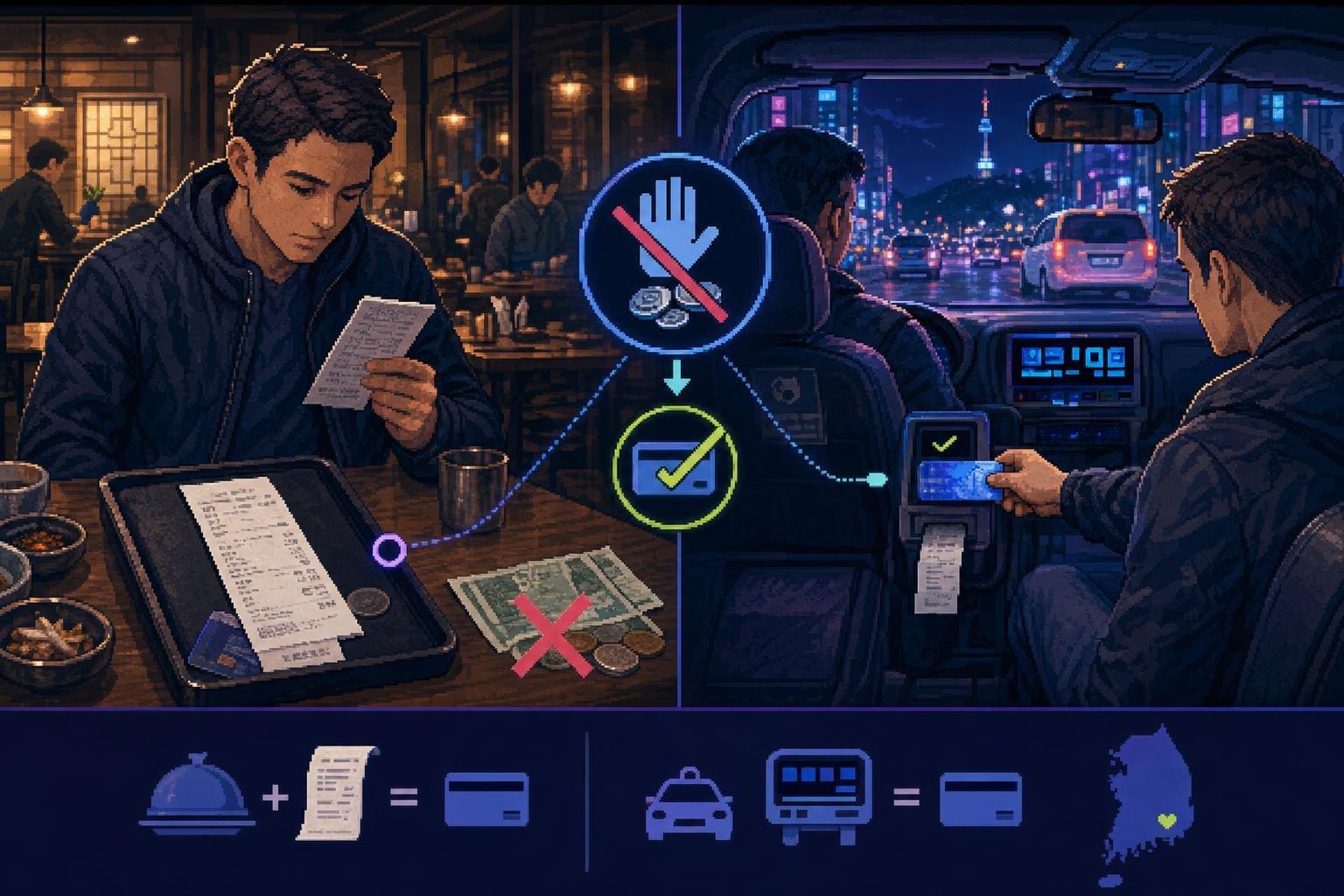
Visitors from countries where tipping is expected often hesitate at the end of a meal or taxi ride in Korea. The practical rule is simple: do not add a percentage automatically. Check the bill, pay the stated amount, and leave without feeling that you have missed an important step.
Korean businesses can differ by venue, especially in international hotels, upscale restaurants, tourist-oriented businesses, and foreign-owned establishments. However, there is no general Korean tipping rate that travelers are expected to calculate.
At a glance: when tipping is and is not expected
| Situation | Should you tip? | What to do instead |
|---|---|---|
| Ordinary Korean restaurant | No | Pay the menu or receipt total. |
| Café or bakery | No | Pay the displayed price. A tip jar or screen may be optional and venue-specific. |
| Taxi | No | Pay the meter or app fare. You may accept your change or let the driver keep a small amount if you genuinely wish. |
| Hotel | Usually no | Check whether the hotel has a listed service charge or its own policy. |
| Upscale restaurant or hotel dining | Usually no additional tip | Check the bill for a service charge before paying. |
| Hair salon, barber, or spa | No | Pay the quoted or displayed price. |
| Private guide or tour | Not automatically | Check the operator’s policy. A personal thank-you is optional, not a Korean requirement. |
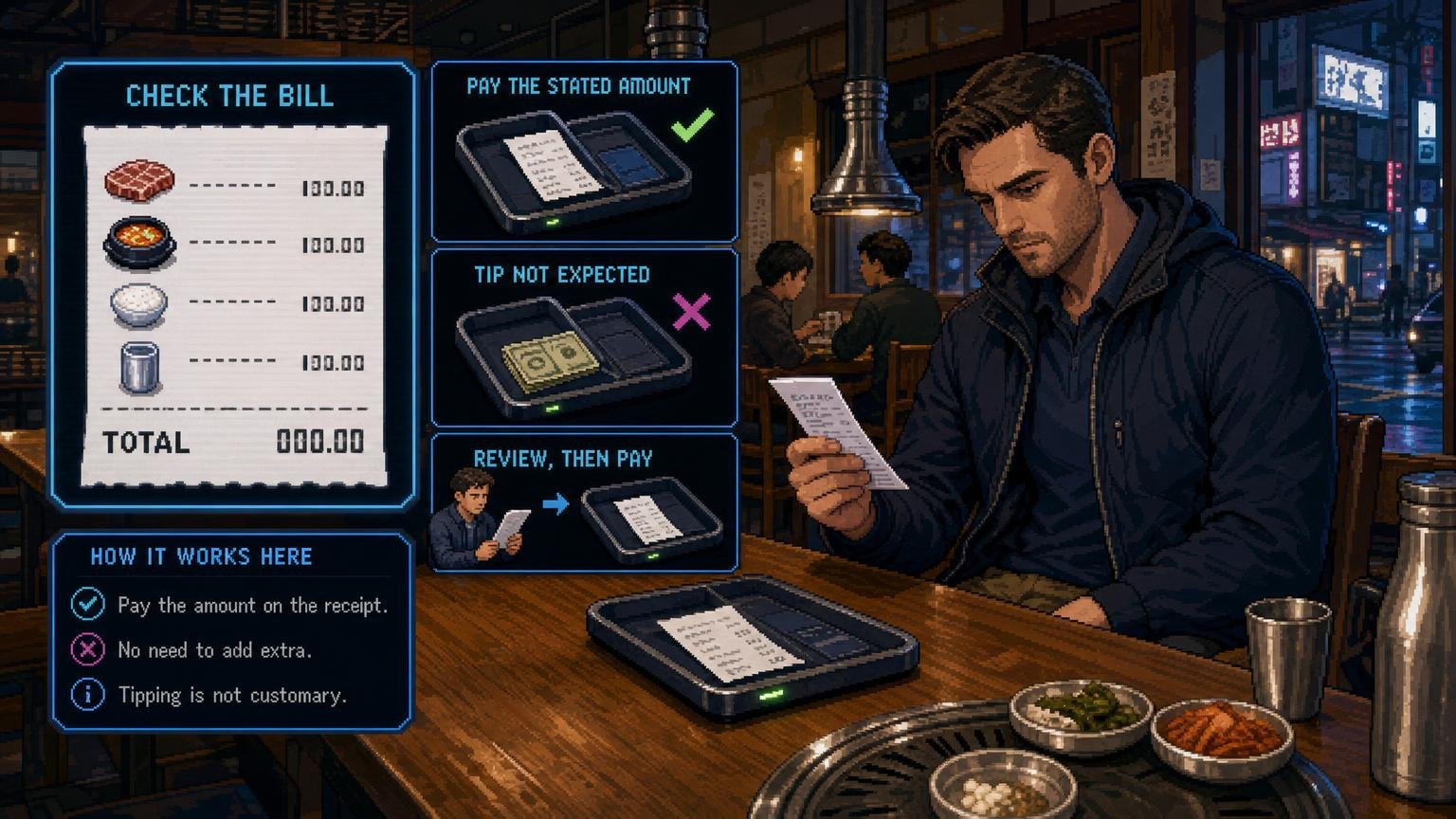
Restaurants: pay the bill, not an American-style percentage
At most Korean restaurants, the menu price and any clearly listed charges are the amount you pay. You do not need to add 10%, 15%, or 20% because the service was friendly or the food was excellent.
This applies to common situations such as Korean barbecue restaurants, noodle shops, casual diners, food courts, and many neighborhood restaurants. At some restaurants, staff may not repeatedly check on the table in the way servers do in countries with a strong tipping culture. That does not mean a tip is missing from the bill.
At a hotel restaurant or upscale venue, look at the menu and receipt for a line such as a service charge. A service charge is a business-set charge connected to the bill; it is not the same as deciding to leave extra cash for an individual employee. The official Visit Seoul money guide notes that many major hotels and upscale restaurants add a 10% service charge, in addition to VAT, so checking the bill is more useful than assuming every venue follows the same system.
What if a payment screen shows a tip option?
Some internationally oriented or foreign-owned businesses may use payment systems that display an optional tip screen. You can decline it if you do not want to tip. The presence of a button does not create a nationwide Korean tipping obligation.
If a charge is already printed on the menu or receipt, treat it as part of the venue’s stated pricing and ask what it means before paying if it is unclear. Do not assume that every extra line is a gratuity.
Cafés, bakeries, and takeaway counters
You normally do not tip when ordering coffee, dessert, bread, or takeaway food in Korea. Some cafés may have a tip jar, QR-code request, or card-terminal prompt, particularly in areas with many international visitors. These are optional and depend on the individual business.
If you want to show appreciation, saying gamsahamnida (감사합니다, “thank you”) is perfectly appropriate. A positive review or a return visit is also a natural way to support a small business.
Taxis: pay the fare shown on the meter or app
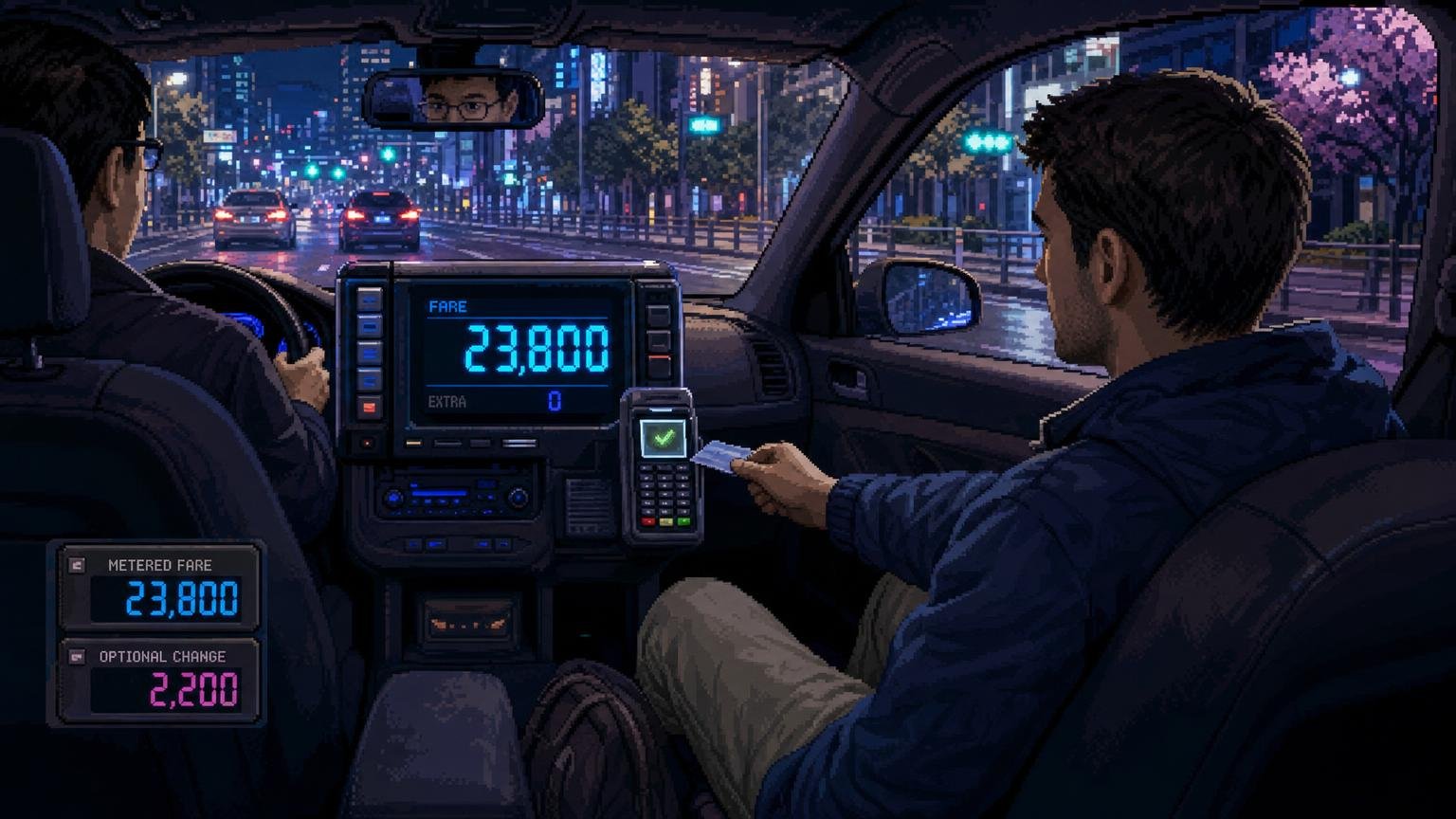
Korea Tourism Organization guidance says that most taxis do not require tips. Pay the metered fare, the app fare, or the confirmed fare for a booked service. Tolls or separately stated booking charges are not tips.
A driver may appreciate being allowed to keep a small amount of change, but this is a personal gesture rather than an expected percentage. If you want your change, simply wait for it. You do not need to round up.
Do not confuse a late-night surcharge, regional surcharge, toll, or call-service fee with a tip. These are fare-related charges and should be explained by the meter, app, or booking information.
What to do when paying a taxi fare
- Check the meter or app total.
- Pay the displayed amount using cash, card, or the payment method accepted by the taxi.
- Take your change unless you deliberately want to leave it.
- Keep the receipt or note the vehicle information if the amount seems wrong.
Hotels: no automatic tip, but check the hotel’s own policy
At an ordinary Korean hotel, guesthouse, or motel, you are not generally expected to tip reception staff, housekeeping staff, or other employees. At a major international hotel, an employee may accept a tip, refuse it, or follow a property-specific policy.
If you are unsure, ask the front desk rather than copying tipping habits from your home country. A service charge already included in a hotel bill does not mean you must add another cash tip.
For luggage assistance, room service, or special arrangements, tipping remains optional and venue-specific. A simple “thank you” is enough if you do not want to give cash.
Hair salons, beauty services, delivery, and tours
Hair salons, barbers, and beauty services
Tipping is not a normal part of paying at Korean hair salons, barbers, nail salons, or beauty businesses. Pay the quoted price and check whether additional services were added to the bill.
Food delivery
You do not need to add a separate cash tip when ordering food through a delivery app. Pay the order total, delivery fee, and any clearly stated charges shown before payment. If an app displays an optional appreciation function, it is a business or platform feature rather than a standard Korean obligation.
Private guides and tours
There is no universal Korean tipping percentage for private guides, walking tours, drivers, or activity staff. Some international tour operators may include their own guidance about gratuities, so check the booking terms first.
If a guide provides exceptional personal help and you would like to offer something, ask whether the operator permits tips and whether the guide can accept them. A sincere verbal thank-you or a positive review is also appropriate.
What to say if someone refuses your tip
Do not insist if a staff member returns the money or appears uncomfortable. Tipping is not customary, and some people may accept it while others may refuse it, as the official Visit Seoul etiquette guide explains.
You can smile and say:
- 감사합니다 (gamsahamnida) — Thank you.
- 괜찮습니다 (gwaenchanseumnida) — It is okay / No problem.
- 서비스가 정말 좋았어요 (seobiseuga jeongmal joasseoyo) — The service was really good.
These phrases make your appreciation clear without turning the interaction into an awkward negotiation.
How to check whether an extra charge is legitimate
Before you pay
- Compare the receipt with the menu, price board, or booking information.
- Look for clearly named items such as a service charge, booking fee, delivery fee, or tax.
- Ask the staff what an unfamiliar line means before using your card.
- Keep the receipt if the final amount differs from the displayed price.
At restaurants and street-food businesses, the official Seoul tourist guidance recommends checking prices before ordering, especially when a price is not displayed. An unexpected charge should not automatically be described as a tip simply because you are a foreign visitor.
If you believe you were unfairly overcharged in Seoul, you can contact a tourist complaint service. Keep the receipt, business name, location, date, and any taxi details that may help identify the incident.
Which approach suits your situation?
- Eating at a local restaurant: Do not tip. Pay the bill total.
- Using a taxi: Pay the meter or confirmed app fare. Keep the change unless you choose otherwise.
- Staying at a luxury international hotel: Check the property’s policy and the bill for an existing service charge.
- Seeing an optional tip screen: Decline it unless you personally want to leave something.
- Wanting to reward excellent service: Say thank you, leave a review, return to the business, or ask whether a tip is accepted.
- Seeing an unexplained extra charge: Ask for clarification and keep the receipt before paying.
Common mistakes foreign visitors make
- Adding 15% or 20% automatically: This is not the normal Korean system.
- Leaving cash on a restaurant table: Staff may think you forgot your money or may return it.
- Confusing a service charge with a tip: A listed service charge is part of the venue’s pricing, not a personal gratuity decision.
- Assuming every card-terminal tip prompt is standard: Payment software can reflect the business or its international customers, not Korean custom as a whole.
- Insisting after a refusal: Accept the refusal and thank the person instead.
- Paying an unexplained amount because you feel pressured: Check the menu or receipt and ask before completing payment.
What may be different
Tipping practices can vary by business type, hotel brand, restaurant level, ownership, tourist area, payment system, and tour operator. Major international hotels and upscale restaurants may list a service charge, while ordinary local businesses usually do not use a tipping system. Optional prompts may also appear at businesses serving many foreign customers.
Policies can change as individual businesses update their payment systems. When a charge matters, rely on the current menu, receipt, booking terms, or staff explanation rather than an assumed national percentage.
FAQ: Tipping in Korea
Do I tip at Korean restaurants?
Usually no. Pay the menu or receipt total. Check for a clearly listed service charge at upscale restaurants or hotel dining venues.
How much should I tip a taxi driver in Korea?
There is no required percentage. Pay the meter or confirmed fare. Rounding up or leaving change is optional.
Should I tip hotel staff in Seoul?
Not automatically. Ordinary Korean hotels do not generally expect tips. International hotels may have their own policy, so ask the front desk if you are unsure.
What if a restaurant asks me for a tip?
Ask whether it is an optional tip or a listed service charge. Check the menu and receipt before paying. If the charge was not explained or you believe you were overcharged, keep your receipt and contact a tourist complaint service.
Is a service charge the same as a tip?
No. A service charge is a business-set charge shown on the bill or pricing information. It is not the same as voluntarily leaving extra money for an employee.
Can I tip a private guide in Korea?
You may be able to, but there is no universal Korean expectation or standard amount. Check the tour operator’s policy first. A thank-you or positive review is also appropriate.
What is the polite way to refuse a tip prompt?
Select the no-tip option or simply pay the stated total. If someone offers or returns money, say gamsahamnida and do not insist.