
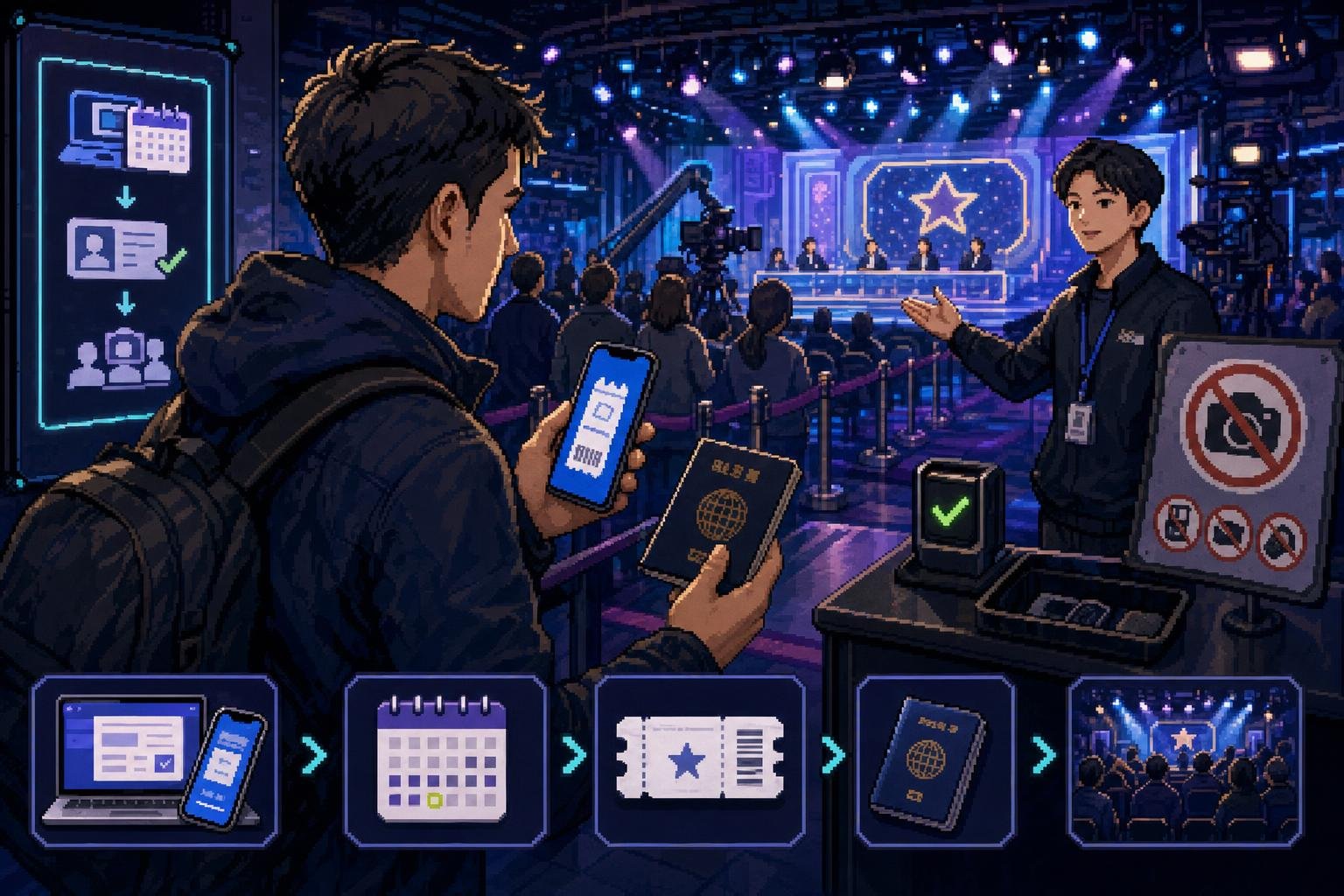
Attending a Korean TV recording can sound like a simple ticket purchase, but the process depends heavily on the show. A studio audience for a talk or entertainment program may be selected through a broadcaster’s website. A music-show pre-recording may instead be organized through an artist’s official fan club and require albums, digital music purchase records, or an official light stick.
The most important point for a foreign visitor is to confirm the exact program notice before making plans. A television station may operate several different audience systems, and a ticket or application for one show cannot normally be used for another.
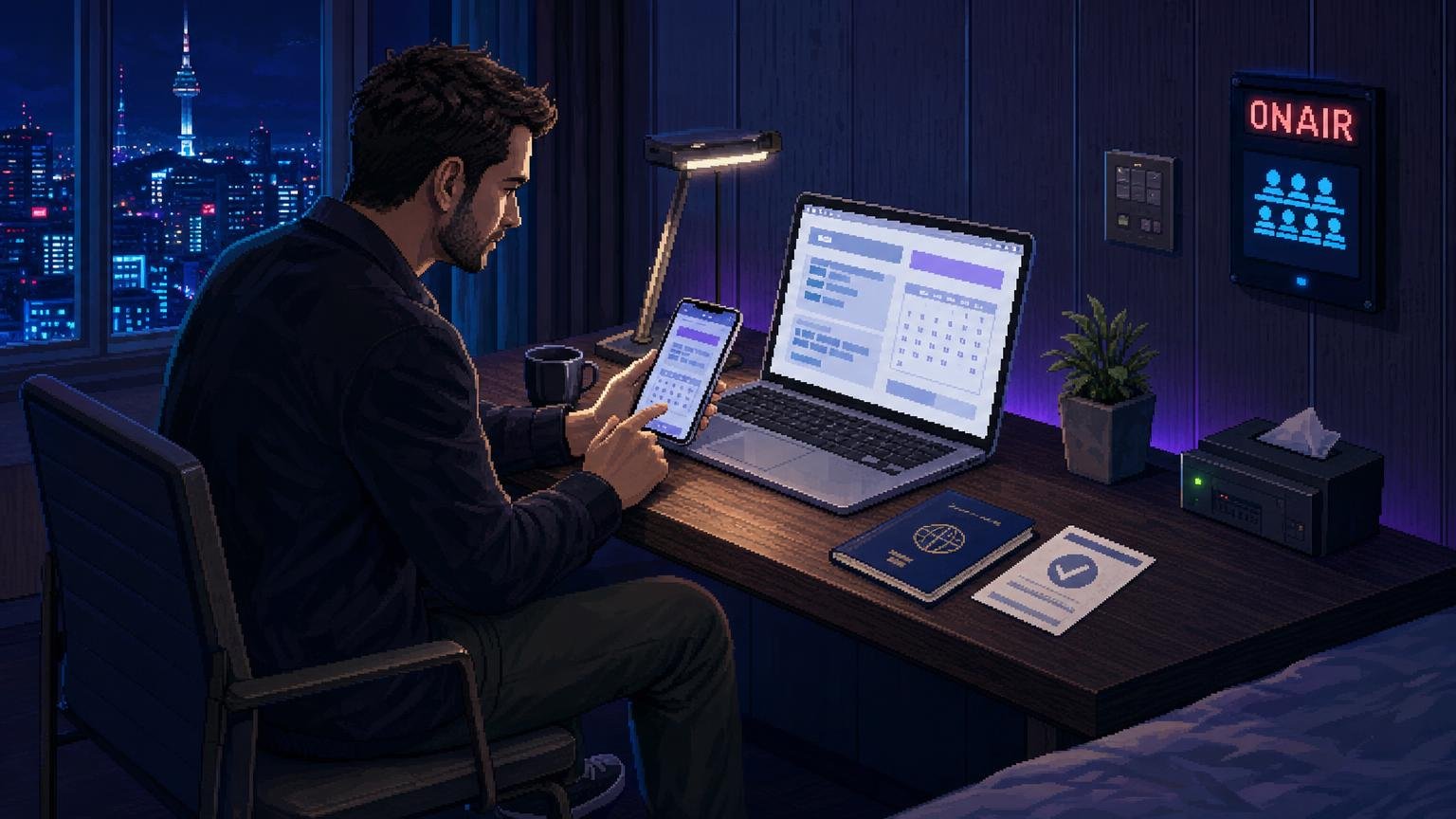
At a glance: which type of taping are you trying to attend?
| Type of recording | How access usually works | Difficulty for a foreign visitor |
|---|---|---|
| General variety or talk show | Official broadcaster or program application, often by lottery or invitation | Possible, but Korean instructions and account requirements may be a barrier |
| Music-show live broadcast | Broadcaster or app application, sometimes with age and identity requirements | Varies; some official systems accept foreign accounts |
| Music-show pre-recording | Artist fan-club notice, usually first-come-first-served or numbered entry | Often difficult because extra fan items and early-morning check-in may be required |
| Special event or celebrity recording | Separate event notice, invitation, or limited public application | Rules are specific to that event |
Step 1: Find the show’s official audience route
Start with the program’s official broadcaster page rather than a resale site or an informal social-media post. Search the Korean terms 방청 신청 or 공개방송 참여, which mean audience application and public-broadcast participation.
KBS explains that audience applications are available to logged-in KBS members and that applicants select a program and recording date through the audience system. The page also says that winners can check or print their audience information and must bring identification for on-site confirmation.
SBS uses several routes depending on the program. Its current SBS Play audience system handles applications, winner notifications, and mobile tickets for participating programs. The SBS Inkigayo audience page specifically states that applications require an identity-verified account, while foreign users can use an account with their date of birth registered.
Step 2: Check whether foreigners can create the required account
Foreign visitors may be able to register, but this does not mean every audience application will accept them. The account system may require a verified name, date of birth, mobile number, email address, or a local identity-verification method.
- KBS: The audience guide requires a KBS member login. The guide does not promise that every program is open to overseas visitors, so check the individual program notice and account-registration options before relying on it.
- SBS: SBS provides a foreigner registration route, and the Inkigayo audience page recognizes foreign accounts with a registered date of birth. You still need to follow the particular show’s age and ticket rules.
- Artist fan-club notices: Foreigners are commonly instructed to enter their name exactly as shown on their passport or residence card. A mismatch between the application and physical identification can prevent entry.
If the application requires Korean mobile-phone authentication that you cannot complete, do not pay someone to apply on your behalf. Some official notices treat proxy applications, transferred entry numbers, or resold participation rights as violations that can lead to refusal of entry or future restrictions.
Step 3: Apply during the exact application window
Before the application opens
- Create and verify the broadcaster or fan-community account.
- Prepare your passport details exactly as printed, including the spelling of your name.
- Convert the opening time to Korea Standard Time, UTC+9.
- Read the age limit, number of permitted guests, and required documents.
- Use a stable connection and avoid submitting duplicate applications.
When the application opens
- Open the official form slightly early if the notice allows pre-access.
- Submit only when the stated application time begins. Some fan-club applications are selected by server submission time.
- Check every field before submitting. Many forms cannot be edited afterward.
- Save the confirmation screen and note where winner information will appear.
After applying
- Check the official application page, app, email, or fan-community account rather than relying only on a text message.
- Read any updated notice posted after the initial announcement.
- Confirm the meeting location, roll-call time, entry number, and required items.
- Plan to arrive before the check-in window, not at the recording start time.
For many music-show pre-recordings, the application period may last only a few minutes. An official QWER notice for an MBC Music Core pre-recording, for example, used a short application window, numbered check-in groups, physical identification, and additional fan requirements. That is an example of a program-specific procedure, not a universal rule for every Korean TV recording.
Tickets are often free, but the application may not be simple
Audience admission is commonly free when the broadcaster selects viewers, but free admission does not mean open admission. Some programs accept applications only for particular dates. Others allocate a limited number of seats, invite selected audience groups, or do not operate a public audience application at all.
Be cautious with anyone selling a supposed variety-show ticket. Official rules from Korean broadcasters and artist organizers commonly prohibit transferring, selling, or altering audience tickets and entry numbers. A ticket bearing another person’s name may not help you at the door because staff can compare the ticket information with your passport or other accepted identification.
What to bring to the studio
- Physical passport: This is usually the safest identification for a short-term visitor. Some notices may accept a residence card or other identification, but the exact list varies.
- Official ticket or winner information: Bring the mobile ticket, application screen, printed document, or message specified by the program.
- Matching personal information: Your name and date of birth should match the application exactly.
- Phone with battery: Some systems use app tickets or mobile account verification.
- Required fan items, if applicable: Music-show pre-recordings may require a fan-club membership screen, album, digital music purchase proof, or official light stick.
Do not bring a camera or recording equipment unless the program specifically allows it. SBS Inkigayo’s audience instructions prohibit photography and video recording and warn that cameras may prevent entry. Similar restrictions are common in studio recordings, where production material and audience privacy must be protected.
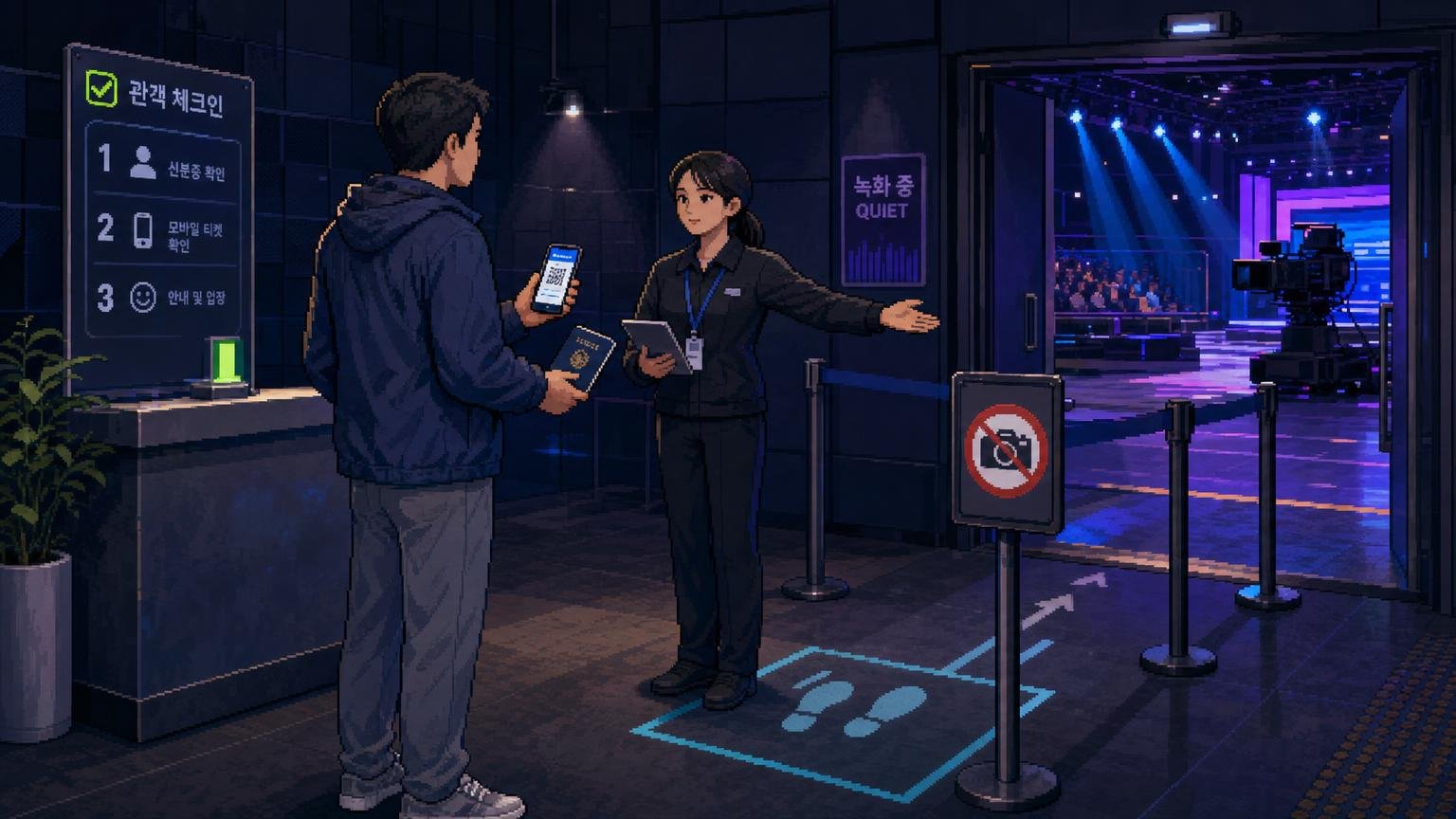
Audience etiquette inside a Korean TV studio
Follow staff instructions immediately
Studio recordings are controlled work environments. Staff may move the audience between waiting areas, change the order of entry, pause the recording, or adjust seating. Follow instructions even if the schedule differs from the original notice.
Expect waiting and schedule changes
A recording can take longer than the advertised program length because scenes may be repeated, lighting or sound may be adjusted, or the production schedule may change. Do not book a tight same-evening activity immediately afterward.
Do not leave during a recording unless staff permits it
Some audience systems state that viewers cannot freely leave while filming is in progress. Use the restroom before check-in and ask staff before leaving your seat or waiting area.
Keep phones and cameras controlled
Silence your phone and follow the recording policy. Do not photograph monitors, scripts, performers, backstage areas, or other audience members. Even when a phone is allowed for a mobile ticket, that does not mean filming is permitted.
Do not shout over the host or performers
React naturally when the audience is encouraged to respond, but avoid unsolicited shouting, repeated name-calling, standing in aisles, or trying to attract a celebrity’s attention. The audience is part of the production, so following the cue system helps the recording run smoothly.
Do not bring gifts or attempt an unscheduled meeting
Many organized broadcast events restrict gifts, banners, personal cheering items, or direct contact with performers. Give letters or gifts only through a clearly announced official procedure, if one exists.
Which route suits different travelers?
- You are visiting Seoul for a short trip: Choose a public broadcaster application only if the recording date fits your itinerary and the account system accepts your details. Keep a backup plan because winning is not guaranteed.
- You want to see a particular idol: Look for that artist’s official fan-community notice. Be prepared for early check-in, numbered queues, age limits, and album or digital-purchase requirements.
- You do not speak Korean: Favor an application with English instructions or a clearly documented foreigner account route. Save screenshots of the important Korean terms and ask staff short, polite questions rather than relying on unofficial translations.
- You are traveling with a friend: Check whether one winning application admits one person or multiple people. SBS Inkigayo, for example, states that one ticket admits one person, while other programs use different rules.
- You need a predictable schedule: A television taping may be a poor choice if you have a flight, tour, or reservation soon afterward. Waiting time and production changes are normal possibilities.
Common problems and what to do
The application page is only in Korean
Use your browser’s translation function for general understanding, but check names, dates, age limits, and document requirements against the original Korean notice. Machine translation can misread whether a date refers to application, winner announcement, roll call, or recording.
You received no text message
Check the official application history or app. SBS states that some audience results are delivered through app push notifications and can also be checked inside the app. A missing text message does not automatically mean that you were not selected.
Your passport name does not match the application
Contact the program or organizer before the recording if changes are allowed. Do not assume that staff can correct the name at the entrance. Many fan-event notices require foreign applicants to use the English spelling shown on their passport.
You cannot complete phone verification
Look for a foreigner registration option, email verification, or a separate official notice. If no route exists, the program may not be practical for a short-term visitor. Avoid unofficial proxy applications because transferred or mismatched entries may be rejected.
You are late
Go to the designated meeting point anyway, but understand that late entry may be denied or moved behind standby applicants. Some notices treat late arrival as a loss of priority even when the recording has not started.
FAQ
Can a foreign tourist buy a ticket for a Korean variety show taping?
Usually, there is no general ticket marketplace for ordinary variety-show tapings. You normally apply through the show’s official broadcaster or program channel, and admission may be free, limited, lottery-based, or invitation-only.
Do I need a Korean phone number?
Not always, but some account and identity-verification systems may require Korean authentication or information that short-term visitors cannot provide. Check the foreigner registration route before planning around a specific show.
Can I use a photocopy or photo of my passport?
Do not assume so. Current notices often require physical identification, and some explicitly list a passport or residence card. Bring the original document specified by the program.
Are Korean variety-show recordings suitable for children?
Only if the individual notice allows it. Age limits can apply even when a parent is present, and music-show notices commonly use a minimum age for audience participation.
Can I film the celebrities?
Usually not. Studio programs commonly prohibit photography, video, and audio recording. Follow the most restrictive rule in the official notice and staff instructions.
Is a music-show pre-recording the same as attending a variety show?
No. Music-show pre-recordings are often organized through an artist’s fan club and may require several fan-specific items. They are a separate route from applying for a general variety or talk-show audience.
Official Information
- KBS audience application guide — application steps, winner checks, ticket printing, and identification guidance.
- SBS Inkigayo audience application and rules — foreign-account eligibility, age limit, identification, mobile ticket, and recording restrictions.
- SBS Play audience application information — application, result notifications, and app-ticket procedures.
- SBS membership registration — includes a foreigner registration route for SBS accounts.
- Official QWER Music Core pre-recording notice — a current example of program-specific fan-club application, identity verification, check-in, and no-recording rules.
- Official &TEAM Music Core pre-recording notice — an example of foreigner identification, fan requirements, early check-in, and studio etiquette.