

A Korean cooking class can be easy to book as a foreign visitor, but the useful details are often hidden in the small print. A class described as “English-friendly” may mean full English instruction, bilingual demonstrations, or simply that the host can answer basic questions. A “vegetarian” menu may still contain fish sauce, shrimp paste, anchovy stock, or egg.
This guide focuses on the practical decisions: how to compare classes, what to write before booking, how to handle allergies and religious diets, what normally happens during the lesson, and how to behave in a shared Korean kitchen.
At a glance: what to check before booking
| What to check | Why it matters | What to confirm |
|---|---|---|
| Teaching language | “English available” is not always the same as a fully English class. | Is the instruction fully in English, translated, or demonstration-based? |
| Menu | Recipes and ingredients differ widely between classes. | Exact dishes, sauces, stocks, seafood, meat, egg, dairy, and alcohol. |
| Dietary support | Traditional Korean seasoning often includes hidden animal ingredients. | Whether substitutions are possible and whether the kitchen can prevent cross-contact. |
| Booking method | Some classes use instant payment; others confirm manually by email. | When the booking becomes final and which payment methods are accepted. |
| Location | A class may be inside a market, cultural center, studio, or private kitchen. | Building name, floor, entrance, meeting point, and arrival time. |
| Cancellation policy | Ingredients may be purchased immediately after confirmation. | Refund deadline, change policy, and what happens after a no-show. |
Where foreigners can find Korean cooking classes
Start with current tourism listings if you want a class designed for international visitors. The Korea Tourism Organization’s Korean cooking-class information includes programs in several regions and notes that available language support and operating details may vary. Use the listing as a starting point, then open the individual organizer’s own page or contact point before making a reservation.
Seoul also has cooking and food-culture programs listed through the official Seoul tourism website. Some are run by public or cultural organizations, while others are special programs with their own application rules. A private studio or activity platform may offer more flexible dates, smaller groups, or a market visit, but check the provider’s current reviews, meeting instructions, and cancellation terms carefully.
For a first visit, choose according to the experience you actually want:
- Recipe-focused class: best if you want to learn techniques and take notes.
- Market-and-cooking class: best if you want help identifying Korean ingredients before cooking.
- Cultural-center class: useful if you prefer a structured venue and multilingual support.
- Small private class: often easier for detailed dietary discussions, but availability and price may vary.
- Kimchi-making class: suitable if you want a hands-on activity with a product that may be easier to carry, subject to the organizer’s packaging rules.
How to book a Korean cooking class step by step
1. Read the full class description, not just the title
Look for the menu, class length, teaching language, group size, age rules, meeting point, included food, and whether the class is hands-on. “Korean food experience” might be a demonstration and tasting rather than a lesson where every participant cooks.
2. Check the date and time in Korea
Booking pages may display times in Korea Standard Time, and some classes run only on selected weekdays. Check the date after conversion if you are booking from another time zone. Avoid placing a cooking class immediately before a flight or a tightly timed tour; chopping, cooking, eating, and cleanup can take longer than the headline duration.
3. Confirm the menu and your dietary needs
Do this before payment whenever possible. Send the organizer the exact ingredients you cannot eat, rather than only writing “dietary restrictions.” Ask about meat, seafood, fish sauce, fermented shrimp, anchovy or beef stock, egg, dairy, sesame, peanuts, alcohol, and wheat-based soy sauce.
4. Check the payment and confirmation process
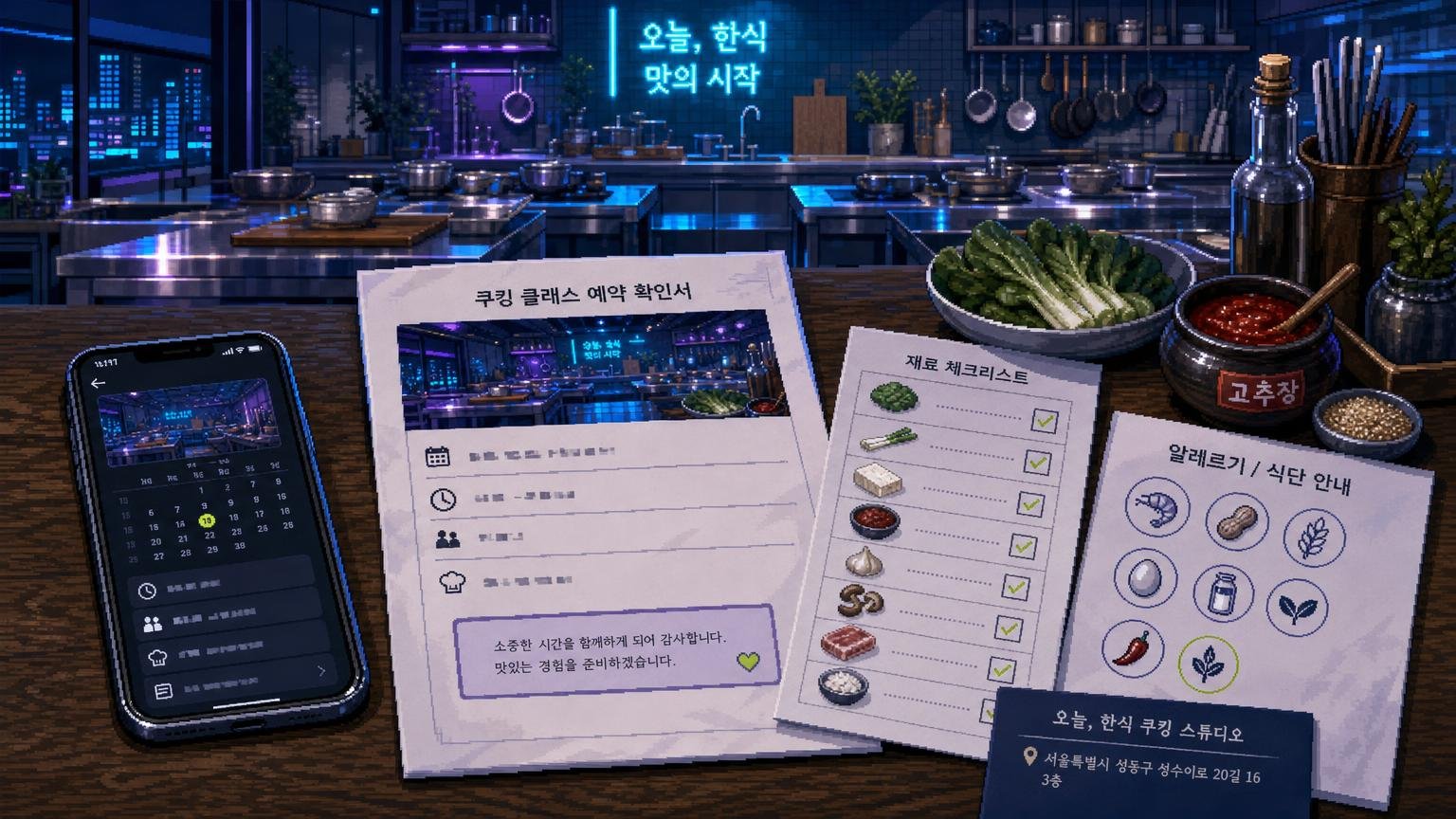
Do not assume that every Korean class accepts an overseas card. The checkout may use a foreign-friendly platform, an organizer’s payment link, card payment at the venue, or another method. A form submission is not necessarily a confirmed reservation: look for a payment receipt or written confirmation with the date, time, location, and participant name.
5. Save the confirmation offline
Keep a screenshot or PDF showing the booking name, address, meeting point, contact details, cancellation terms, and any dietary agreement. If the class is inside a large building or market, save the Korean venue name as well as the English name so you can show it to a taxi driver or local staff member.
What to write to the organizer before booking
A short, specific message is more useful than a general question such as “Can you make it vegetarian?” You can adapt this template:
Subject: Dietary question for [class name] on [date]
Hello, I would like to join the Korean cooking class on [date] for [number] person/people. I cannot eat [list exact ingredients]. Could you confirm whether the planned menu contains these ingredients, including sauces, stocks, fermented seasonings, and garnishes? If substitutions are possible, please tell me what the alternative would be. I understand that the class may use shared equipment. Thank you.
If you have a serious allergy, state that clearly and ask whether the kitchen can manage cross-contact. If the organizer gives a vague answer, choose another class rather than hoping the instructor can solve it on the day. “No meat” does not automatically mean no seafood, fish sauce, shellfish, or animal-based stock.
Dietary options: what is realistic?
Vegetarian
Vegetarian substitutions may be possible, but the result depends on the recipe and the studio. Ask whether the class can exclude meat, seafood, fish sauce, shrimp paste, anchovy stock, and meat-based broth. Some classes advertise a separate vegetarian menu; that is usually more reliable than requesting an improvised change to a meat-centered lesson.
Vegan
Vegan travelers should confirm egg, dairy, fish sauce, shrimp, anchovy, meat stock, honey, and sauces separately. A dish containing vegetables can still use seafood-based seasoning. Also ask whether the replacement ingredients will be cooked with the same utensils or pans.
Halal or Muslim-friendly diets
Ask about pork, lard, alcohol, cooking wine, meat certification, and shared cookware. “No pork” is not the same as halal. If halal certification or strict preparation is essential, request the class’s exact policy in writing before booking.
Gluten-free
Soy sauce commonly contains wheat, and flour may be used in pancakes, dumplings, noodles, or fried foods. Ask about soy sauce, gochujang, doenjang, flour, noodles, batter, and shared cooking surfaces. Do not rely on a translation of “no bread” as proof that a class is gluten-free.
Food allergies
List each allergen and explain the severity. Ask about ingredients, labels, shared knives, cutting boards, pans, gloves, and tasting utensils. A cooking class is a shared kitchen environment, so the organizer may decide that it cannot safely accommodate a severe allergy.
What to expect on the day
Most hands-on classes follow a pattern like this:
- Arrival and check-in: Staff confirm the booking and direct you to the workstation.
- Introduction: The instructor explains the menu, ingredients, tools, and safety points.
- Demonstration: Watch the cutting, seasoning, heat control, or folding technique before starting.
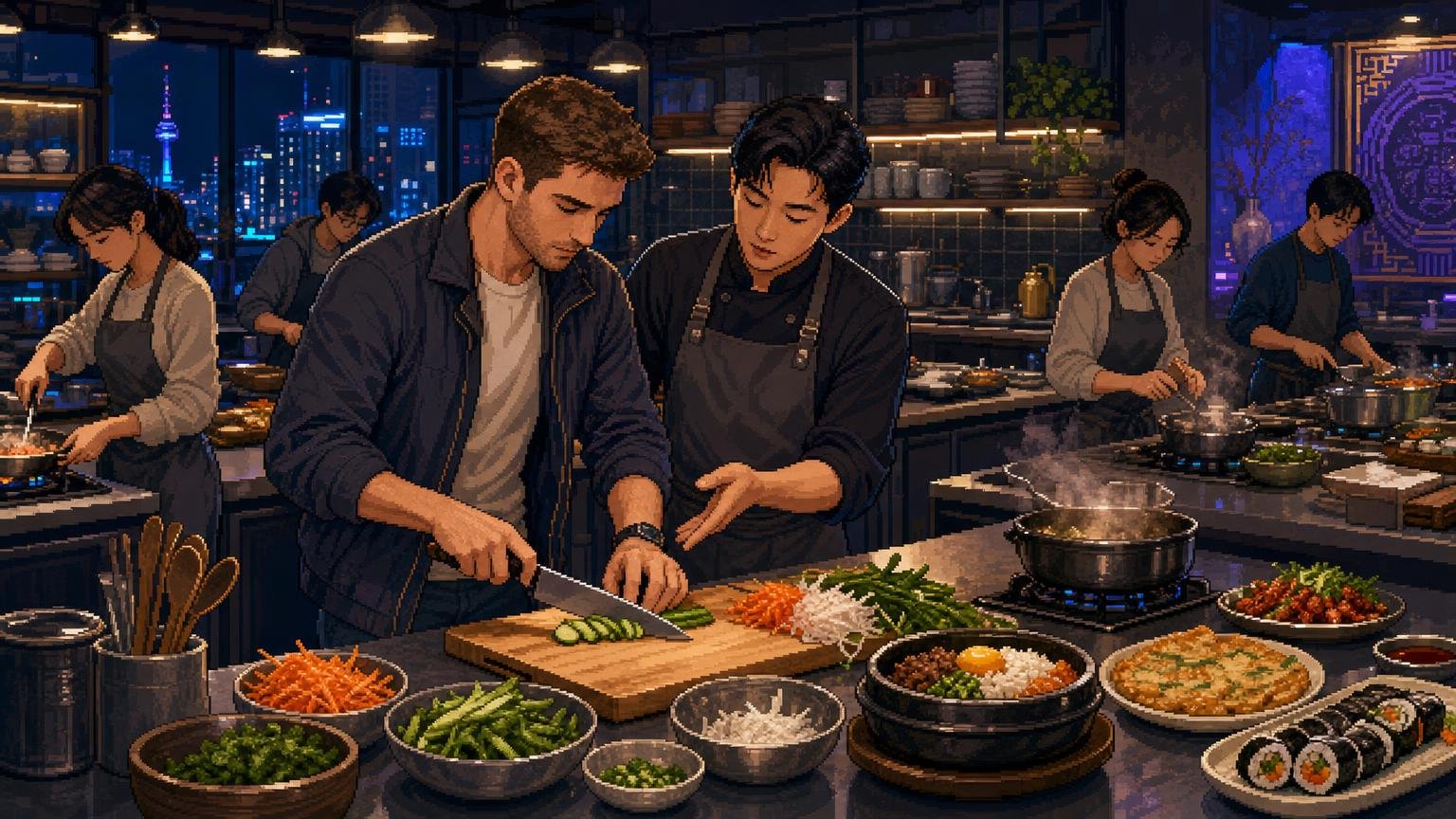
- Hands-on cooking: You may work alone, in pairs, or at a shared table.
- Plating and eating: Many classes include tasting the food you prepared; confirm this when booking.
- Cleanup and closing: Some studios include cleanup in the program, while others expect participants to return tools or clear their station.
Do not worry if you do not recognize every Korean utensil. Ask the instructor to demonstrate how to hold a knife, use a burner, open unfamiliar packaging, or handle hot cookware. If the class is bilingual, demonstrations may carry more information than the spoken explanation, so watch the instructor’s hands carefully.
Cooking-class etiquette for foreign visitors
- Arrive 10–15 minutes early unless the confirmation gives a different instruction. Late arrivals can miss the safety briefing or disrupt a shared class.
- Wear practical clothing. Choose sleeves and shoes that are comfortable and safe around heat. Avoid loose scarves, dangling accessories, and open footwear.
- Wash your hands and follow hygiene instructions. Use the provided apron, hair covering, or gloves if requested.
- Do not start cutting or heating ingredients before the demonstration. The recipe may depend on a particular order or preparation method.
- Ask before photographing people. Photos of ingredients and your own workstation are usually less sensitive, but check before photographing other participants or staff.
- Use polite forms of address. “Chef,” “teacher,” or “instructor” is appropriate in English. A simple “annyeonghaseyo” when arriving and “gamsahamnida” when leaving is appreciated but not required.
- Do not waste ingredients. Korean cooking classes may use carefully portioned ingredients, especially small-group or traditional programs.
- Ask before taking leftovers. Some food is intended to be eaten immediately, and some ingredients may not travel safely.
- Follow the alcohol policy. A food-culture program may include traditional alcohol tasting, but participation may be optional and age restrictions may apply.
Which type of class suits your situation?
| Your priority | Look for | Potential warning |
|---|---|---|
| Clear English instruction | “Class conducted in English” or a named English-speaking instructor | “English support” may mean limited translation. |
| Strict dietary needs | Separate menu, advance email confirmation, small group | Large shared classes may not prevent cross-contact. |
| Learning techniques | Hands-on format with a small participant limit | A demonstration-only program will provide less practice. |
| Convenience | Central studio, clear map pin, online payment, instant confirmation | Marketplace information may not match a recently changed schedule. |
| Local food shopping | Class that explicitly includes a market visit | Allow extra time for walking and shopping before cooking. |
| Family travel | Published child-age rules and guardian requirements | Some programs do not accept unaccompanied minors. |
Common booking mistakes and how to avoid them
Booking a class without checking the language
Look for a precise statement about instruction language. If the page is unclear, ask whether the instructor explains each step in English or whether English materials are simply provided.
Assuming the displayed price includes everything
Check whether the listed amount includes ingredients, tasting, drinks, market purchases, service fees, and taxes. Some market-based programs may involve separate ingredient costs; do not assume this unless the organizer states it.
Confusing a booking request with a confirmed booking
Save the confirmation email, not only the booking form. If you have not received confirmation by the stated deadline, contact the organizer before traveling to the venue.
Arriving at the wrong entrance
Large cultural centers, markets, and commercial buildings can have several entrances. Save the building name, floor, room, and Korean address. If the page provides a meeting-point photograph, keep it offline.
Changing the menu without asking
Do not replace ingredients or omit seasoning on your own. Tell the instructor before cooking begins so the portion, timing, and cooking method can be adjusted safely.
Ignoring cancellation rules
Some programs prepare ingredients after confirmation or restrict future participation after a confirmed no-show. For example, the Seoul Hallyu Experience Program’s current cooking-class information asks selected applicants to respond to a confirmation request and warns that no-shows after confirmation may affect future participation. That is a program-specific rule, not a universal rule for every class.
What may be different between classes
Cooking-class details can vary by organizer, venue, season, menu, and booking channel. In particular, recheck the teaching language, exact dishes, dietary substitutions, foreign-card support, minimum or maximum group size, child policy, meeting point, cancellation deadline, and whether the class is still operating on your chosen date. Official tourism listings can introduce you to programs, but the organizer’s current confirmation should control your travel plans.
FAQ
Do I need a Korean phone number to book?
Not always. Some international booking pages accept an email address and overseas phone number, while a local organizer may request a contact number for same-day communication. Check the form before paying. If a Korean number is mandatory, ask whether email, messaging, or a hotel contact can be used instead.
Can I book a class after arriving in Korea?
Sometimes, but popular dates and small-group classes may fill in advance. If your schedule is fixed or you have dietary restrictions, book earlier and wait for written confirmation rather than relying on a last-minute opening.
Are Korean cooking classes suitable for complete beginners?
Usually, choose a class that describes itself as hands-on and beginner-friendly. You should still check whether the instructor demonstrates knife work and whether translation is provided for each step.
Can I join if I do not eat spicy food?
Ask whether gochugaru, gochujang, fresh chili, or spicy sauces can be reduced or served separately. The answer depends on the menu, and reducing spice may change the recipe.
Can I take the food back to my hotel?
Ask the instructor first. Some dishes are intended to be eaten immediately, and food-safety or packaging limitations may apply. A class that includes kimchi or other packaged products may have different instructions from a class serving hot cooked food.
What should I do if the class cannot accommodate my allergy?
Do not attend without a clear safety agreement. Request a refund or change according to the booking platform’s policy, and choose a class that explicitly confirms it can manage your requirements.
Is tipping expected?
Tipping is not a standard requirement in ordinary Korean cooking classes. Follow the organizer’s stated policy. A sincere thank-you, a positive review, or a polite message is generally more appropriate than assuming an extra payment is required.
Official Information
- VISITKOREA: Korean Cooking Classes — introductory listings and program examples for international visitors.
- Visit Seoul: Korean Cuisine Culture Center — venue information, language availability, and a reminder that menus, prices, and times differ by program.
- Visit Seoul: OKITCHEN STUDIO K-Food Cooking Class — example of program-specific dietary, confirmation, and no-show guidance.
- VISITKOREA: Experience Making Korean Foods First-Hand — examples of Korean food experiences and advance reservation or interpretation notes.