
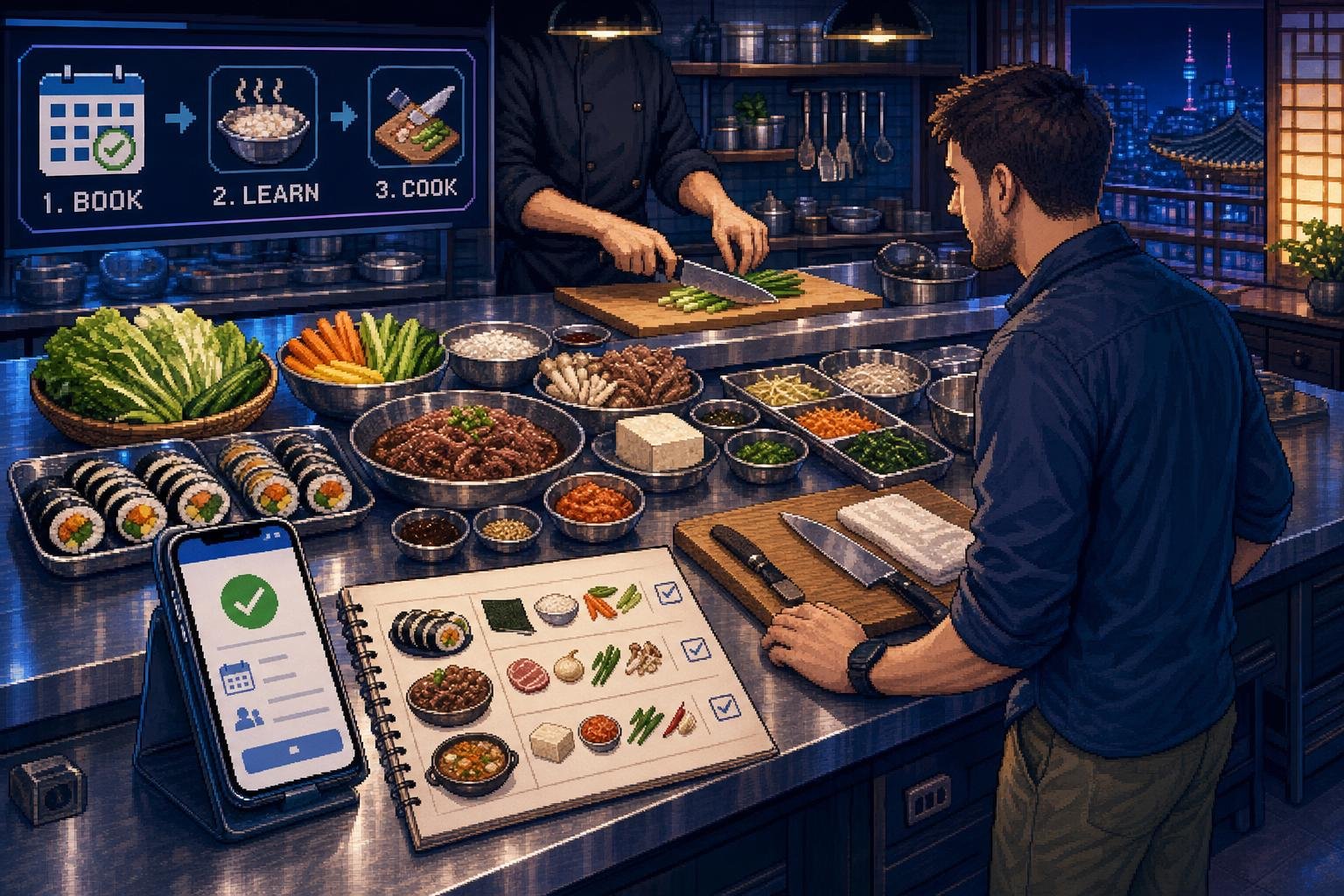
A Korean cooking class is easiest to arrange when you treat it like a practical activity booking rather than simply showing up at a food attraction. The important questions are whether the class is genuinely open to international visitors, whether instruction is available in English, what you will cook, how the reservation is confirmed, and whether the ingredients suit your diet.
Seoul has several different formats. Some classes teach traditional dishes in a public Korean-food center. Others combine a market visit with cooking, while private studios may offer a longer hands-on session in English. The right choice depends more on your schedule and food requirements than on the class’s marketing name.
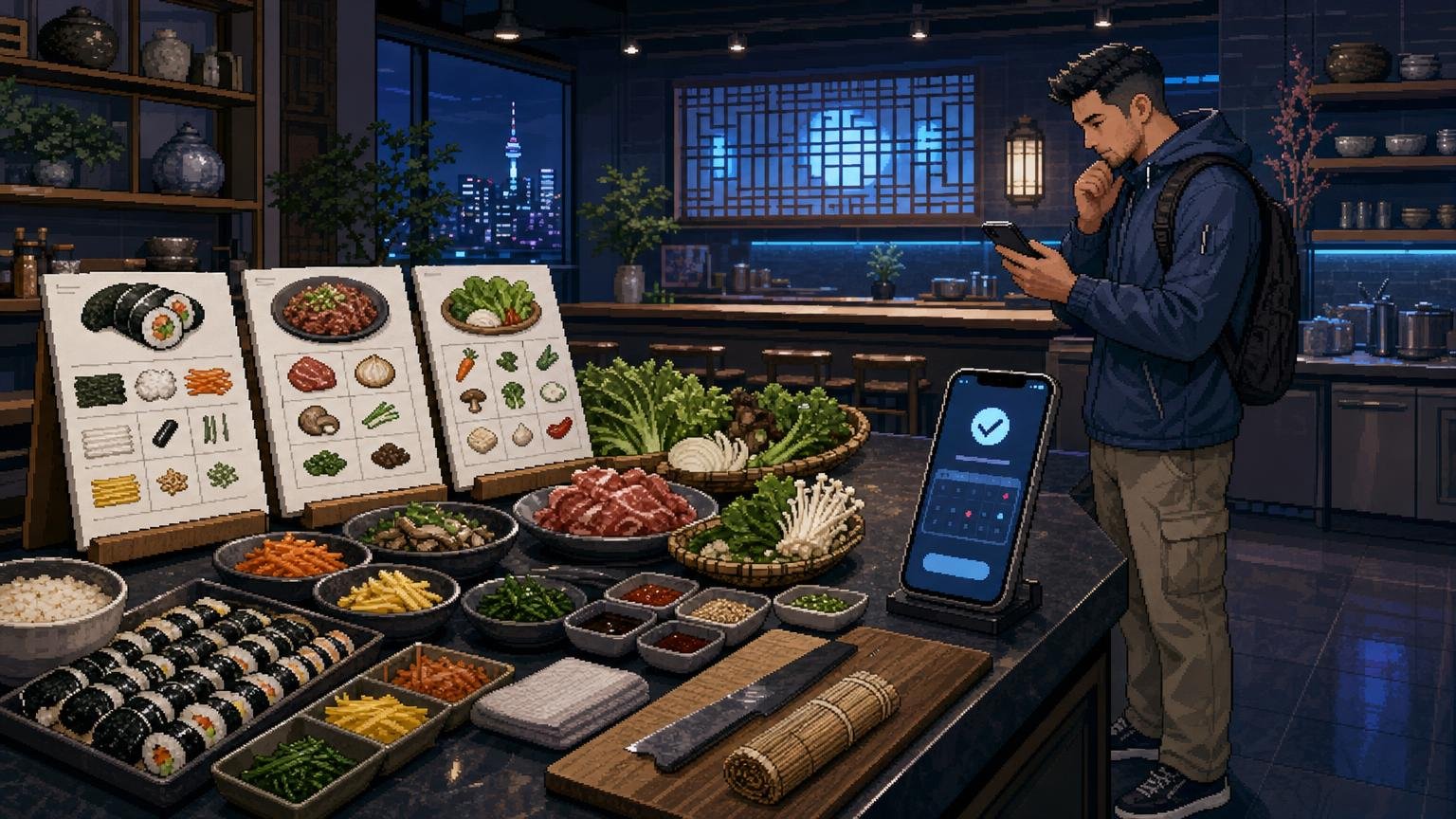
At a glance: choose the class format first
| Class type | Usually suits | What to check |
|---|---|---|
| Public Korean-food center | Travelers who want an official cultural setting and a shorter class | Current schedule, English session, individual booking, and payment method |
| Private cooking studio | Travelers who want more explanation or a flexible menu | Minimum group size, exact meeting point, language, and cancellation terms |
| Market-and-cooking class | Visitors who want to understand ingredients as well as recipes | Walking distance, market start time, weather arrangements, and total duration |
| Kimchi-making workshop | Travelers who want a focused activity and a take-home food item | Ingredient list, amount provided, packaging, and foreigner identification rules |
Step 1: Decide what you want to learn
Do not search only for “Korean cooking class.” Start with the dish or experience you actually want.
- Everyday Korean food: Look for classes featuring dishes such as japchae, bulgogi, bibimbap, gimbap, or Korean pancakes.
- Traditional food culture: Consider a Korean-food learning center or a class connected with traditional cuisine and seasonal ingredients.
- Kimchi: Check whether the session is mainly fermentation instruction or a shorter preparation workshop.
- Market experience: Choose a class that explicitly includes shopping for ingredients, not one that only meets at a kitchen.
- Royal or regional cuisine: Expect a more specialized class and confirm whether the instruction is designed for beginners.
Menus are not interchangeable. A class advertised as Korean cooking may focus mainly on one dish, while another may include a demonstration, hands-on preparation, tasting, and a recipe handout. Read the current class description before booking.
Step 2: Confirm that foreigners can join
Look for clear wording such as “open to foreign tourists,” “English class,” or “English-speaking participants.” Official tourism listings describe several Seoul programs that accept international visitors, including classes at HANSIK Space E:eum and other cooking studios.
Do not assume that an English-language website guarantees an English-speaking class. Some official reservation pages list many sessions together, and the language may depend on the specific date or group. If the language is not stated, contact the provider before paying.
What to ask the provider
- Is this specific session conducted in English?
- Can one foreign visitor book individually?
- Is the class shared with other participants or private?
- How long is the cooking and tasting portion?
- Will I receive the recipe in English?
- Can the class handle my allergy or dietary restriction?
Step 3: Check the menu and ingredients before booking
This is the most important step for travelers with allergies, religious restrictions, or special diets. Korean cooking classes may use meat, seafood, eggs, dairy, nuts, soy, wheat, fermented seafood, or cooking wine. Even a dish that appears vegetarian may use anchovy stock, fish sauce, oyster sauce, or shrimp-based seasoning.
For example, the current Seoul Hallyu K-Food program lists ingredients such as beef, eggs, shiitake mushrooms, onions, pickled radish, and spinach, and asks participants with allergies or vegan requirements to contact the organizers in advance. Treat this as a reminder to check each class separately rather than as a general rule for all Korean cooking classes.
Step 4: Compare the booking method
There is no single reservation system for Korean cooking classes. Depending on the provider, you may book through an official reservation website, submit an application form, email the operator, or reserve through a tourism-booking platform.
- Official public programs: Some accept an online application and confirm selected participants later. A confirmation reply may be required before your place is final.
- Public cooking centers: These may use a reservation calendar with individual and group categories. Make sure you select an individual class rather than a page intended for a pre-arranged organization.
- Private studios: These often show a fixed price and available dates, but minimum numbers and cancellation rules vary.
- Platform bookings: The platform may handle payment and cancellation, while the class provider handles the meeting instructions. Read both sets of conditions.
Use the name and contact details that you can access while traveling. Keep the confirmation email, booking number, address, and provider’s phone or email available offline.
Step 5: Check payment, cancellation, and contact requirements
Never assume that a foreign card, cash payment, or same-day booking will be accepted. The payment method depends on the reservation system. A class may require online payment, payment at the venue, or confirmation by email before payment.
Cancellation conditions also differ. One current HANSIK Space E:eum reservation page states that cancellations at least 48 hours before the class can receive a full refund, while later cancellations may be subject to the provider’s refund policy. This is an example of one provider’s rule, not a universal Korean standard.
Check these points before completing the booking:
- Whether the listed price is per person
- Whether a minimum number of participants is required
- Whether the booking can be changed or only cancelled and rebooked
- Whether late arrival is treated as a no-show
- Whether the provider can contact you by email or phone
- Whether a foreign card is accepted by the payment page
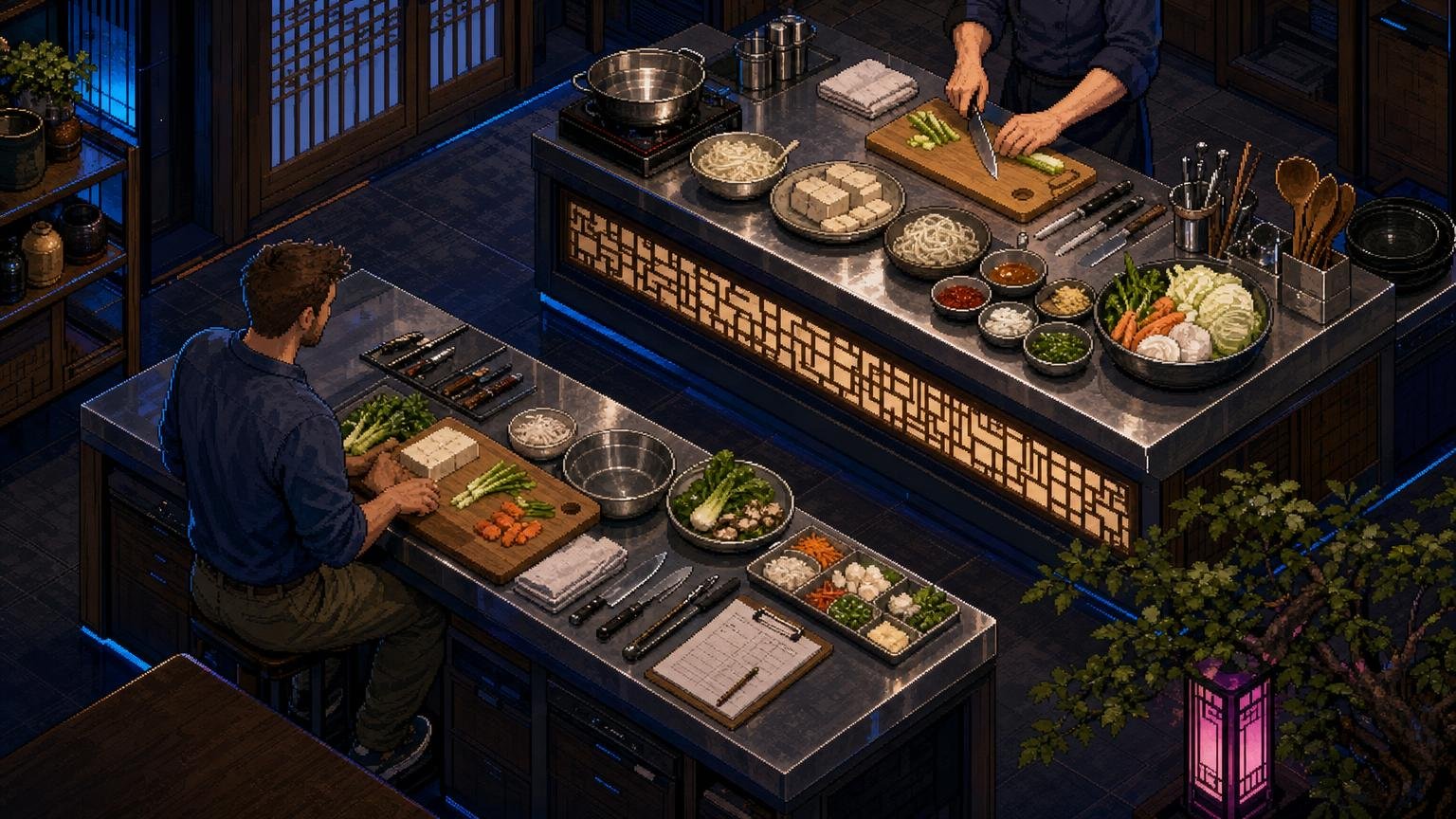
Step 6: Prepare for the class day
Cooking classes are hands-on, so arrive in practical clothing and closed-toe shoes. Avoid loose sleeves, expensive clothing, and large bags if the kitchen has limited storage. Tie back long hair if necessary and follow the instructor’s safety directions.
Bring:
- Your booking confirmation or reservation number
- The name used for the reservation
- A phone with the provider’s address saved
- Your passport or other identification if the program requests proof of foreigner status
- A translation of important allergy information in Korean, if relevant
Some public classes allow entry shortly before the start time but begin strictly on schedule. A current HANSIK Space E:eum class notice warns that late participants may be treated as no-shows and refused entry. The exact grace period varies, so plan to arrive around 15 minutes early.
Which type of class is best for your trip?
Choose a public cultural-center class if…
You want a clearly organized cultural activity, a central Seoul location, and a relatively short session. HANSIK Space E:eum states that its Hansik Learning Center offers classes for English-, Chinese-, and Japanese-speaking participants, but you still need to select a current English session and confirm availability.
Choose a private studio if…
You need more help in English, want to ask many food questions, or have a group that prefers a slower pace. Private classes may offer more flexibility, but compare the total price, minimum booking size, and cancellation terms.
Choose a market-and-cooking class if…
You want to learn how Koreans choose ingredients and you can spare several hours. This format involves more walking and may be less suitable immediately after arriving with heavy luggage or when your schedule is tightly fixed.
Choose a kimchi workshop if…
You want a shorter, focused activity or something you can take home. Confirm how the finished kimchi is packed, how much is included, and whether the workshop is mainly demonstration or hands-on preparation.
Common mistakes and troubleshooting
“The page is in English, but the class is not.”
English website navigation does not always mean English instruction. Check the language for the actual session or email the provider before booking.
“I booked one place, but my friend wants to watch.”
Many cooking centers require every participant to reserve a place. A non-participating companion may not be allowed into the kitchen for safety or capacity reasons.
“I need a vegetarian or halal option.”
Ask about stock, sauces, seafood ingredients, shared equipment, and cross-contact. If the provider cannot confirm the ingredients, do not rely on assumptions based on the dish name.
“The class is full.”
Check later dates, another menu, or a private class. Public programs can have small capacities and may open reservations only for a limited period before the class.
“I cannot complete the online payment.”
Do not repeatedly submit the form if you are unsure whether payment went through. Check for a confirmation email, then contact the provider or booking platform. If the system requires a Korean phone number, ask whether email reservation or an alternative booking channel is available.
What may be different
Cooking-class details can change by provider, date, menu, and season. In particular, check the current page for:
- Price and whether ingredients or takeaway packaging are included
- English availability and interpretation
- Individual versus group booking
- Minimum age and guardian requirements
- Allergy substitutions and vegetarian options
- Payment method and foreign-card acceptance
- Cancellation deadlines and no-show treatment
- Meeting point, class duration, and late-arrival rules
Official tourism listings are useful for finding suitable providers, but they may not show every current booking condition. The provider’s live reservation page should be the final check.
FAQ
Can a foreigner join a Korean cooking class without speaking Korean?
Yes, many classes are designed for international visitors or offer English instruction. Confirm the language of the exact session before booking because language support is not identical across providers.
Do I need a Korean phone number?
Not always. Some providers accept an email address and international contact number, while others use a reservation form that may be easier with local contact details. Check the actual booking form before choosing a class.
Do I need to bring my passport?
Some foreigner-only programs request a passport or other proof of foreigner status. Bring identification when the program instructions mention it, but do not assume every cooking class has this requirement.
Can I join if I have food allergies?
Possibly, but ask before booking. Korean recipes may include hidden seafood, soy, wheat, eggs, dairy, nuts, or fermented ingredients. A provider may not be able to guarantee a fully safe substitute in a shared kitchen.
Are cooking classes suitable for children?
Age rules vary. Some classes allow children only with a guardian, while others restrict younger children for safety reasons. Check the current class notice and reserve a place for every participant.
Can I book on the same day?
Sometimes, but it is risky. Small classes may sell out, and ingredient preparation may begin after confirmation. Reserve in advance whenever the class is important to your itinerary.
What if I arrive late?
You may be refused entry or treated as a no-show, especially in a public teaching kitchen. Allow extra time for finding the building and arrive before the stated start time.