
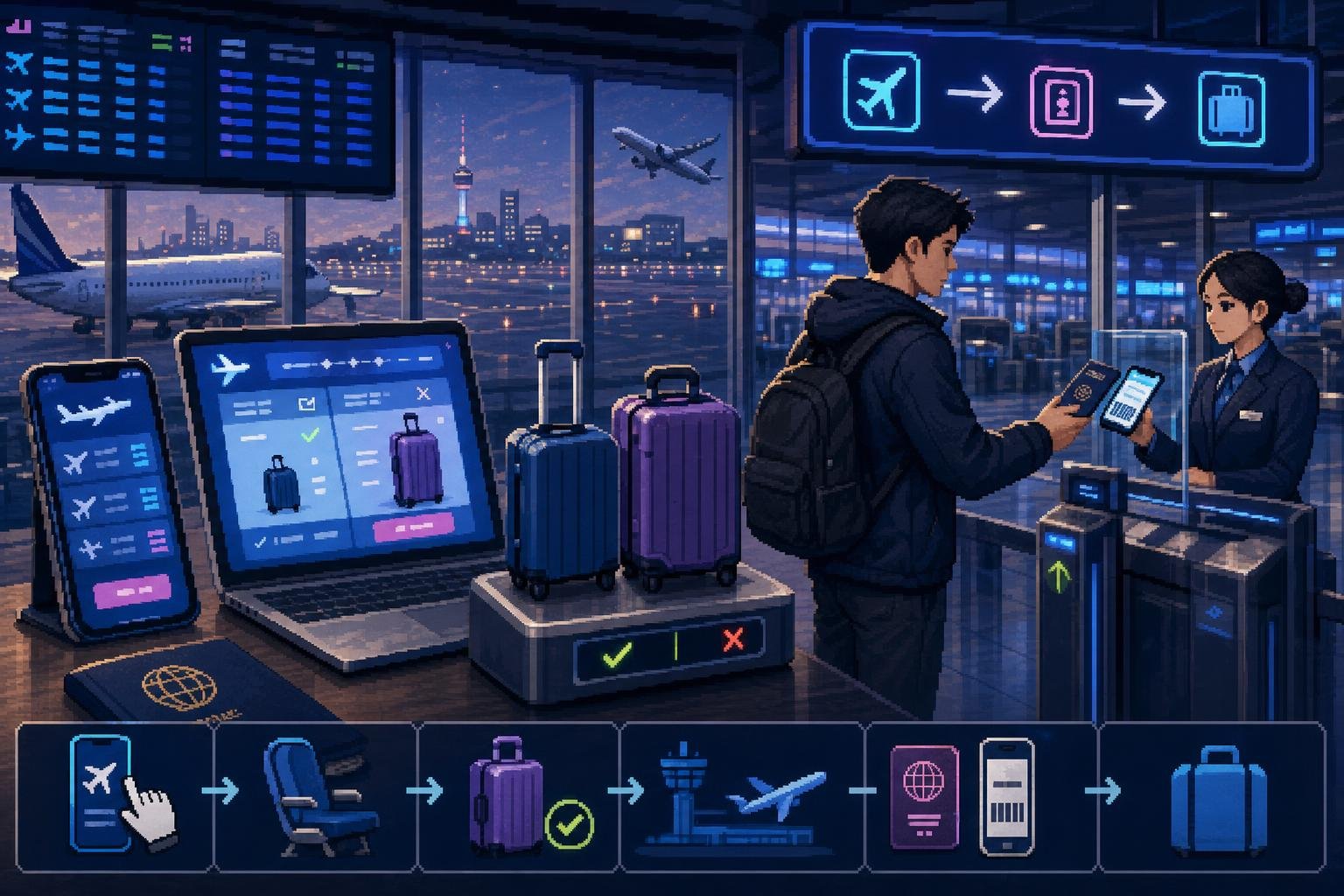
Domestic flights are useful when you need to travel between Seoul, Jeju, Busan, Daegu, Gwangju, Yeosu, Ulsan, Cheongju, or other cities that are not well connected for your schedule. The booking process is generally straightforward for foreigners, but the important details are different from international travel: domestic flights in Korea still require identity verification, baggage rules depend heavily on the fare, and a short flight does not always mean a short airport process.
At a glance
| Question | Practical answer |
|---|---|
| Which airlines can I use? | Common choices include Korean Air, Asiana Airlines, Jeju Air, Jin Air, Air Busan, T’way Air, Eastar Jet, Air Seoul, and other carriers depending on the route and date. |
| Where should I book? | Use the airline’s English website or app when possible. A reputable international booking platform can be useful for comparing several airlines, but check the ticket conditions carefully. |
| Do I need a Korean phone number? | Not always. Booking forms vary. Use an email address you can access during the trip and enter your phone number in the international format if accepted. |
| What identification is accepted? | For a foreign visitor, carry the original passport. Domestic boarding requires an identity document and boarding pass. |
| Is checked baggage included? | It depends on the airline and fare. Some low-cost basic fares include no checked baggage, while other fares include a set allowance. |
| How early should I arrive? | Allow enough time for the airline’s check-in cutoff, baggage drop, security screening, and the walk to your gate. The exact cutoff varies by airline and airport. |
1. Choose the route and airport carefully
Search by airport code as well as city name. Seoul’s domestic flights generally use Gimpo Airport (GMP), not Incheon Airport (ICN). Jeju flights may depart from Gimpo, Busan Gimhae, Daegu, Cheongju, Gwangju, or other airports. Busan’s main airport is Gimhae Airport (PUS), while Jeju’s airport is Jeju International Airport (CJU).
Do not assume that every airport in a metropolitan area serves every destination. Routes and departure times vary by season, weekday, aircraft availability, and airline. Check the actual departure airport shown on the booking confirmation before arranging an airport transfer.
Before you search
- Write down the exact city or island you need to reach.
- Check whether your departure airport is Gimpo, Incheon, Gimhae, or another regional airport.
- Compare the total journey time, including airport transfers and baggage, not only the time in the air.
- If you have a separate international flight, leave a generous buffer rather than booking a tight self-transfer.
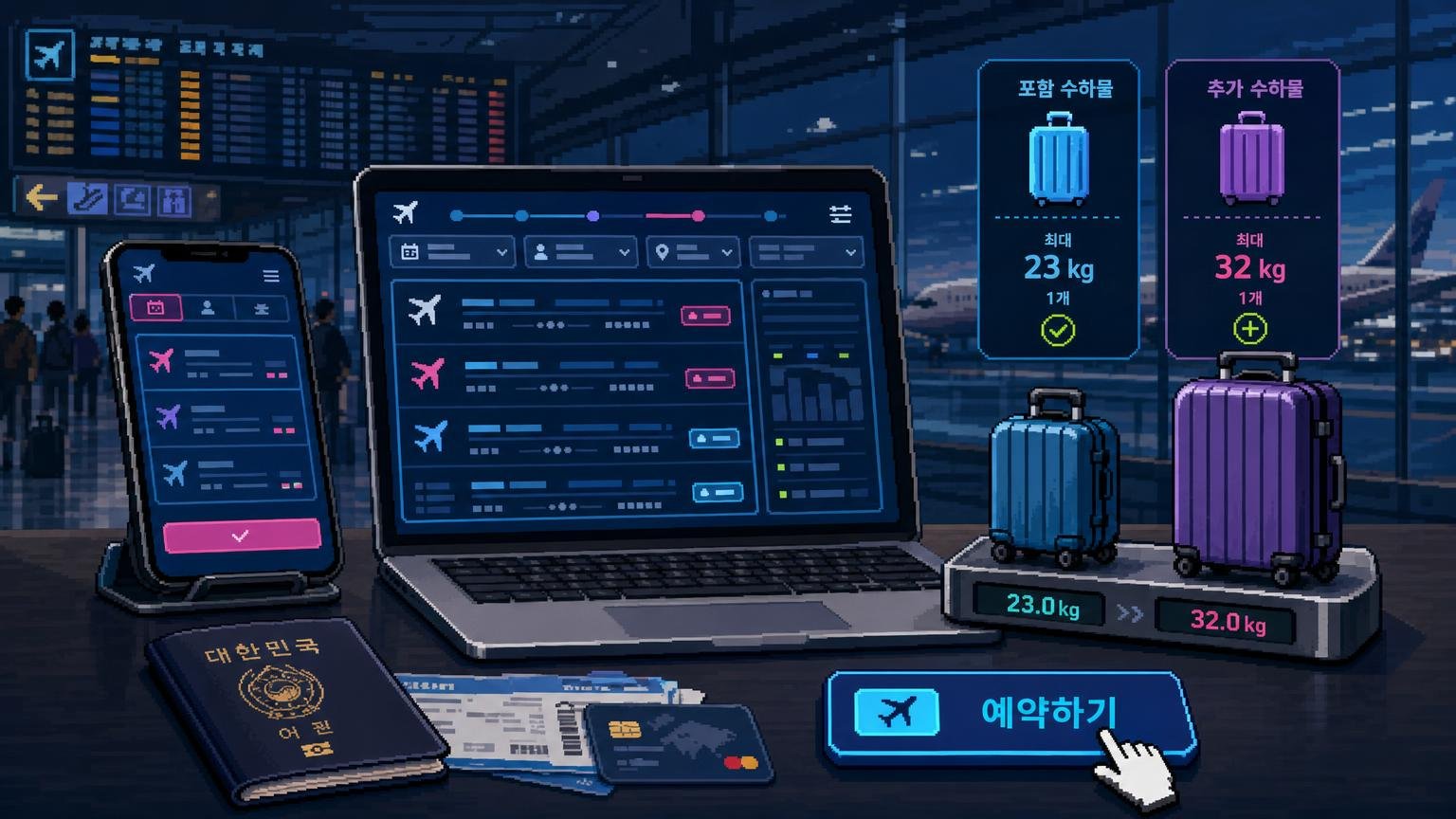
2. Compare Korean domestic airlines
The most suitable airline depends on the route, departure time, baggage, and ticket flexibility. Airline names may appear in English, Korean, or both, so check the two-letter airline code on your booking.
Full-service airlines
Korean Air and Asiana Airlines are common choices on major domestic routes. Their fares may be convenient for travelers who prefer a more traditional airline booking process or who need a clearer included-baggage allowance. Always compare the specific fare class rather than assuming every ticket has the same conditions.
Low-cost carriers
Jeju Air, Jin Air, Air Busan, T’way Air, Eastar Jet, and Air Seoul may offer competitive fares on popular routes. Low-cost fares can be good value when you travel with a small cabin bag, but the cheapest fare may exclude checked baggage, seat selection, or other extras.
Airline availability is route-specific. For example, an airline shown at Gimpo may not operate the route you need on your travel date. Use the airline’s own schedule or a flight search tool to confirm that the flight is actually operating, then check the operating carrier shown before paying.
3. Decide where to book
Option A: Book directly with the airline
This is usually the clearest option when you already know which flight you want. The airline’s website or app normally shows the fare family, baggage allowance, seat options, change rules, and payment total before purchase. Direct booking can also make it easier to manage a schedule change or add baggage later.
Use the English-language version if available. Enter your name exactly as shown in your passport, including the order and spelling requested by the form. Save the reservation number, e-ticket, payment receipt, and the airline’s customer-service details.
Option B: Use an international booking platform
An international booking platform can help when you want to compare several airlines or when an airline website rejects your card or contact details. Before paying, identify the operating carrier, baggage allowance, currency, cancellation rule, and who will handle changes or refunds.
A third-party booking may involve an extra support layer. If a flight is changed or cancelled, you may need to contact the platform rather than the airline that operates the aircraft. Avoid buying a very tight connection on separate tickets unless you are prepared to manage the risk yourself.
Payment and phone-number problems
Payment methods differ by airline, website version, card issuer, and departure country. A foreign Visa or Mastercard may work, but no single card is guaranteed to work on every Korean booking page. If payment fails, try the airline’s English site or app, check that your billing address matches your card record, or compare the same flight on a reputable international platform.
A Korean mobile number is not automatically required for every booking. If a form accepts an international number, include the country code. If the website requires Korean verification or does not accept your number, use another official booking channel or contact the airline before creating duplicate reservations.
4. Check the fare before you pay
The headline fare is not the complete comparison. Open the fare conditions and check these items:
- Checked baggage: confirm the number of kilograms included, if any.
- Cabin baggage: check both the weight and maximum dimensions.
- Changes and refunds: the cheapest fare may have strict penalties or limited refund eligibility.
- Seat selection: a seat may be assigned at check-in or may cost extra.
- Payment currency: check whether the final amount is charged in Korean won or another currency.
- Airport taxes and surcharges: confirm that the displayed total includes all required charges.
As an example of how much fares can differ, Jeju Air currently lists domestic fare options with different baggage benefits: its displayed Basic option has no free checked baggage, while Standard includes 15 kg and Biz Lite includes 30 kg. The airline also states that domestic carry-on baggage is limited by both weight and size. Treat this as an example of fare variation, not a universal rule for every airline.
5. Baggage: what to check before arriving
Checked baggage
Weigh your bag before leaving for the airport if possible. A low-cost fare may include no checked baggage, and buying baggage online before departure can be cheaper or more convenient than paying at the airport, depending on the airline. Some airlines stop advance baggage purchases a set number of hours before departure.
Do not rely on a baggage allowance from an international flight when booking a separate domestic ticket. The domestic ticket’s own fare rules apply. If your domestic flight is booked separately from your international flight, you may need to collect your luggage and check it again.
Cabin baggage
Cabin baggage allowances are usually based on both weight and dimensions. A bag that fits in the overhead bin may still be weighed at the counter or gate. Personal items such as a small backpack or laptop bag may also be included in the combined weight limit.
Batteries and restricted items
Keep power banks and spare lithium batteries in your cabin baggage unless the operating airline specifically states otherwise. Check the airline’s prohibited-items page for camping fuel, aerosols, sports equipment, drones, medical equipment, and other unusual items. Domestic and international liquid rules are not always identical, so do not automatically apply international liquid restrictions to a domestic flight.
6. What to bring to the airport
- Your original passport.
- Your booking reference or e-ticket.
- Your mobile boarding pass, if already checked in.
- The payment card used for the booking, if the airline or booking platform asks for verification.
- Any documents for special baggage, medical assistance, or an infant passenger.
For domestic boarding, foreign travelers should use their passport as the default identification document. A screenshot of your passport is not a substitute for the original. The name on the reservation should match the passport closely enough for the airline to verify your identity.
7. Airport procedure for a domestic flight
Step 1: Go to the domestic terminal
At large airports, domestic and international terminals may be separate. At Gimpo, domestic flights use the domestic terminal. Follow the airline and flight-number displays rather than simply following signs for the airport name.
Step 2: Check in
If online check-in is available for your flight, complete it through the airline’s website or app. Some foreign passengers or bookings may still need an airport-counter document check. If the mobile boarding pass does not appear, go to the airline counter with your passport and reservation number.
Step 3: Drop checked baggage
Use the airline counter or an available self-service process. Keep the baggage receipt until you collect your bag. If the baggage allowance is unclear, ask the counter staff to confirm the included weight before handing over the bag.
Step 4: Pass identity verification and security
Domestic passengers still need to show a boarding pass and accepted identification before entering the departure area. At the gate or security checkpoint, keep your passport and boarding pass easy to reach.
Step 5: Check the gate and board
Airport displays can show gate changes, delays, or a different boarding time. Stay near the gate after passing security, especially when the airport is busy or when your flight uses a remote boarding position.

How early should you arrive?
There is no single arrival time that works for every domestic airport and airline. Check the operating airline’s stated check-in and baggage deadlines, then add time for the day of travel. Arriving around 90 minutes before departure is a practical buffer for many first-time visitors, especially when checking baggage or using an unfamiliar airport. A traveler with only cabin baggage and a mobile boarding pass may need less time, but should not use the minimum possible time for an important connection.
At Gimpo Airport, the Korea Airports Corporation notes that the time available for issuing boarding passes and checking baggage varies by airline and that domestic-flight information is generally available about 30 minutes before scheduled departure. This does not mean that arriving 30 minutes before departure is safe; airline check-in and boarding cutoffs may be earlier.
Which booking approach suits you?
- You want the simplest support: book directly with the airline operating the flight.
- You need to compare several airlines: use a flight search platform, then inspect the airline’s fare rules before booking.
- You have checked luggage: compare the total price after adding baggage, not only the basic fare.
- You are making an international connection: avoid a tight self-transfer and check whether you need to change terminals or re-check baggage.
- Your foreign card keeps failing: try the airline app or English site, another card, or a reputable international booking platform. Do not repeatedly submit payment if you cannot confirm whether the first transaction succeeded.
- You are travelling during a Korean holiday period: book earlier and check the airport and flight status again shortly before departure.
Common mistakes and troubleshooting
Booking Incheon when you need Gimpo
Seoul has two major passenger airports. A domestic flight to Jeju or Busan often uses Gimpo, while most international flights use Incheon. Check the airport code before arranging transportation.
Assuming every fare includes a suitcase
Low-cost domestic fares may include cabin baggage but no checked baggage. Open the baggage section before payment and buy the required allowance in advance when the airline offers that option.
Using a nickname or shortened name
Use the passport name requested by the booking form. If you make a spelling mistake, contact the airline or booking platform before travelling. Do not assume that a ticket can be freely transferred to another person.
Arriving with only a digital copy of your passport
Carry the original passport. A domestic boarding pass alone is not enough for a foreign visitor if the airline needs to verify identity.
Missing a flight after online check-in
Online check-in does not remove the airline’s baggage-drop or boarding deadlines. If you have checked baggage, go to the bag-drop or counter within the stated time and arrive at the gate before boarding closes.
Confusing the operating airline with the booking brand
On a codeshare or third-party booking, the airline selling the ticket may not be the airline operating the aircraft. Check which carrier’s counter, baggage rules, and check-in process apply.
- Routes, flight times, and operating airlines can change by date and season.
- Fare names and included baggage vary by airline and sometimes by route.
- Foreign-card acceptance can differ between the airline website, app, booking platform, and card issuer.
- Online check-in and mobile boarding-pass availability may vary for foreign passengers, special requests, codeshare flights, or bookings made through another company.
- Check-in, baggage-drop, and boarding deadlines are set by the operating airline and may differ by airport.
- Airport terminal arrangements, kiosks, and self-service baggage facilities can change.
FAQ
Can a foreigner fly domestically in Korea with a passport?
Yes. Carry your original passport and boarding pass. Domestic passengers must complete identity verification before boarding, and a passport is the practical default identification document for foreign visitors.
Do I need a Korean resident registration card?
No Korean resident card is normally needed for a short-term visitor. Use your passport as your identification document. If you hold a Korean residence card, carry it as well, but follow the airline’s current identification guidance.
Can I book a domestic Korean flight without a Korean phone number?
Often, an international phone number and email address can be used, but booking forms differ. If a particular site requires Korean verification, try the airline’s English website or app, a different official booking channel, or a reputable international booking platform.
Is Gimpo Airport closer to central Seoul than Incheon Airport?
Gimpo is generally the Seoul airport used for many domestic flights, while Incheon is the main international gateway. Check the airport code on your ticket because the two airports are not interchangeable for a normal domestic departure.
Can I take liquids on a domestic flight in Korea?
Domestic and international security rules can differ, but dangerous and restricted items remain prohibited. Check the operating airline’s current restricted-items guidance for liquids, aerosols, alcohol, batteries, and special equipment.
Should I book directly or use a third-party platform?
Direct booking is usually easier for managing airline changes and baggage. A third-party platform can be useful for comparing fares or solving a payment problem, but check who will handle cancellations, schedule changes, and refunds before paying.
What happens if my international flight and domestic flight are on separate tickets?
You may need to travel between terminals or airports, collect and re-check baggage, and pass through the required arrival and departure procedures. Leave a substantial buffer and confirm the airport codes for both flights before booking.
Official Information
- Korea Airports Corporation: Gimpo Airport fast check-in and domestic airline information
- Jeju International Airport: domestic boarding procedure
- Korean Air: domestic fares and included services
- Korean Air: domestic flight boarding procedure and identification documents
- Jeju Air: domestic fare options and baggage benefits
- Jeju Air: cabin and checked baggage rules